Iraqi forces enter Kataib Hezbollah stronghold Jurf al-Sakhar
Iraqi security forces entered Jurf al-Sakhar on 20 November under a compromise deal, testing Baghdad's effort to curb militia power.
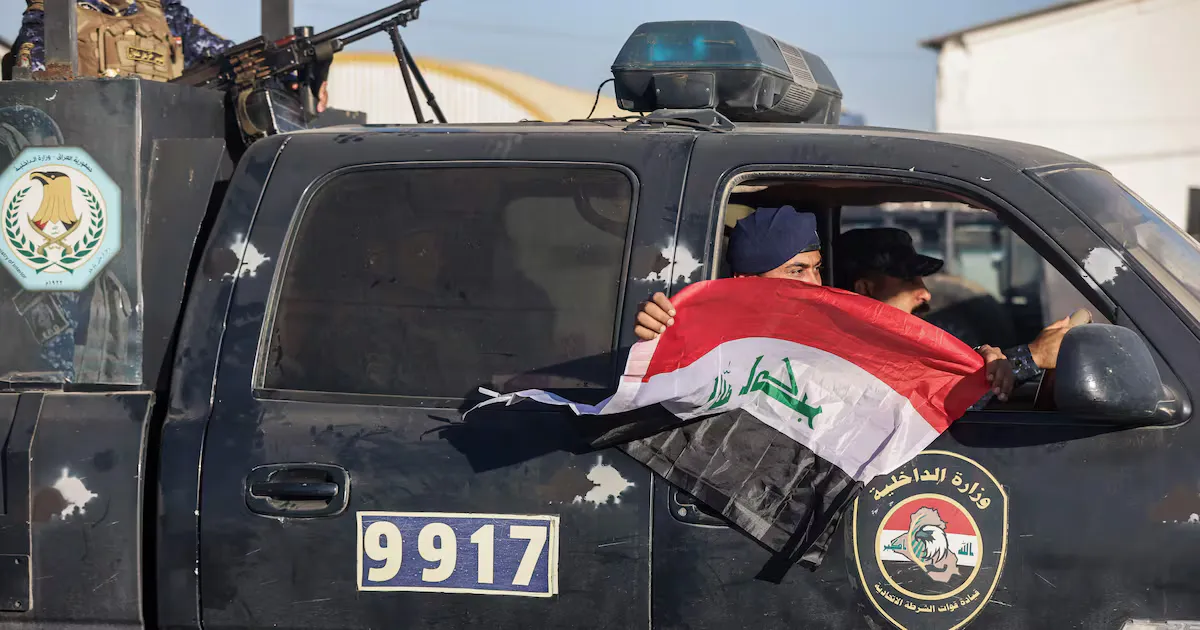 Photo: The National
Key points
Iraqi forces entered Jurf al-Sakhar on 20 November under a deal with Kataib Hezbollah, testing state authority.
Iraqi security forces began entering Jurf al-Sakhar on Friday under a government plan to restore state power in an area long controlled by the Iran-backed Kataib Hezbollah militia. Tanks and armoured vehicles rolled into the district as government forces took up positions under a security agreement with the militia, marking Baghdad's most significant move in years to reassert authority over the area.
The deployment follows a compromise deal established late on Thursday to ease tension with Iran's most powerful militia ally in Iraq. Under the deal, Kataib Hezbollah members were expected to withdraw to other parts of the country while federal police and the Popular Mobilisation Forces were set to take over parts of the area. The agreement was brokered by Shi'ite politicians.
Deal details
The government established a new joint security headquarters in the district south of Baghdad, bringing together units from the army, federal police, energy police and PMF. The command is tasked with overseeing security, protecting oil infrastructure and reopening key roads in the area. The operation is a test of Baghdad's broader effort to bring armed groups under state control while avoiding a confrontation between competing Shiite groups.
Prime Minister Ali al-Zaidi earlier this week ordered security forces to prepare to move against Kataib Hezbollah, which officials accused of running an oil smuggling network siphoning state-owned oil worth hundreds of millions of dollars. Kataib Hezbollah, branded a terrorist group by the United States, has rejected the smuggling accusations. So far, nine senior security and oil officials have been dismissed following an investigation focused on Jurf al-Sakhar in Babil province.
Oil smuggling probe
Jurf al-Sakhar, about 50 km (30 miles) south of Baghdad, has remained largely closed to civilians and the government for more than a decade. The predominantly Sunni area was recaptured from ISIS in 2014 by Kataib Hezbollah fighters alongside the Iraqi army, but most former residents have been barred from returning. Iraqi officials have increasingly linked the restoration of state authority to plans for reopening the area and addressing displacement.
Experts say the outcome in Jurf al-Sakhar could shape the government's wider campaign to curb militia influence. "This is a significant change to the past 12 years, when the area was out of reach to the government. If it's enforced as planned, it will be break the last stronghold of Kataib Hezbollah since the war on ISIS," Lahib Hagel, an Iraq expert at Crisis Group, said. "But questions remain regarding the areas that will be controlled by the Hashd Brigades [PMF] and whether Kataib Hezbollah will be able to exercise influence through them."
Any direct confrontation with Iran's heavily armed militia allies in Iraq could be risky. After one of Zaidi's predecessors ordered a similar crackdown on militias five years ago, the prime minister's Baghdad home was hit in a drone strike that authorities described at the time as an assassination attempt. US President Donald Trump has pressured Zaidi to disarm the militias that have struck US troops and facilities in Saudi Arabia and the United Arab Emirates.
Militia influence
Kataib Hezbollah forms several battalions in Iraq's Popular Mobilisation Forces, a grouping of armed factions set up in 2014 to fight Islamic State and subsequently recognised as an official security force. Fighters receive state salaries and Kataib members, including some designated as terrorists by the US, hold senior positions in the PMF. While technically under the prime minister's command, the group often operates outside the chain of command.
Kataib has its own political party, called Huquq, or Rights, with five lawmakers. An Iraqi official report said the group also generates cash through businesses such as construction, housing, trade, tourism and currency exchange, though the group denies this and says it is dedicated to security. In August, Iraqi special forces arrested the intelligence chief of the Iran-aligned faction Harakat al-Nujaba on accusations of involvement in drone attacks against US interests.
The detention, which lasted 48 hours, triggered threats of retaliation from the group and prompted intervention by senior Shi'ite politicians who helped defuse tensions. A week later, Iraqi special forces arrested four militia members over allegations they facilitated attacks on US interests. The deployment in Jurf al-Sakhar is the latest test of whether Baghdad can assert control over armed groups that have operated with impunity for years.
The operation's success will depend on whether Kataib Hezbollah fully withdraws and whether the PMF units that take over remain loyal to the state. The government has not announced a timeline for reopening the area to civilians or for completing the handover. The coming weeks will show whether the compromise deal holds and whether Jurf al-Sakhar truly returns to state control.
Frequently asked questions
What is Jurf al-Sakhar?
Jurf al-Sakhar is a district in Iraq's Babil province, about 50 km south of Baghdad. It was a stronghold of the Iran-backed Kataib Hezbollah militia and was recaptured from ISIS in 2014.
Why did Iraqi forces deploy there?
Prime Minister Ali al-Zaidi ordered the deployment after accusing Kataib Hezbollah of running an oil smuggling network worth hundreds of millions of dollars. The operation aims to restore state control and curb militia influence.
What does the compromise deal involve?
Under the deal brokered by Shi'ite politicians, Kataib Hezbollah members are expected to withdraw to other parts of Iraq, while federal police and the Popular Mobilisation Forces take over parts of the area.