Israel election hits record turnout as Netanyahu seeks to keep power
Israelis turned out in record numbers on Tuesday to vote, with 66.7% of eligible voters casting ballots by 6pm local time, a 9% increase over the 2022 election, as Netanyahu fought to retain office against Gadi Eisenkot.
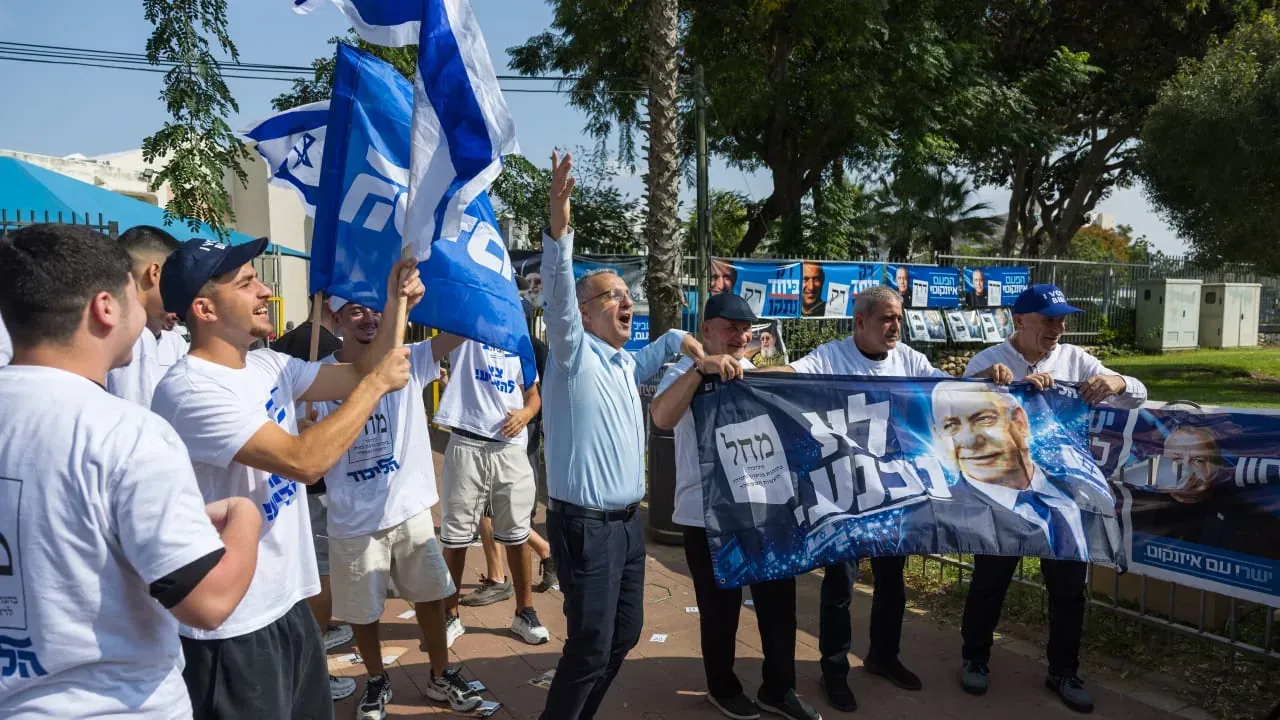 Photo: The Jerusalem Post
Key points
Israel's election saw record turnout of 66.7% of eligible voters by 6pm local time on Tuesday, a 9% increase over the last election, as Netanyahu fought to retain power against Gadi Eisenkot.
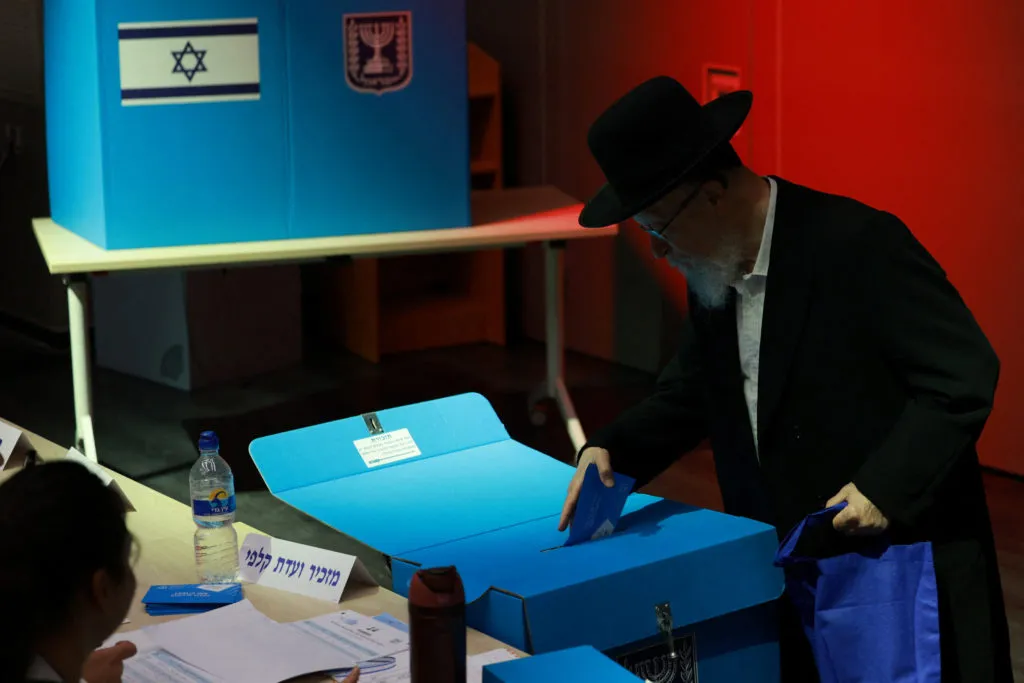
Israelis turned out in record numbers on Tuesday to vote in a closely contested election that could determine the political future of Prime Minister Benjamin Netanyahu. By 6pm local time, 66.7% of eligible voters had cast a ballot, a 9% increase since the last election in 2022, according to an hourly turnout update. Voting was scheduled to continue until 10pm local time, with long queues reported outside polling stations across the country.
The election is the first since the Hamas-led attacks on Israel in October 2023, which killed around 1,200 people and saw 251 others taken hostage. The subsequent wars in Gaza, Lebanon and Iran have become central issues in the campaign. Netanyahu, Israel's longest-serving prime minister with 19 years in office, has defended his record, calling himself the only leader with the mettle to face down Israel's foes. His right-wing coalition has faced criticism over security failures, its policies towards Palestinians and Israel's growing international isolation.
What the turnout figures show
Netanyahu is facing a challenge from Gadi Eisenkot, a former military chief of staff and security hawk seeking to unite opposition parties across the political spectrum. Opinion polls have indicated a close contest, with neither side having a clear path to securing a governing majority in Israel's 120-seat parliament. The country's fragmented political system means that forming a coalition could prove as challenging as winning the election itself. Most polls show Netanyahu's Likud and his current coalition partners losing their majority, with a clear anti-Netanyahu majority among opposition seats.
Figures from the Central Elections Committee point to exceptionally high voter participation nationwide. By 10am, 16.68% of eligible voters had cast their ballots, the highest turnout recorded at that hour since 1981. By noon, national turnout had reached 31.5%, compared with 28.4% at the same time during the elections for the 25th Knesset, an increase of 3.1 percentage points and the highest turnout at that hour since 1977. The early figures were presented at a press conference at the Knesset's command center by Adv. Din Livne, acting director-general of the Central Elections Committee.
The trend continued into the afternoon. By 2pm, turnout had reached 44.9%, compared with 38.9% in the previous election, an increase of six percentage points and the highest rate recorded at that hour since at least 1973. 55.7% of eligible voters had cast their ballots within the first nine hours of polling, marking a record turnout for that point in the day. As of 6pm local time, turnout reached 66.7%, a 9% increase since the last election in 2022.
Where the numbers came from
Likud officials describe a particularly worrying picture about turnout in their own strongholds. As of noon, turnout in Bat Yam, considered a Likud stronghold, stood at just 23%. Turnout was approximately 24% in Kiryat Shmona, 25% in Nof HaGalil, and 27% in Kiryat Malachi. These figures reflect overall turnout in each locality and do not indicate how many Likud supporters have voted. One official said, "There isn't even a single encouraging sign," while another warned that repeated gevalt calls reminded voters of "the boy who cried 'Wolf, wolf.'"
The participation of Israel's Arab minority, which makes up about a fifth of the country's population, could influence the outcome. Polls published before the election estimated that turnout in Arab communities could reach approximately 60%–63%, up from around 56% in 2022. An analysis by the Stat-Net Institute found the number of polling stations in Arab localities is lower than in the previous election even though the number of eligible voters has increased, which may explain some of the long queues. Ahmed Tibi, a candidate from an Arab party, said record turnout from Israel's Arab minority would "pave the way for an alternative government and change the grave reality."
The Likud on Tuesday submitted a formal request to the Central Elections Committee for voting hours to be extended, citing congested polling stations nationwide. Ofer Winter's People of Israel, National Security Minister Itamar Ben-Gvir's Otzma Yehudit, and the haredi Shas party joined Likud's request for an hour-long extension. Shas Chairman Arye Deri said in a Tuesday statement, "I am very concerned about the apathy in the Haredi and right-wing strongholds." The decision can only be made by CEC Chairman Justice Noam Sohlberg.
The fight over voting hours
The Yashar party, led by Gadi Eisenkot, opposed Likud's request to extend voting hours. "No unusual incident has occurred to justify granting this request," the party stated, calling it intended to lay the groundwork for claims challenging the integrity of the election. Current rules already allow a voter to cast their vote past the polling time as long as they arrive at a station by 10pm.
Netanyahu has urged supporters to turn out in large numbers, warning that high participation among opposition voters and Israelis of Arab heritage could affect the result. "You all need to stream to the polls," he said, adding, "This is a fateful moment." In a video circulated on Tuesday, he warned about efforts by the change bloc to bring voters to the polls, saying, "We are in danger, because the left is flying its thousands of people thousands of kilometers so that they will come to the polling station."
Eisenkot expressed confidence the election could mark a turning point. "I am convinced that by the end of today, we will see a change — a new spirit for the State of Israel — that will serve as a rectification for the past three years and for that terrible day," Eisenkot said during a visit to kibbutz Nir Oz in southern Israel. He reiterated his commitment to dismantling Hamas' military and governing capabilities in Gaza within 18 months of forming a government. Opposition groups have pledged to establish a national inquiry into the October 7 security failures, a move resisted by Netanyahu's government.
If neither Netanyahu nor Eisenkot can assemble a governing coalition, Netanyahu could remain as caretaker prime minister until another election is held. His opponents have succeeded in removing him from office only once since 2009, after four inconclusive elections over two years, though he returned to power 18 months later. Palestinian politicians have indicated they might support a minority government of the Jewish Israeli parties in order to unseat Netanyahu's far-right coalition, though Eisenkot has ruled out partnering with Arab parties. The Central Elections Committee's decision on the extension request is expected shortly, with polls due to close at 10pm local time.
Frequently asked questions
What was the turnout in Israel's election?
By 6pm local time on Tuesday, 66.7% of eligible voters had cast a ballot, a 9% increase since the 2022 election and the largest turnout on record since the early 1970s. By 2pm, turnout had reached 44.9%, up six percentage points from the previous election.
Who is Netanyahu facing in the election?
Netanyahu faces a challenge from Gadi Eisenkot, a former military chief of staff seeking to unite opposition parties. Opinion polls indicate a close contest with neither side having a clear path to a governing majority in Israel's 120-seat parliament.
Why did parties request an extension of voting hours?
Likud, Shas, Otzma Yehudit and People of Israel requested a one-hour extension past 10pm, citing congested polling stations. The Yashar party opposed the request. Only CEC Chairman Justice Noam Sohlberg can decide whether to extend voting hours.