Japan launches MMX rocket to collect 10 grams from Phobos
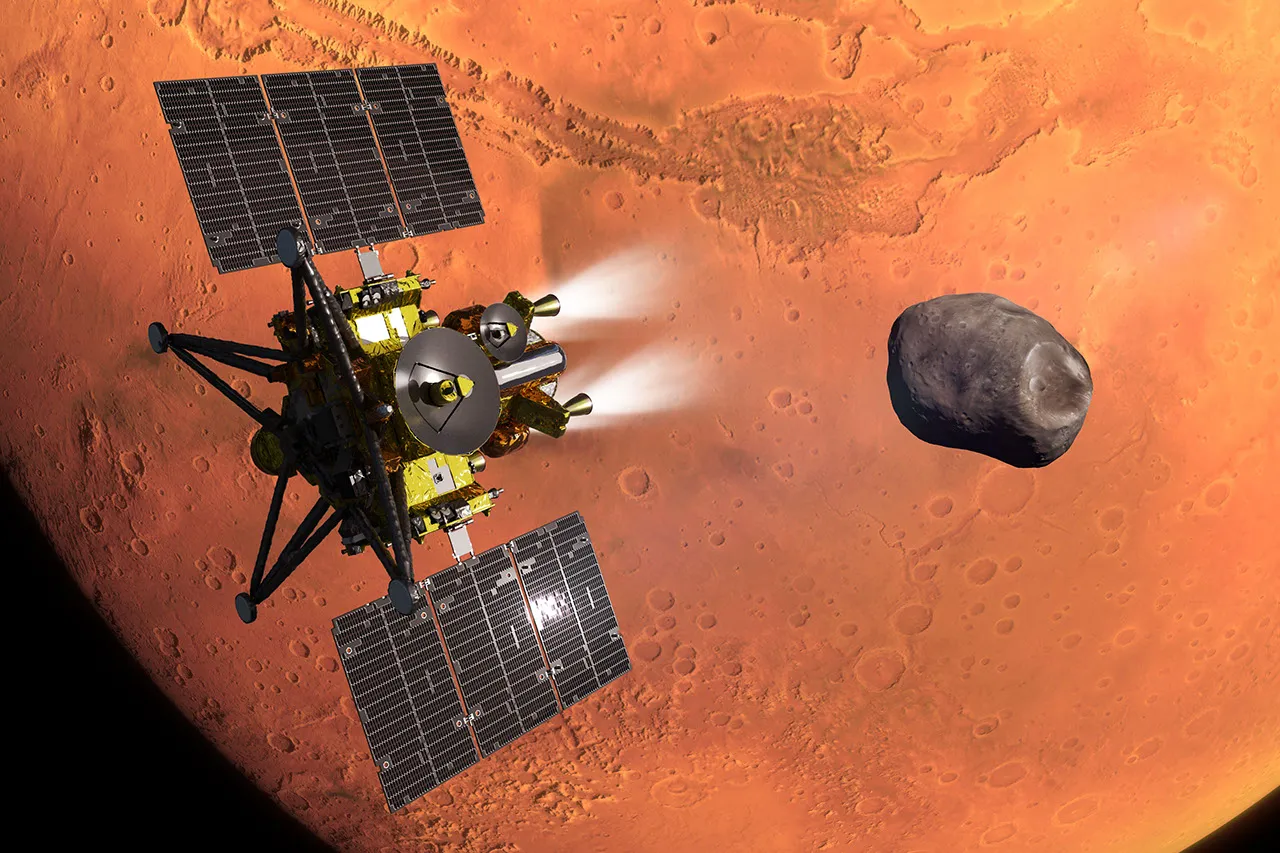
Japan launched the Martian Moons eXploration spacecraft toward Phobos on Monday, aiming to gather at least 10 grams of soil and return samples to Earth in 2031.
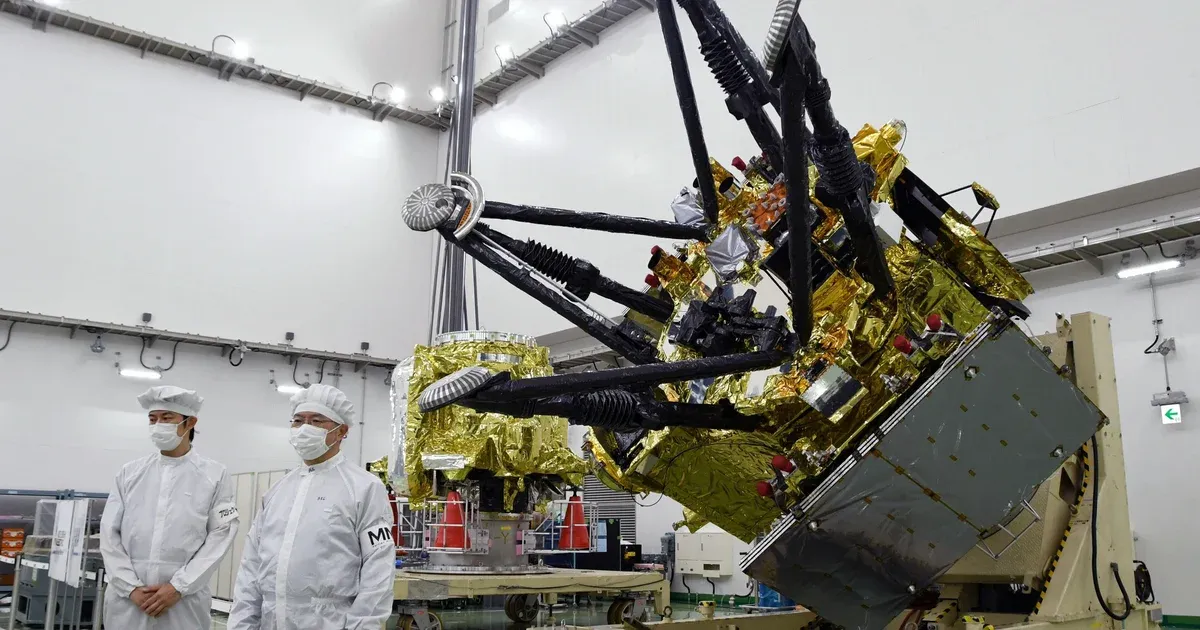 Photo: CBS News
Key points
Japan launched the MMX spacecraft toward Phobos to collect at least 10 grams of soil and return samples to Earth in 2031.
Japan launched an ambitious $350 million mission to Mars on Monday to study the red planet's two moons, dropping a small rover on the largest — Phobos — before the mothership touches down to collect soil samples for return to Earth. The Martian Moons eXploration spacecraft lifted off at 3:41 p.m. EDT (4:41 a.m. Japan time) from the Tanegashima Space Center.
The mission's primary goal is to determine whether Phobos and the smaller moon Deimos were created by the impact of a large body early in the solar system's history, or whether they are asteroids captured by Mars's gravity. Phobos measures just 17 miles across at its widest, while Deimos is less than half that size. Size and shape alone cannot settle the origin question.
Why Phobos soil matters
Thomas Statler, who helped oversee development of two NASA instruments aboard the spacecraft, said the two theories pull in opposite directions. "In some ways, they resemble asteroids from the outer part of the asteroid belt ... but there (are) other lines of evidence pointing to these moons being remnants of a giant impact early in Mars' history," Statler said. The samples should answer the question one way or the other.
The MEGANE instrument will measure neutrino particles and gamma rays emitted by Phobos to determine its elemental makeup. David Lawrence of Johns Hopkins University, who leads the MEGANE team, said more volatile elements such as hydrogen or potassium would lean toward the captured-asteroid hypothesis, while fewer volatiles would support the impact idea. "We know nothing about Phobos' elemental composition," Lawrence said.
One hour and 11 minutes after liftoff, following two firings of the upper stage engine, the 9,900-pound MMX probe was released to fly on its own. The spacecraft will brake into orbit around Mars in September 2027 on a trajectory that allows it to circle the planet in lockstep with Phobos, then spend three years training instruments on the moon and its environment.
How the spacecraft reaches Phobos
A 55-pound rover supplied by the German and French space agencies is set to land on Phobos in early 2029. With Phobos's gravity just 1/1,000th as strong as Earth's, the rover has no braking rockets and is expected to bounce down and tumble to a stop, then right itself. Yaji Kentaro of the MMX project team said the low gravity raised concerns the rover might tip over, so its landing legs were designed for a stable touchdown.
About a year after the rover's landing, in the 2030 timeframe, the MMX spacecraft itself will touch down on Phobos once and possibly twice to collect soil using two devices, one built by JAXA and the other supplied by NASA. The official mission requirement is at least 10 grams, or less than half an ounce. Two sampling methods serve as a safeguard in case one fails, said Kiyoshi Kuramoto, who leads the mission's international scientists.
Researchers have attempted similar journeys for decades. Since the 1980s, Russia has sent three probes to Phobos, all of which failed. Kuramoto said scientists cannot pick a landing spot until they take close-up observations of the moon, because little is known of its surface. "Returning samples from a Martian moon is a world-first challenge that is not easy," Kuramoto said.
Two ways to grab soil
After collecting samples, the spacecraft will observe Deimos before beginning a year-long journey back to Earth. The Phobos samples will be placed in an aerodynamic, heat-resistant capsule that re-enters the atmosphere over Australia. The capsule is expected to land in Woomera, in remote South Australia, where an international team of researchers will retrieve and study the material.
The mission is expected to return samples to Earth in 2031, which would make them the first ever samples returned from a moon other than our own. Researchers suspect Phobos's surface soil contains Martian material, and analysing it could clarify how the planet evolved over billions of years. Abigail Fraeman of NASA's Jet Propulsion Laboratory said the return samples will settle the open questions.
Where the capsule lands
JAXA has a record of successful sample-return missions. Its Hayabusa mission became the first to return a sample from a near-Earth object, bringing back material from asteroid Itokawa in 2010, and Hayabusa2 delivered samples from Ryugu in 2020. Many Hayabusa2 members helped design MMX, though Kuramoto noted Phobos's orbit and gravity differ from Ryugu's. The mission involves scientists from NASA, the European Space Agency, and Germany's and France's space agencies.
Frequently asked questions
What is Japan's MMX mission trying to do?
The Martian Moons eXploration mission will land on Phobos, collect at least 10 grams of soil, and return the samples to Earth in 2031 to determine whether Phobos and Deimos are captured asteroids or debris from a collision with Mars.
When will the MMX spacecraft reach Phobos?
The spacecraft will enter orbit around Mars in September 2027, spend three years studying Phobos, drop a rover in early 2029, and land on Phobos itself in the 2030 timeframe to collect samples.
Where will the Phobos samples land on Earth?
The re-entry capsule is expected to land in Woomera, in remote South Australia, where an international team of researchers will retrieve the sand and rock samples for study.