Judge Cooper blocks Trump's second birthright citizenship order
US District Judge Christopher Cooper issued a preliminary injunction on Wednesday against Trump's August executive order, ruling the president cannot add exceptions to birthright citizenship.
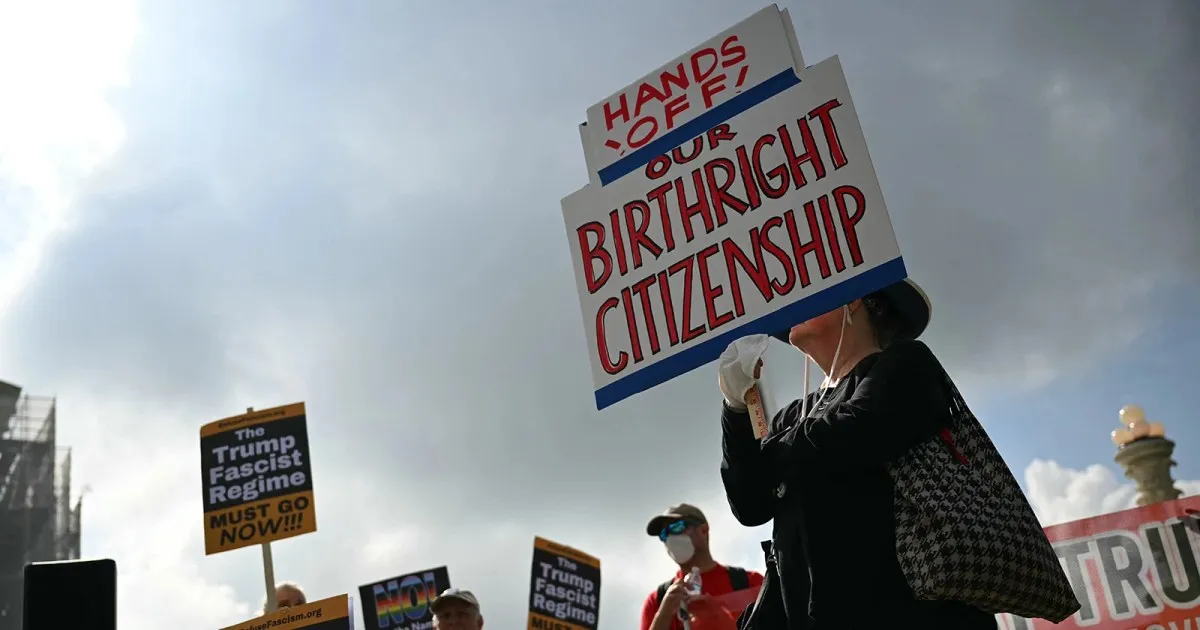 Photo: MS NOW
Key points
A federal judge blocked Trump's second birthright citizenship order, ruling the president cannot create new exceptions to the constitutional guarantee.
US District Judge Christopher Cooper on Wednesday blocked President Donald Trump's second executive order limiting birthright citizenship, issuing a preliminary injunction in a 67-page ruling. Cooper, an Obama appointee sitting in Washington, found that the president cannot create new exceptions to the constitutional guarantee. The order Trump signed in August sought to withhold citizenship from additional groups of children born in the United States.
The ruling is the second federal defeat for Trump on the issue this year. In a 6-3 decision in June, the Supreme Court struck down his first executive order limiting birthright citizenship. Cooper wrote that the ink on that decision had scarcely dried when Trump issued a second order seeking further restrictions. The new injunction stops enforcement against a certified class of children.
Three exceptions the court kept
Cooper set out the boundaries the Supreme Court drew. He wrote that the June opinion reaffirmed that birthright citizenship extends to all but three narrow categories of children, each long understood to be beyond the nation's governing authority at birth. Those are children of foreign officials with full diplomatic immunity, children of enemy forces in hostile occupation of US territory, and children born aboard foreign public ships.
Trump's August order tried to go further. Cooper described it as targeting children whose parents work for foreign governments or international organisations but lack diplomatic immunity, children born through commercial surrogacy arrangements, and children with a parent suspected of membership in certain gangs or terrorist organisations. The judge found the president cannot carve out such exceptions for children born within the United States and subject to its laws.
The constitutional text at the centre of the case is the 14th Amendment's citizenship clause. It states that all persons born or naturalised in the United States, and subject to the jurisdiction thereof, are citizens of the United States and of the state wherein they reside. Cooper wrote that the clause promises citizenship to practically all children born in the United States, a rule he said is codified in the Immigration and Nationality Act.
What the second order targeted
Cooper traced the rule's origins to English common law and called it deeply rooted in the legal tradition. He quoted the Supreme Court's 1958 decision in Perez v. Brownell: "Citizenship is man's basic right for it is nothing less than the right to have rights." He added that the Supreme Court kept the promise earlier this year and that his court does so again by enjoining the order's application to the certified class.
The case before Cooper is Nathan v. Trump, brought in September by the American Civil Liberties Union, the Legal Defense Fund, the Asian Law Caucus and the Democracy Defenders Fund. The groups challenged the administration's latest attempts to deny birthright citizenship to children born under certain circumstances. Cooper certified a broad class covering children who are or will be unlawfully denied citizenship under the order.
Cody Wofsy, deputy director of the ACLU's Immigrants' Rights Project, welcomed the ruling. "Enough is enough," he said in a statement. He said the Supreme Court has twice rejected efforts to gut birthright citizenship, in 1898 and again earlier this year, adding: "Third time is not the charm, and the president needs to accept that birthright citizenship is the law of the land."
Appeal and class certification
Cooper also denied the administration's request for a stay pending appeal, which it had made in advance of his ruling. That denial means the injunction takes effect while any appeal proceeds, rather than being suspended. The administration has not said publicly whether it will appeal the decision to a higher court.
One account of the order's focus differs from the others. A report on the ruling said the revised executive order centred on birth tourism, the practice of travelling to the United States to give birth to secure citizenship for the child, and stated that the practice is currently illegal. Cooper's opinion, as described in the other accounts, addressed foreign workers, surrogacy and gang or terrorist suspicions.
The White House has not accepted the earlier rulings. White House chief of staff Stephen Miller is among administration officials and Republican allies who want to redefine the 14th Amendment's birthright citizenship principle. Trump's first order was struck down in June; the second was signed in August and blocked on Wednesday. Each round has moved through the same Washington court.
The next step is the appeal. Cooper declined to pause his injunction while the administration challenges it, so the order stays blocked unless a higher court intervenes. The case is Nathan v. Trump in the US District Court for the District of Columbia, and any appeal would go to the US Court of Appeals for the District of Columbia Circuit.
Frequently asked questions
What did Judge Christopher Cooper rule?
Cooper issued a preliminary injunction blocking Trump's August executive order limiting birthright citizenship. He found the president cannot carve out new exceptions to birthright citizenship for children born in the United States and subject to its laws.
What were the three exceptions the Supreme Court allowed?
Cooper said the June ruling kept exceptions for children of foreign officials with full diplomatic immunity, children of enemy forces in hostile occupation of US territory, and children born aboard foreign public ships. All other children born on US soil are citizens at birth.
Who brought the lawsuit?
The American Civil Liberties Union, the Legal Defense Fund, the Asian Law Caucus and the Democracy Defenders Fund filed Nathan v. Trump in September. Cooper certified a class of children who are or will be unlawfully denied citizenship under the order.