Khamenei vows unrestricted response to any US or Israeli strikes
Iran's Supreme Leader Mojtaba Khamenei warned on 31 October 2026 that any threat would draw an immediate, geographically unrestricted response, ordering commanders to expand Iran's target list to all American and Israeli assets.
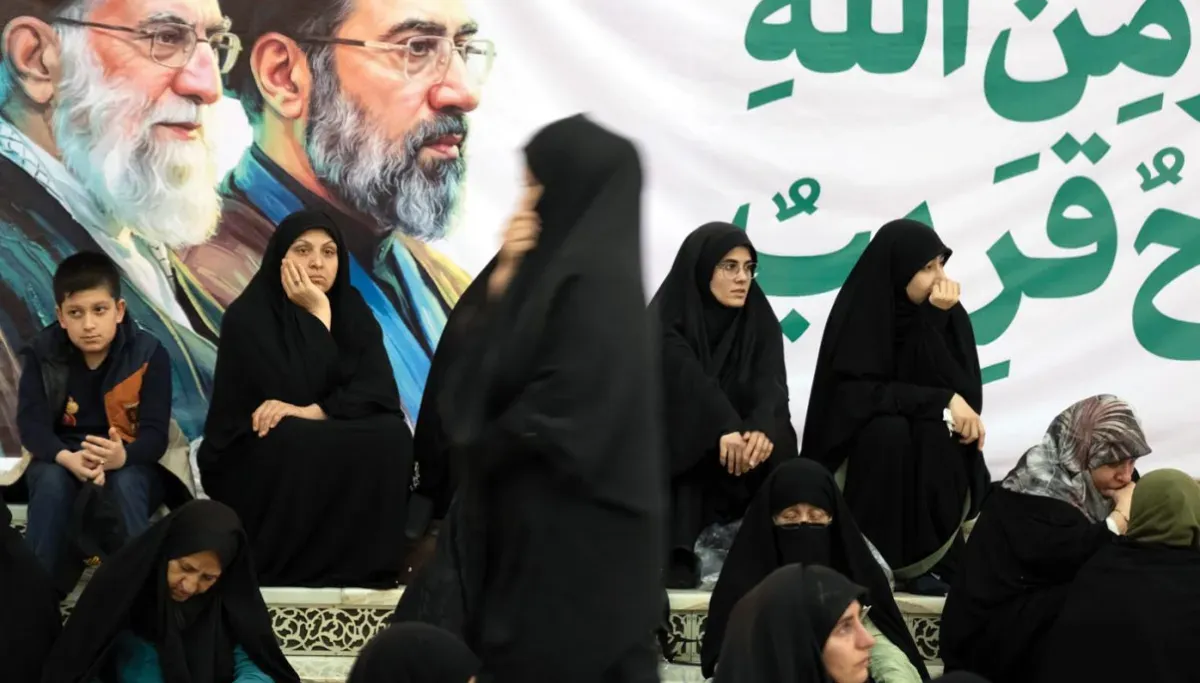 Photo: Washington Examiner
Key points
Iran's Supreme Leader Khamenei warned on 31 October 2026 that any US or Israeli threat would be met with an immediate, geographically unrestricted response and an expanded target list.
Iran's Supreme Leader Mojtaba Khamenei warned the United States and Israel on 31 October 2026 that any threat would draw an immediate, geographically unrestricted response, and ordered commanders to expand Iran's target list to include all tangible and intangible assets belonging to the American-Zionist enemy. Khamenei delivered the warning to top military commanders in a meeting, according to a statement.
Khamenei's vow matters because it removes any stated limit on where Iran would strike next, and it lands as the United States weighs fresh military action after its midterm elections. The United States and Israel have already struck Iran this year, and Iran responded with attacks on American assets across the region. Khamenei's order to broaden the target list signals a wider range of potential targets than Iran has previously named.
What the meeting changed
The meeting was the first reported encounter between Khamenei and his military top brass since he took power, and it included armed forces chief of staff Ali Abdollahi, army chief Amir Hatami, and Revolutionary Guards commander Ahmad Vahidi. Khamenei has not been seen publicly since before he took the helm in March, after the killing of his father Ayatollah Ali Khamenei in US-Israeli strikes.
Khamenei said Iran's military target list would be updated comprehensively so that all physical and non-physical assets of the US-Zionist enemy are brought within the reach of Iran, according to the Washington Examiner. He also wrote that a new order would increasingly lay the groundwork for unity among Muslim nations and governments and the formation of the New Islamic Civilization, in a statement to X.
The war began on 28 February with US-Israeli strikes on Iran, and the Islamic republic swiftly responded with attacks on American assets in countries around the region. Since the outbreak of the war, Tehran has restricted shipping through the Strait of Hormuz, which normally carries around one-fifth of global oil consumption. The blockade has caused a spike in global energy prices, making the war unpopular among the US public ahead of midterm congressional elections on Tuesday.
Where the numbers came from
US Secretary of State Marco Rubio said on 31 October that President Donald Trump had not yet made a decision about fresh strikes, speaking at a G20 press conference in Atlanta, Georgia. Trump has warned of fresh military action after the US holds midterm elections early next week, saying last weekend that he was weighing whether to finish them off. In Israel, Prime Minister Benjamin Netanyahu has spoken of a historic, one-time opportunity to topple the Iranian government.
Diplomatic efforts are underway to avert a resumption of fighting. Qatari mediators spent 12 hours in Tehran on Friday trying to prevent another military escalation and remained in regular contact with the White House, and a US delegation is set to join indirect talks in Qatar. A preliminary draft framework stated that Iran could transfer its stockpile of highly enriched uranium to an agreed third country, and that the Strait of Hormuz would reopen within seven days of an initial agreement.
Iran's leadership is not currently pursuing talks with Washington. Foreign Minister Abbas Araghchi said on 31 October that there are currently no plans for meetings with American officials, and that Iran's conditions are clear, with consultations regarding them ongoing among mediators. Araghchi confirmed Iran received a letter from US Vice President JD Vance, calling the American side's effort to open a dialogue a positive step, while warning on X of an earth-shattering blow Iran's armed forces would deal against those who dare harm our people.
What happens next
Army spokesman Mohammad Akaraminia said on 31 October that any resumption of hostilities would only expand the scope of the war, writing on social media that the flames of war will undoubtedly engulf a much wider geographical area. Iran has previously warned it would consider severing undersea cables in the Strait of Hormuz. Araghchi said there would no longer be any red lines.
US Senator Chris Murphy, a Democrat from Connecticut, posted on X this week that Trump is reportedly planning to restart war with Iran after the election, and that while he could not disclose any details, the plan is insane. An earlier preliminary agreement reached by the US and Iran with the help of mediators in June fell apart within weeks.
Khamenei warned the United States and Israel on 31 October against launching new attacks, following threats to resume strikes after elections in both countries. Israel voted on Tuesday but has yet to form a new government, leaving the make-up of the next administration unclear. The US midterm elections are scheduled for Tuesday, and gains for the opposition Democrats could restrict Trump's ability to enact policy.
Frequently asked questions
What did Khamenei warn the US and Israel about?
On 31 October 2026, Iran's Supreme Leader Mojtaba Khamenei told top military commanders that any level or type of threat must be met with an immediate, impactful and geographically unrestricted response, and ordered Iran's target list updated to include all tangible and intangible assets belonging to the American-Zionist enemy.
Has Trump decided on new strikes against Iran?
US Secretary of State Marco Rubio said on 31 October that Trump had not yet made a decision about fresh strikes, speaking at a G20 press conference in Atlanta, Georgia. Trump has warned of fresh military action after the US midterm elections.
Are US and Iran talks still happening?
A US delegation is set to join indirect talks in Qatar, and Qatari mediators held 12 hours of talks in Tehran on Friday. But Iranian Foreign Minister Abbas Araghchi said on 31 October there are currently no plans for meetings with American officials.