Lagarde resigns as ECB president, leaving post on 7 February 2027
European Central Bank President Christine Lagarde announced on 29 October 2026 she will step down on 7 February 2027, nine months before her eight-year term ends in October 2027, opening a succession race.
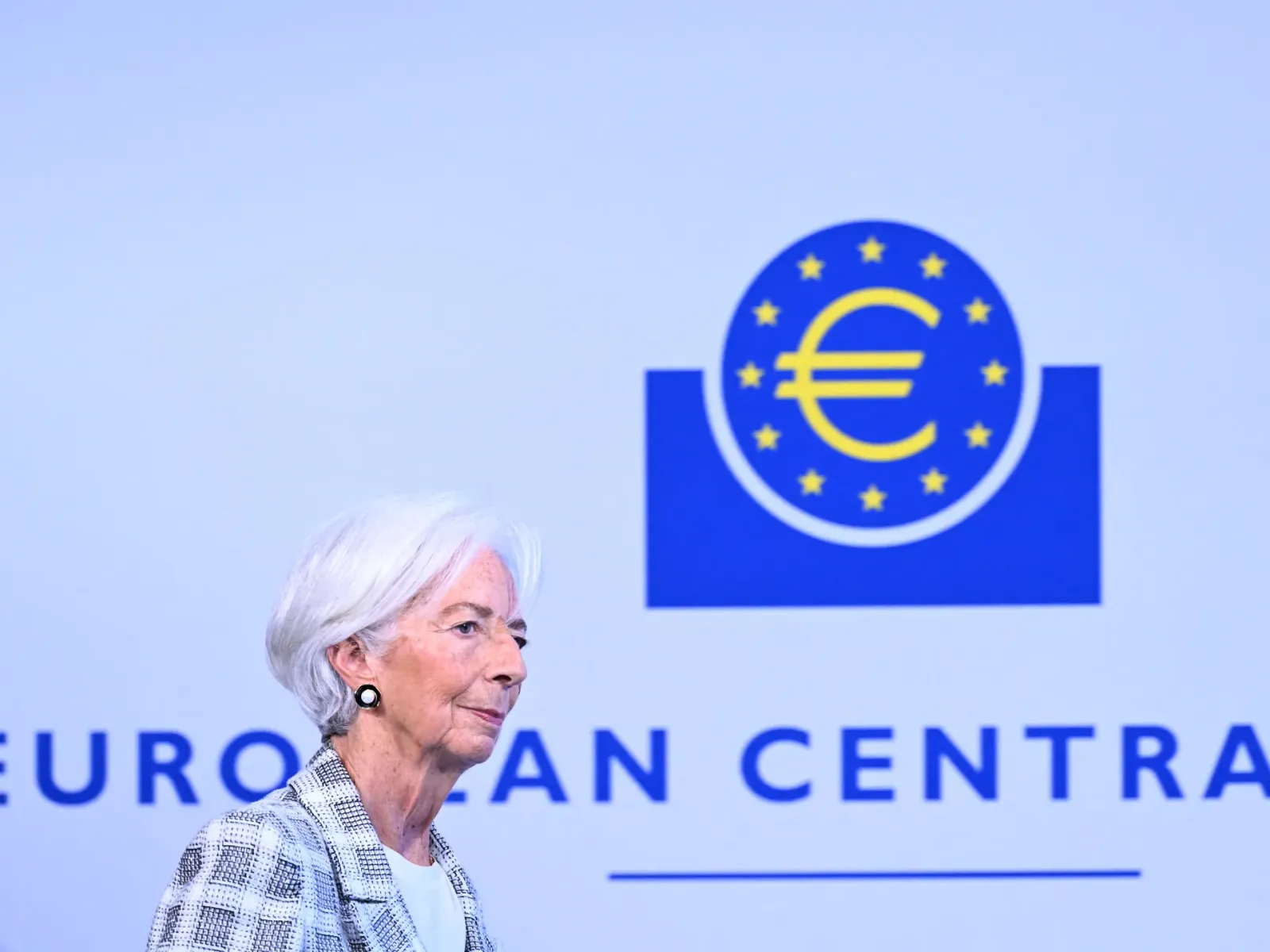 Photo: Al Jazeera
Key points
ECB President Christine Lagarde announced on 29 October 2026 she will resign and step down on 7 February 2027, nine months before her term ends.
European Central Bank (ECB) President Christine Lagarde announced on 29 October 2026 that she will resign and step down on 7 February 2027, about nine months before her eight-year term was scheduled to end in October 2027. The ECB said in a statement that Lagarde informed its Governing Council and European Council President António Costa of the decision.
The early departure opens a vacancy at the helm of the eurozone's central bank well before France's presidential election, giving the leaders of the 21 eurozone countries time to agree on a successor. Lagarde, a former French finance minister and head of the International Monetary Fund, arrived in Frankfurt in 2019 as the first ECB chief without formal economics training or central banking experience.
What the resignation changes
In a filmed statement posted on X, Lagarde said she was leaving "with a sense of good work done and an ECB that is fit for the future." At her regular press conference on 29 October, after the ECB left its key interest rates unchanged, she said she wanted "the freedom of speech, the freedom of expression, and the freedom to engage on matters that are not monetary policy matters."
Lagarde said her ECB role obliged her to stay neutral on "principles close to my heart," adding: "I don't think that I can be comfortable in that neutrality at the present time." Sources told the AFP news agency that leaving early would give Lagarde "greater freedom to express her views." She has hinted she could campaign in the French presidential race, saying a European voice was needed in the debate.
The succession contest centres on former Dutch central bank chief Klaas Knot and Pablo Hernández de Cos, head of the Bank for International Settlements, both seen as frontrunners. Joachim Nagel, president of the Deutsche Bundesbank, has also put himself forward, though Germany has never provided the ECB's president in the central bank's more than 25-year history.
A crowded succession field
The vacancy arrives alongside other leadership changes. Isabel Schnabel, an ECB Executive Board member, will move to the International Monetary Fund in Washington in early January 2027, freeing a seat on the six-member board.
German Chancellor Friedrich Merz said a decision would be taken by year-end. The biggest obstacle to a German successor, blue News reported, is that the European Commission is already led by a German, Ursula von der Leyen, making two Germans at the helm of major European institutions hard to justify.
Why the timing matters for France
The timing allows current European Council members, including French President Emmanuel Macron, to take part in appointing Lagarde's successor before France's presidential election. Marine Le Pen, the National Rally leader, is well ahead in polls. Holger Schmieding of Berenberg Bank said the EU is trying to guard against the risk that Le Pen wins.
Markets appeared unfazed. Simon Dangoor of Goldman Sachs said that institutional behaviour is likely to outlast Lagarde and be similar whoever takes over. Marcel Fratzscher of the German Institute for Economic Research said the early exit gives governments an opportunity to appoint a successor who will protect the ECB's independence.
German member of the European Parliament Markus Ferber warned that if the impression arises that a departure is timed around national elections, it damages trust in an institution that must stand above domestic political calculation. Jean-Luc Mélenchon of France Unbowed protested that Macron had engineered a similar situation at the Bank of France.
Whoever succeeds Lagarde will inherit tense European bond markets, with borrowing costs at their highest level in years and inflation running at almost double the bank's 2 percent target. Lagarde warned that countries with high debt must factor higher interest rates into their fiscal policy plans. Lagarde succeeded Mario Draghi at the ECB in 2019.
Frequently asked questions
When will Christine Lagarde leave the ECB?
Lagarde informed the ECB Governing Council and European Council President António Costa that she will step down on 7 February 2027, about nine months before her eight-year term ends in October 2027.
Who could succeed Lagarde as ECB president?
Former Dutch central bank chief Klaas Knot and Bank for International Settlements head Pablo Hernández de Cos are seen as frontrunners. Deutsche Bundesbank president Joachim Nagel has also put himself forward.
Why is the timing of Lagarde's resignation significant?
The February 2027 departure lets eurozone leaders settle the successor question before France's presidential election, where polls show Marine Le Pen favoured to win, and before Macron leaves office in spring 2027.