Le Pen launches French campaign before 10,000 in Orleans
Far-right leader Marine Le Pen formally launched her French presidential campaign in Orleans on 25 October 2026, addressing about 10,000 supporters a day after nationwide cost-of-living protests turned violent.
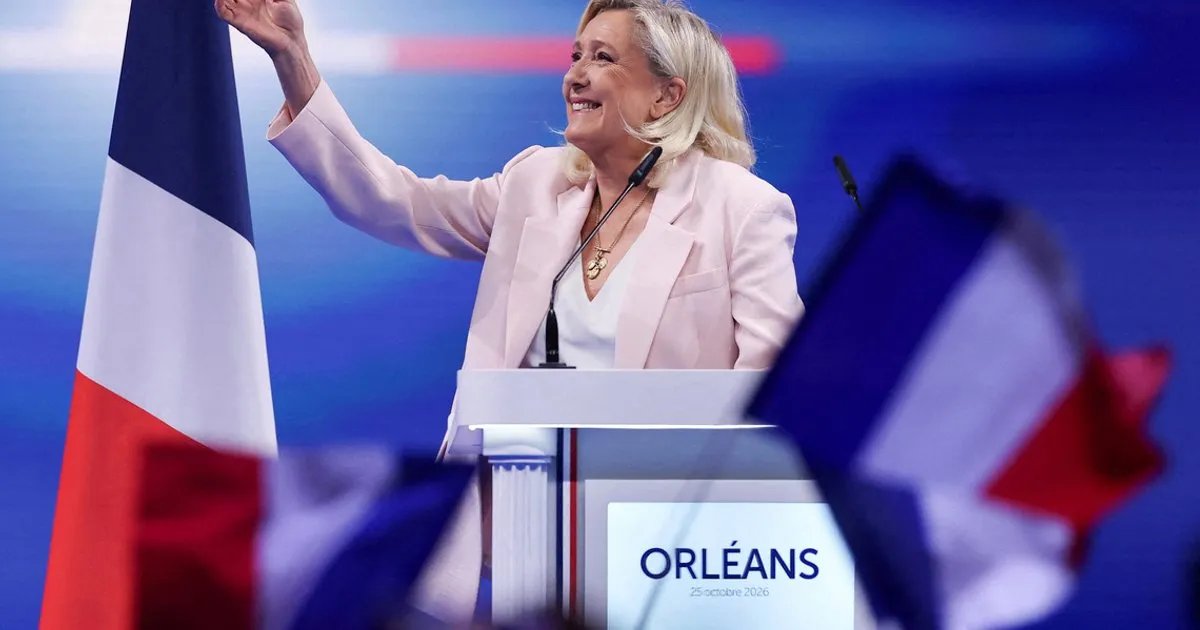 Photo: The Straits Times
Key points
Marine Le Pen formally launched her French presidential campaign in Orleans on 25 October 2026, addressing about 10,000 supporters with pledges of order, security and economic renewal.
Far-right leader Marine Le Pen formally launched her French presidential campaign in Orleans on 25 October 2026, promising to restore order and national confidence. She addressed some 10,000 cheering supporters in the city of Joan of Arc, a day after nationwide cost-of-living protests flared again into violence. Le Pen is the frontrunner in next year's French presidential election.
Why Orleans and why now
The launch matters because France is living through one of its most turbulent periods in years, with mass protests over living costs and inequality last weekend descending into looting and vandalism. Le Pen cast herself as best placed to navigate what she described as mounting economic, social and security crises, and the street turmoil has given her a measurable boost in the polls.
Le Pen chose Orleans deliberately: the city is home to Joan of Arc, the 15th-century warrior heroine revered by nationalists as a symbol of patriotism and sovereignty. She built her speech around the theme of a national renaissance, arguing France was living through upheaval but would emerge stronger if it embraced her vision of security, prosperity and renewal.
On security, Le Pen promised zero tolerance policing and said restoring security was the state's first duty. She pledged a hard line on immigration, vowing to restore border controls, automatically expel foreign criminals, and crack down on gangs and drug traffickers. She also condemned what she called Islamist ideologies that promote violence, saying they are incompatible with France.
What Le Pen promised voters
On the economy, Le Pen pledged spending restraint, lower business taxes, reduced bureaucracy and support for industry, innovation and artificial intelligence. She rejected further increases in the retirement age. On Europe, she stopped short of advocating a French exit from the European Union, but said she would roll back Brussels' influence, restore national control over borders and laws, and put French interests first, including avoiding foreign wars.
An opinion poll published on 25 October 2026 put Le Pen on 32% to 33.5%, well ahead of her nearest rival, hard-left leader Jean-Luc Melenchon on 17%, as voters desert mainstream parties for the political extremes. Surveys suggest she would easily defeat Melenchon in a run-off ballot, expected to be held in early May. The unrest has fed her standing, with weeks of protest benefiting her in the polls.
The poll numbers behind her lead
The congress was designed to showcase unity at the top of the National Rally party, with Jordan Bardella re-elected party president and presented as Le Pen's choice for prime minister. Bardella's speech was interrupted by activists from a Jewish student union, drawing attention to recent accusations he made antisemitic comments in his youth, which he denies.
Le Pen carries her own legal overhang: she could have to campaign wearing an ankle tag after she was convicted of embezzling European Parliament funds, and she is appealing the court verdict. She has spent more than a decade transforming the party she inherited from her father, Jean-Marie Le Pen, in 2011, softening its image and broadening its appeal.
Party unity and legal overhang
Le Pen closed her address with optimism, telling the crowd things were good before and will be better tomorrow, and saying the future belongs to us before leading flag-waving supporters in singing the national anthem. The next dated marker is the run-off ballot, expected to be held in early May.
Frequently asked questions
Where and when did Marine Le Pen launch her presidential campaign?
Marine Le Pen formally launched her campaign in Orleans on 25 October 2026, addressing some 10,000 supporters in the city home to Joan of Arc, a day after nationwide cost-of-living protests flared into violence.
How far ahead is Le Pen in the polls?
An opinion poll published on 25 October 2026 put Le Pen on 32% to 33.5%, well ahead of hard-left leader Jean-Luc Melenchon on 17%. Surveys suggest she would easily defeat Melenchon in a run-off expected in early May.
What did Le Pen promise on security and immigration?
Le Pen promised zero tolerance policing, said restoring security was the state's first duty, and pledged to restore border controls, automatically expel foreign criminals, and crack down on gangs and drug traffickers.