Massive waves batter Northern California coast, flooding beaches and roads
Waves up to 60 feet hit Northern California on 14 November, flooding Pacifica's Taco Bell and closing Highway 1.
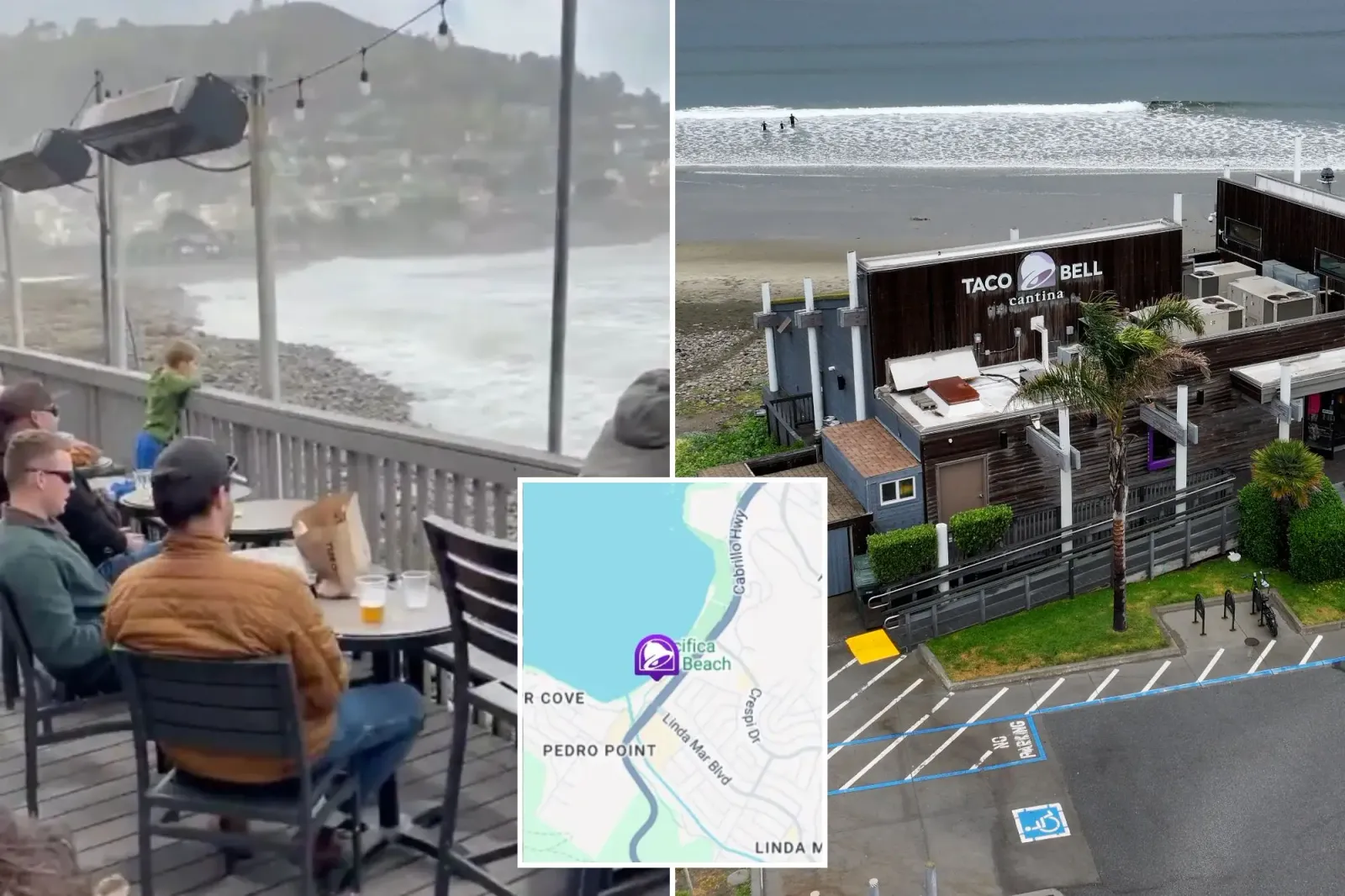 Photo: New York Post
Key points
Massive waves up to 60 feet hit Northern California on 14 November, flooding the Pacifica Taco Bell and closing Highway 1.
Massive waves up to 60 feet battered the Northern California coast on 14 November, flooding the beachfront Taco Bell Cantina in Pacifica and closing parts of Highway 1. The National Weather Service warned of breaking waves reaching 25 to 35 feet along exposed beaches, with 50-to-60-foot monsters possible at Mavericks in nearby Half Moon Bay. No injuries were reported.
The Taco Bell Cantina, located directly on the sand at Pacifica State Beach, found itself in the ocean's crosshairs Saturday as monster waves sent rocks, kelp and seawater surging toward the oceanfront fast-food mecca. Diners stuck it out on the patio as the waves rolled in, according to a video posted by San Francisco Chronicle investigative reporter Matthias Gafni.
Taco Bell in the crosshairs
The restaurant escaped major structural damage thanks to a relatively low tide during the peak surge. But nearly a foot of floodwater covered parts of adjacent Highway 1, blocking vehicles from entering its parking lot. Unpredictable sneaker waves swept completely into the parking area, catching spectators off guard. The waves were reportedly the biggest to hit the Bay Area in more than a decade, according to the New York Post. Beachgoers scrambled as sneaker waves flooded the restaurant's parking lot. One fan declared on social media, "We must protect historical landmarks like the Pacifica Taco Bell from 60 foot monster waves."
The restaurant, nicknamed "the most beautiful Taco Bell in the world," features ocean views, a walk-up surf window and alcoholic Baja Blast freezes. Its wooden building began life as an A&W in 1972, became a Taco Bell in 1985 and was remodeled into a Cantina in 2019. Fans pleaded on social media for the National Guard and FEMA to intervene, with one saying, "If we lose the Pacifica Taco Bell Cantina, we riot."
Wave heights and warnings
High surf and coastal flooding battered Northern California from Thursday through Saturday, sending massive waves crashing onto shorelines in San Francisco, Pacifica and Santa Cruz. The storms are fueled by an atmospheric river, which brings in widespread rain, high elevation snow and gusty conditions, as reported by weather.com.
The National Weather Service in Medford, Oregon, urged mariners to remain in port during the period of extremely dangerous weather. "Mariners are urged to remain in port during this period of extremely dangerous weather, secure vessels and continue to monitor forecasts for updates," the service said on Thursday morning. Boating is ill-advised this weekend, and the risk of drowning in coastal waters is very high.
High tides combined with the elevated water levels from El Niño could create multiple feet of coastal flooding during each of these storms, according to weather.com. Coastal debris, including logs from evergreen trees, could become projectiles in cresting waves. This debris has killed and seriously injured people on the beaches in the past, according to the National Weather Service in Portland, Oregon.
Storms to continue
Rainfall totals are expected to range from 3-6 inches in southern Oregon, far Northern California, in the northern Sierra Nevada foothills and on Washington's Olympic Peninsula. Lower rainfall totals over an inch are likely from the Bay Area to western Washington and Oregon. Given that this is the first stronger storm system of the season, flooding is not expected and the rainfall will largely be beneficial.
The next storm will sweep southward through much of the West Coast on Sunday, according to weather.com. By Sunday morning, the heavy rain and high elevation snow will be hitting parts of Washington, Oregon and Northern California. By the evening, it will spread from the Bay Area to western Montana. The snowfall at this point will only be reserved for the highest peaks and not exceed a foot.
Later storm systems may increase chances of flooding, particularly near wildfire burn scars, where mudslides and debris flows become a greater threat. The risk for rip currents and sneaker waves will be higher than average through early in the week ahead. The storms will continue to bring waves as high as 30 feet in nearshore waters, potentially breaking to 50 feet at favored spots, most likely from Northern California to the Oregon coast.
The Taco Bell Cantina remains open, with one fan posting, "Vibes at the beachfront Pacifica Taco Bell Cantina remain high despite the waves closing nearby parking lots." The restaurant's fans continue to monitor the situation, with another saying, "If washed away, losing the Pacifica Taco Bell may be the most significant loss this El Nino season." The next storm is expected to approach Northern California on Wednesday.
Frequently asked questions
How high were the waves that hit Northern California?
Waves reached up to 60 feet at Mavericks in Half Moon Bay, with breaking waves of 25 to 35 feet along exposed beaches, according to the National Weather Service.
Did the Pacifica Taco Bell suffer damage?
The restaurant escaped major structural damage due to a relatively low tide during the peak surge, but nearly a foot of floodwater covered parts of adjacent Highway 1.
What caused the massive waves?
The waves were fueled by an atmospheric river, which brought heavy rain, high elevation snow, and gusty conditions to the West Coast. High tides combined with elevated water levels from El Niño contributed to coastal flooding.