OpenAI acquires Pierre Computer to expand Codex storage
OpenAI announced on 4 November 2026 it will acquire Pierre Computer Company, integrating Code Storage into Codex.
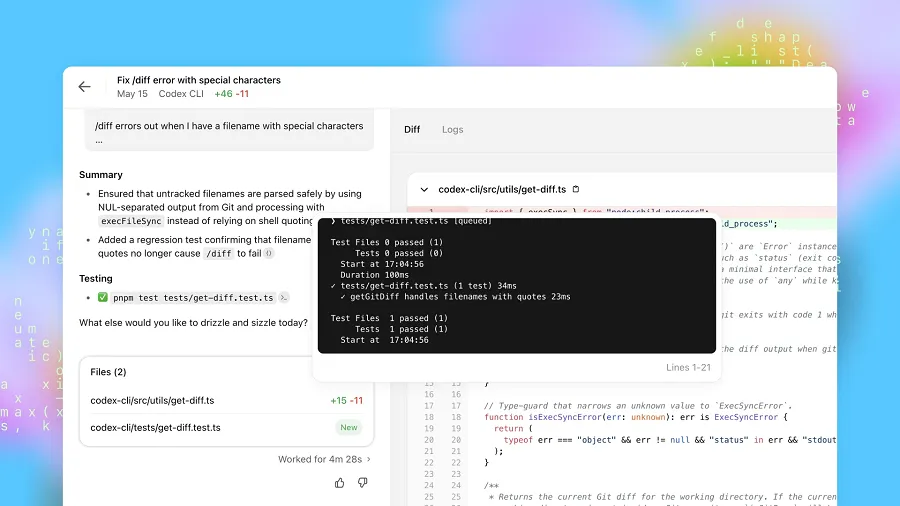 Photo: SiliconANGLE
Key points
OpenAI will acquire Pierre Computer Company, integrating its Code Storage product into Codex and continuing open-source libraries.
OpenAI Group PBC announced on 4 November that it will acquire Pierre Computer Company Inc., a developer tooling startup, to integrate its Code Storage product into the Codex programming tool. The terms of the deal were not disclosed. Observers positioned the acquisition as a challenge to Microsoft's GitHub for the age of AI agents.
Pierre operates a cloud service that AI agents use to store the code they generate, along with related files such as software licenses and interface design elements. According to Pierre, the service provides significantly better performance than competing technologies, helping one customer, AI startup Lovable Inc., cut code retrieval latency by about 70%.
What the acquisition adds
The acquisition builds on an existing relationship. Pierre's Trees and Diffs libraries already operate in the Codex app when users browse project files or review a change. Trees is designed for rapid file navigation, while Diffs shows what changed and includes an Edit mode that lets a reviewer correct a line directly where a problem appears.
OpenAI will continue to offer Trees and Diffs under an open-source license after the acquisition closes. Additionally, it plans to integrate the features of Pierre's paid code hosting service into Codex. In the longer term, the Pierre team will help OpenAI "ship new products and platforms." Code Storage is a distributed storage system built on Git, with application programming interfaces designed for machine use. The service supports native Git clone, push and fetch endpoints inside customer products, software-development kits for TypeScript, Python and Go, webhooks, and synchronization with GitHub, GitLab and Bitbucket.
How Code Storage works
Pierre says the service uses Git's three-phase commit protocol and a spoke-like, quorum-based architecture to provide durability and consistency for reads and writes at scale. Its published specifications include 30 or more concurrent writes, repositories as large as 32TB and Git LFS support, placing the product's emphasis on high-volume machine activity and large stored artifacts.
The service already has a commercial footprint. Pierre lists Lovable, Poke, Anything, Bolt, Amp and Parahelp among users storing generated code and other changing artifacts, including agent memory files, design material and legal documents. Its usage-based pricing distinguishes between hot data touched within seven days and colder data left untouched for longer.
The acquisition announcement explicitly connects the deal to OpenAI's 2 November disclosure of Pando, its in-house Git backend for engineers and agents. OpenAI says Codex-enabled parallel development increased branches, pushes, merges, fetches and clones, while its previous monorepo systems experienced slow fetches and pushes, failed merges and reliability that at times fell below 90%.
OpenAI's own Git scaling
Pando now powers all development in OpenAI's monorepo while retaining Git protocol and client compatibility. OpenAI reports that the system cut median push latency by nearly fivefold and delivers nearly a petabyte of Git data per day. It coordinates updates to branches independently and reuses Git packfiles across fetches, allowing writes to scale across branches and reads to be served through caches.
Built with Codex, Pando moved from kickoff to production in ten weeks and began serving production traffic in April 2026. The acquisition brings that scaling effort together with Pierre's storage and code-review products. OpenAI's longer-term ambition is for Codex to connect the code a company ships with the decisions its people make.
The acquisition has not closed. Completion remains subject to customary conditions, including regulatory approvals, and the two companies will stay separate and independent until then. Once it closes, OpenAI intends to bring Code Storage's features and functionality into Codex while allowing existing customers to continue using the service. The planned acquisition would give OpenAI a storage product with existing machine-oriented workloads alongside Codex, while Pando addresses the growth of parallel work inside its own monorepo. With both systems built around Git, the central consequence is a larger OpenAI role in the infrastructure beneath agent-generated software, where storing and serving concurrent work becomes part of the coding product itself.
Frequently asked questions
What is Pierre Computer Company?
Pierre Computer Company is a developer tooling startup that operates Code Storage, a cloud service for AI agents to store generated code and related files. It also develops open-source libraries like Trees and Diffs, which are used in OpenAI's Codex.
When will the acquisition close?
The acquisition has not closed yet. Completion is subject to customary conditions, including regulatory approvals. Until then, the two companies will remain separate and independent.
What will happen to Pierre's open-source projects?
OpenAI will continue to offer Pierre's open-source libraries Trees and Diffs under an open-source license after the acquisition closes. The company also plans to continue contributing to Pierre's open-source projects.