UK takes 32 government services offline after PHP flaws found
Two critical PHP vulnerabilities dubbed php2shell pushed 32 UK government services offline on 22 October, as the language powering 70% of websites faced mass patching worldwide.
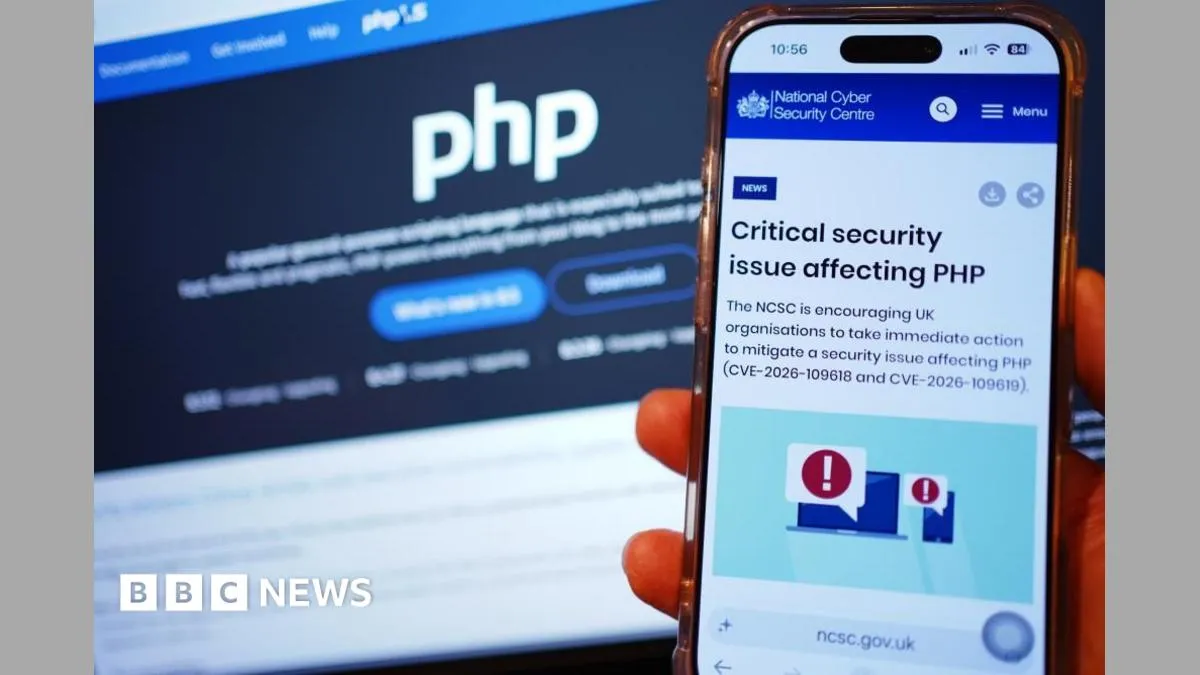 Photo: BBC News
Key points
Two critical PHP vulnerabilities forced 32 UK government services offline and prompted worldwide site shutdowns as operators patched the language that powers 70% of websites.
Two critical vulnerabilities in PHP, the programming language behind most websites, prompted a scramble to patch systems and take services offline. The UK government said 32 government services were unavailable and four partially unavailable, tech minister Baroness Lloyd of Effra told the House of Lords. Websites around the world were taken offline on Wednesday and Thursday after the PHP developers announced the flaws.
The UK government did not specify which services went offline but said no large public-facing critical services had been affected. Downing Street said some limited government services may be offline while security work was carried out. The government said its experts were working with international partners, and stressed that services being offline did not mean they had been hacked.
What the vulnerabilities allow
The PHP Foundation, the non-profit that maintains the language, warned that under the right conditions an unauthenticated attacker could remotely execute code on servers running PHP. James Sullivan, director of cyber and tech at the Royal United Services Institute in London, said this would let an attacker control a web server without a password, enabling data theft, data alteration, or further attacks.
Cyber-security firm Wiz, which helped uncover the vulnerabilities, said PHP powers 70% of the world's websites. The flaws, now called php2shell, are inherent in the language itself and affect many past versions. The PHP Foundation said the vulnerabilities had been known about since at least 2024, but competing fix approaches each had downsides and progress stalled.
The PHP Foundation took responsibility for not fixing the flaws sooner, saying the delay was a structural failure caused by its security team's decision process and lack of resources. Artificial intelligence agents helped uncover the vulnerabilities: OpenAI said it had led a coalition of researchers over two months, while Wiz researchers said they independently used AI to identify the flaws.
How AI found the flaw
Cloudflare chief executive Matthew Prince wrote on X that the company saw thousands of attempts to exploit the vulnerabilities in the 10 hours before the public announcement. That jumped to tens of thousands in the 45 minutes after the announcement, and to hundreds of thousands within two hours. Cloudflare has counted millions of attempts since, and Amazon also reported exploitation attempts while its sites ran normally.
Sites in several countries were taken offline as operators checked whether PHP ran in their systems. A Dutch cyber-security agency's website, Finland's government, and parts of Wikipedia went temporarily offline and had returned to normal by Thursday. In the UK, a garage in Chepstow, South Wales, could not print MOT paperwork, forcing paper records and customer delays.
Where disruption spread
Olly Whitehouse, chief technology officer of the National Cyber Security Centre, called the event unprecedented and said it would be universally felt. He said there were no indications of any successful breaches by hackers. Cyber-security lecturer Rory Hopcraft said the government needed to ensure its own infrastructure was up to date, practising what it preaches to other organisations.
The FBI's cyber threat division acknowledged the vulnerabilities, saying they expose websites and apps to interference from cybercriminals who can remotely insert malware into PHP's source code. The FBI encouraged organisations that cannot patch immediately to take sites offline temporarily. Some sites may remain down because patches for different software types need to be received and tested.
What happens next
Andrés Guerrero-Saade, vice-president of intelligence and security research at SentinelOne, said the gap between a patch being available and attackers exploiting it is the whole game, and that window has been shortened by AI. Microsoft chief executive Satya Nadella said at an event in Germany on Thursday that he had not seen anything like this in a long time.
Experts say the full impact may take months to become apparent, with no successful attacks reported so far. The National Cyber Security Centre said it was starting to see positive confirmation that its advice had been received and was being acted on. Organisations were still working to identify and fix exposures as of 22 October.
Frequently asked questions
What are the PHP vulnerabilities called php2shell?
Two critical flaws in PHP that let an unauthenticated attacker remotely execute code on servers running the language, without a password. The PHP Foundation said they affect many past versions of PHP, which powers about 70% of the world's websites.
How many UK government services went offline?
Tech minister Baroness Lloyd of Effra told the House of Lords that 32 government services were unavailable and four were partially unavailable, largely from precautionary measures taken while security updates and mitigations were applied.
Have any successful attacks been reported?
No successful attacks have been reported so far. The National Cyber Security Centre said there were no indications of any successful breaches, though the full impact may take months to become apparent.