Tens of thousands march in Portugal housing protests
Tens of thousands marched in over 30 Portuguese cities on 14 November, the largest protest yet against soaring rents and house prices.
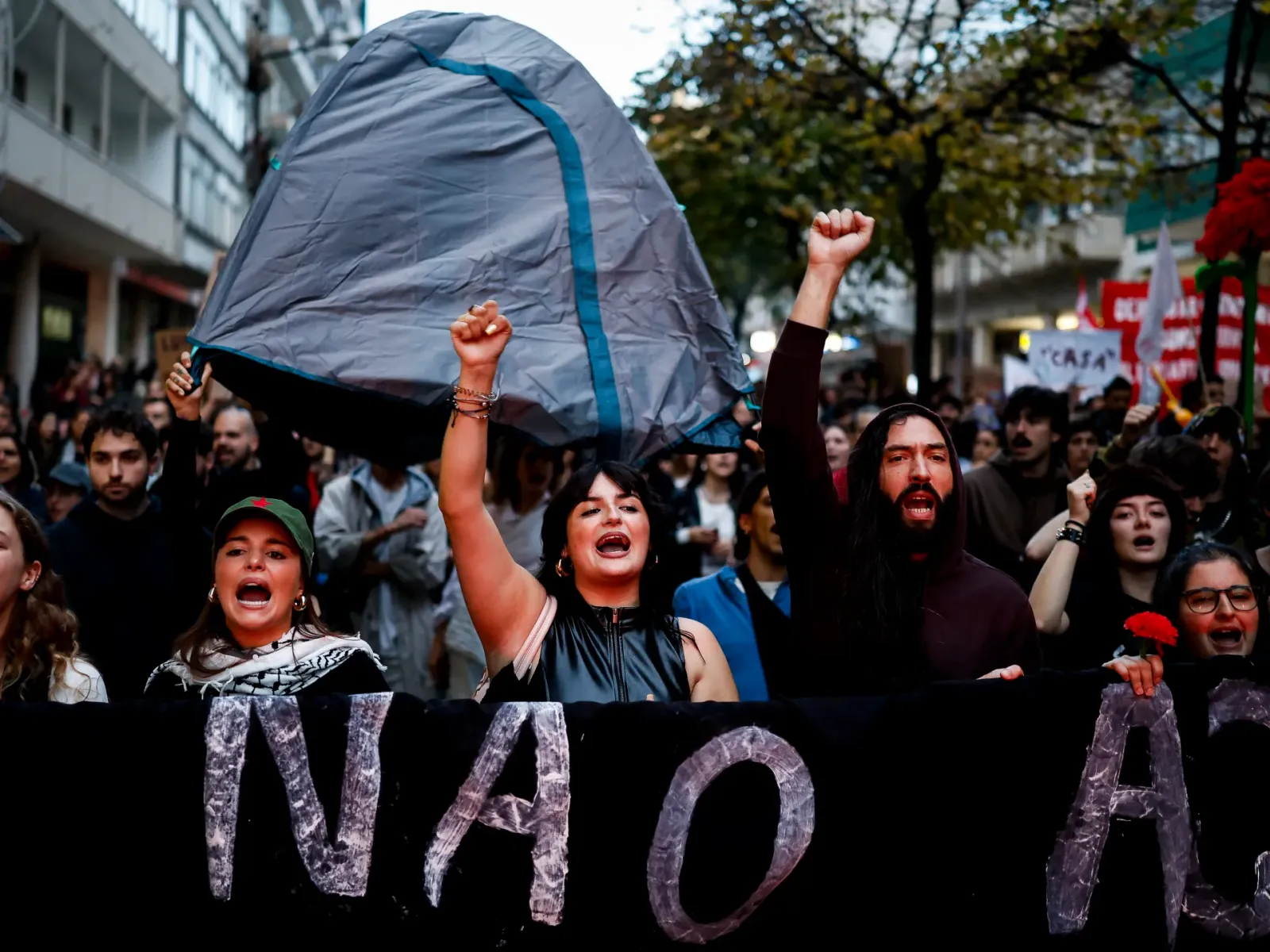 Photo: Al Jazeera
Key points
Tens of thousands marched across Portugal on 14 November in the largest housing protest yet, demanding rent caps and tenant protections.
Tens of thousands of people marched through more than 30 cities and towns in Portugal on Saturday in the largest protest yet against soaring housing costs. Demonstrations took place in Lisbon, Porto, Faro, Portimao, Coimbra, Braga and other locations, organisers said. The turnout marked the biggest national demonstration since the social movement began weeks ago.
The protests were organised by the Casa Para Viver (A Home to Live In) platform, which brings together approximately 100 housing associations and grassroots organisations. Marchers, ranging from teenagers to retired people, walked behind large banners. In Lisbon, drums, music and chanting accompanied the procession. The demonstrations took their cue from protests in neighbouring Spain last month over similar housing issues.
What protesters demand
Protesters called for caps to be placed on rent increases, greater legal protection for tenants against eviction, and more affordable housing. They also demanded the reversal of proposed changes to rental legislation. One woman on a protest march in Lisbon said she was a business owner, "and I can't afford a house." Another protester said she had joined "for a better life, for all of us, not just the young people."
A man said: "We have been suffering this for the last three or four years, and I have many friends and family in this situation, they had to move because they cannot afford the rent. If you earn, for example, a thousand euros, and you have to pay rent of six hundred, seven hundred, then you cannot live, it's impossible." Susana Pacheco, a 35-year-old data analyst, said she worried about whether her younger sister could afford to move out of their parents' home.
The protests came after parliament approved government proposals to provide greater flexibility in rental contracts and accelerate eviction procedures. Housing campaigners warned the changes could weaken tenant protections amid rising rents and limited housing availability. Some activists have camped in central squares in Lisbon and Porto. Riot police with dogs have dispersed some protests, drawing accusations of heavy-handed tactics.
Prices outpace incomes
House prices in Portugal have risen much faster than incomes in recent years, statistics show. Between 2015 and 2025, Portugal posted the biggest jump in the European Union in the home price-to-income ratio, with an increase of 61 percent, followed by the Netherlands with 34 percent, the EU statistical office Eurostat said last week. There is no indication that the rise in housing costs is slowing.
Between the first quarter of last year and the first quarter of 2026, property prices rose by almost 20 percent, the National Statistics Institute, a government agency, said last month. Rental prices have also climbed significantly, recording a 68 percent increase since 2020, according to the government. Much of this jump in real estate costs has been fuelled by foreign buyers and investment funds, as the country's relaxed climate near the ocean has attracted many remote workers and retirees.
Tourism has also surged, with many city centre apartments switched to short-term rentals, reducing the number of homes available for long-term residents. Protesters said the change pushed up rents and sale prices, arguing that local needs were being displaced. The housing crisis has fuelled weeks of demonstrations, with some activists camping in central squares in Lisbon and Porto, the country's two largest cities.
Government response
The government has responded to the protests by lowering taxes on new construction, restricting short-term rentals, and promising to build 145,000 new homes, but it acknowledged that the effects will not be immediate. Prime Minister Luis Montenegro was urged by Casa Para Viver representatives to engage directly with them. Portuguese President António José Seguro, whose role is mostly ceremonial but who wields political influence, convened a Council of State, an advisory body, to discuss the protests earlier this month and met Friday with some of the protesters.
The protests in Portugal in recent weeks took their cue from demonstrations in neighbouring Spain last month over similar issues around housing and forced evictions. A wave of youth-led protests has swept Europe in the latter half of this year, with demonstrators across the continent denouncing rising prices and a lack of future prospects. The turnout on Saturday marked the largest mobilisation so far in a growing housing crisis, with organisers saying immediate relief was still missing.
Frequently asked questions
Why are people protesting in Portugal?
They are protesting against surging housing costs, including soaring rents and house prices that have outpaced incomes. They demand rent caps, tenant protections, and more affordable housing.
How much have house prices risen in Portugal?
House prices rose almost 20% from the first quarter of 2025 to the first quarter of 2026, according to the National Statistics Institute. Rents have increased 68% since 2020.
What has the government done in response?
The government has lowered taxes on new construction, restricted short-term rentals, and promised to build 145,000 new homes. It acknowledged the effects will not be immediate.