Poundland enters administration with 11,000 jobs at risk
Poundland entered administration on 25 November 2026 after owner Gordon Brothers failed to find a buyer, putting 11,000 jobs and about 600 stores at risk.
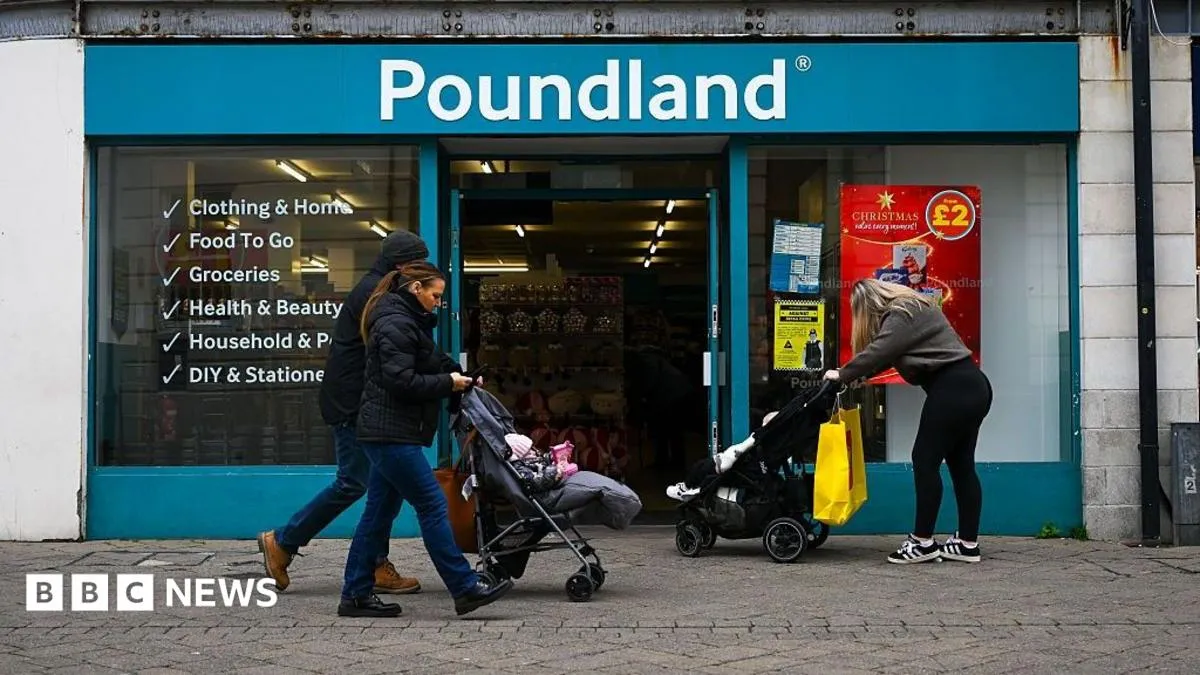 Photo: BBC News
Key points
Poundland entered administration on 25 November 2026 after its owner Gordon Brothers failed to agree a sale, putting 11,000 jobs at risk.
Poundland collapsed into administration on 25 November 2026, putting 11,000 jobs at risk after its owners failed to find a buyer to keep the discount chain in business. The retailer formally entered administration on Wednesday afternoon, just weeks before Christmas, and consultancy AlixPartners was appointed to oversee the process. The administration puts about 600 shops and 11,000 jobs into play, and the chain is likely to be broken up with some stores sold to rival retailers.
What the administrators will do
AlixPartners will pursue a sale of the business and its assets while running the chain day to day. The administrators said it would look at "all options" for the business, "including sales of the business and its assets, either in whole or part". They added: "We appreciate this is a deeply concerning time for all involved - customers, suppliers and, in particular, Poundland colleagues." Poundland shops and distribution centres will remain open and continue to trade during the process. The appointment followed a deadline that had given Poundland protection from its creditors.
Poundland's US owner Gordon Brothers held talks with several bidders over a last-minute rescue deal, but no transaction was reached. Gordon Brothers bought the business for less than £1 and had denied claims that it hoped to profit by selling off the chain's 600 shops and stock piecemeal. The Commons Business, Innovation, Science and Trade Committee accused the firm of restricting funding and driving the retailer towards insolvency.
In a note to staff, Poundland boss Barry Williams said the board had "taken the difficult decision to appoint administrators" after no deal was agreed. He wrote: "It is with sincere sadness and intense regret that we have to tell you that we had no alternative but to take this decision." Williams claimed Gordon Brothers had removed "all borrowing facilities and access to our bank accounts" on 27 October.
The loan that blocked a deal
One central stumbling block was a shareholder loan Gordon Brothers inherited when it bought the business. Gordon Brothers was owed £22.5m of that loan, while the previous owner Pepco was owed £7.5m. Gordon Brothers rejected various offers to buy the business as a going concern that included deals to pay off the loan, and the bidders' proposals fell short of what the owner wanted.
Irish firm Martin Property Group offered to pay off £5m of the loan up front and defer the rest of the payments to 2030, and that offer was rejected. London-based Xyra offered £12.5m up front but ran out of time to get a deal over the line. A German investment firm, Zachert Private Equity, is also understood to have made a late offer, which was rejected too.
The crisis came to a head over the past few weeks after Gordon Brothers restricted access to some funds used for day-to-day operations. Stock at the retailer was not replenished at the necessary pace in the run-up to the festive period, and shoppers saw increasing gaps on shelves as suppliers halted deliveries for fear of not getting paid.
Gordon Brothers rejects the criticism
Gordon Brothers said it had put £85m into Poundland over a year to help save it from insolvency, and that it stepped in when no one else was willing to finance the business. It said the appointment followed an extensive three-month merger and acquisition process that explored every avenue to secure a sale of the whole company.
Gordon Brothers had stated that Poundland was "challenged and vulnerable to any potential downturn in future trading", in contrast to Williams, who had said the business was making a "strong recovery". The owner also said the management team had worked hard over the past 12 months to achieve £100m of cost savings, but the business remained vulnerable to inflationary pressures or any downturn in sales and margin.
Bally Auluk, national officer at shopworkers union Usdaw, said: "This is devastating news for our members, who were only recently praised by management for helping to turn the business around, and now face the threat of losing their jobs." Usdaw said it was seeking urgent meetings with the administrators to save as many stores and jobs as possible.
The Commons Business, Innovation, Science and Trade Committee has written to Mark Newton-Jones, Gordon Brothers' chief in Europe, asking him to appear at a public hearing. The letter also seeks assurances that neither "Gordon Brothers or any related party will not act as administrator, liquidator or in any other insolvency capacity in relation to Poundland". A government spokesman said administrators must be given time and space to do their job.
Frequently asked questions
Why did Poundland collapse into administration?
Poundland's owner Gordon Brothers failed to agree a sale with several bidders, including Martin Property Group, Xyra and Zachert Private Equity. A shareholder loan of £22.5m owed to Gordon Brothers and £7.5m owed to Pepco was a central stumbling block in the talks.
How many jobs and stores are at risk?
About 11,000 jobs are at risk across roughly 600 Poundland stores. The chain entered administration on 25 November 2026, and AlixPartners will pursue a sale of the business and its assets, with stores and distribution centres remaining open during the process.
What happens to Poundland stores now?
Poundland shops and distribution centres remain open and continue to trade while AlixPartners seeks a buyer. The administrators said they would look at all options, including sales of the business and its assets, either in whole or part.