Supreme Court upholds most of Quebec’s Bill 21
On 27 November 2026, the Supreme Court of Canada upheld most of Quebec’s 2019 Bill 21, barring public servants in positions of authority from wearing religious symbols, while striking down the ban on National Assembly members.
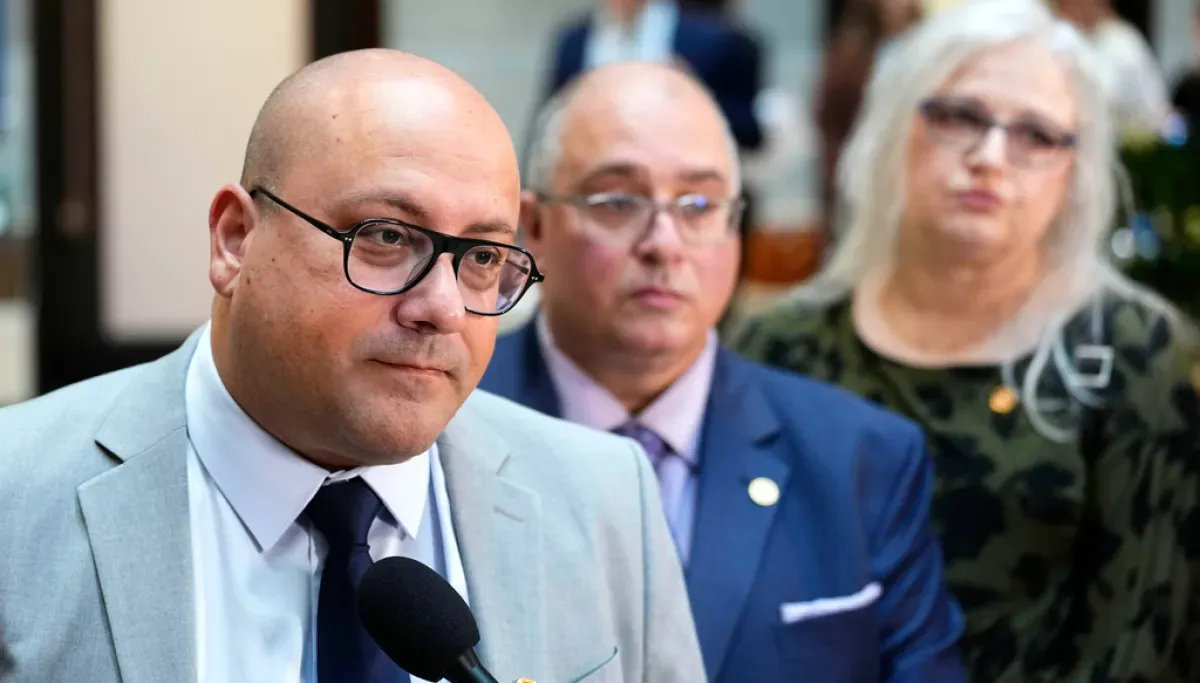 Photo: Washington Examiner
Key points
On 27 November 2026, the Supreme Court of Canada upheld most of Quebec’s Bill 21, striking down only the ban on National Assembly members wearing religious symbols.
On 27 November 2026, the Supreme Court of Canada upheld most of Quebec’s Bill 21, the 2019 law barring public employees in positions of authority from wearing visible religious symbols at work. The law covers public school teachers, police officers, judges, government lawyers and other officials. It bans Muslim headscarves, Sikh turbans, Jewish kippahs and Christian crosses while duties are performed. The court struck down only the section banning National Assembly members from wearing face coverings for religious reasons.
The 520-page decision says Quebec correctly applied the notwithstanding clause, a section of the Constitution that lets legislatures override Charter rights. The justices agreed that governments can use the clause pre-emptively, as Quebec did when it introduced Bill 21. They also agreed that a legislature can override multiple Charter rights at the same time. Chief Justice Wagner, with Justices Malcolm Rowe and Suzanne Côté, wrote that a legislative body need not show a link between the law and the rights it overrides. Courts are not to substantively review the legitimacy of the policy or the appropriateness of invoking the clause.
What the ruling decided
The case was brought forward by the English Montreal School Board, which argued the law infringed on minority language rights. The court’s unanimous determination that the override clause was used correctly was not matched by unanimity on the law’s compatibility with the Charter. The majority declined to issue a non-binding declaratory judgment on the inconsistencies of such laws with Charter rights, even though it ruled it could.
Three of the seven justices — Michelle O’Bonsawin, Andromache Karakatsanis and Sheilah L. Martin — wrote that Bill 21 is incompatible with freedom of religion, freedom of expression and the right to equality. O’Bonsawin and Karakatsanis wrote that “there can be no serious question that Bill 21 violates freedom of religion,” and that it treats visible religious minorities as less worthy of full participation in Quebec society, influences their life choices and mobility, and creates professional barriers by preventing qualified individuals from being hired, promoted or transferred.
The dissent and the dispute
The three dissenting justices also argued that the court had the power to strike down Bill 21 despite the notwithstanding clause, because the law violates gender equality, a section of the Charter that governments are not allowed to override. They noted that Bill 21 has a disproportionate effect on Muslim women, and wrote that “The attorney general of Quebec chose not to address whether any breaches related to Bill 21 could be justified in a free and democratic society.” Wagner, Rowe, Côté and Nicholas Kasirer determined that the gender-equality section could not be used to strike down the law.
The three justices also wrote that Bill 21 is not so incompatible with freedom of religion or human dignity as to be invalid, because the notwithstanding clause must be renewed every five years. The majority ruled it can issue a non-binding declaratory judgment on the inconsistencies of such laws with Charter rights, but declined to do so for Bill 21.
Quebec Premier Paul St-Pierre Plamondon, at a news conference in Quebec City on Friday afternoon, called the ruling a “good day for secularism in Quebec” but said legislators will need to read the fine print to understand its implications. He denounced the federal government’s involvement in the legal challenge, noting that Ottawa participated as an intervener and asked the court to set limits around how provincial governments can override the Charter of Rights and Freedoms.
Reaction and what follows
St-Pierre Plamondon said the court’s decision to allow declaratory statements is “a setback” for provincial autonomy, because it “weakens” the notwithstanding clause and will let justices give non-binding opinions on cases involving the override clause. He has also promised to expand secularism laws to schoolchildren. Bloc Québécois Leader Yves-François Blanchet, provincial Conservative Leader Éric Duhaime and former premier François Legault all lauded the ruling.
Prime Minister Mark Carney, in a radio interview, said his government respects the independence of the court and the provisions in the Constitution, and that it is important for all legislators to respect the rights and liberties of all Canadians, including minority rights. Advocacy groups such as the National Council of Canadian Muslims criticized Bill 21 as discriminatory.
Nevien Waly, who wears a hijab, worries she will never get to teach in Quebec schools. She left her career as an accountant and started studying education in 2019, right before Bill 21 was adopted. Speaking to The Canadian Press moments after the ruling, the 45-year-old said she feels sad and disappointed. The law has even prevented her from volunteering at the schools of her four children. “When there was no final decision, there was always a glimpse of hope that things could change around, and now it’s kind of set in stone, so it’s just kind of like a mourning period,” she said. The ruling was released on 27 November 2026.
Frequently asked questions
What did the Supreme Court decide about Bill 21?
On 27 November 2026, the Supreme Court of Canada upheld most of Bill 21, the 2019 Quebec law barring public servants in positions of authority from wearing religious symbols, while striking down only the section banning National Assembly members from wearing face coverings for religious reasons.
Why did three justices dissent?
Justices O’Bonsawin, Karakatsanis and Martin wrote that Bill 21 violates freedom of religion, freedom of expression and equality, and that the court could strike it down because it violates gender equality, a Charter section governments cannot override.
What is the notwithstanding clause?
It is a section of the Constitution that allows legislatures to override Charter rights. The court agreed governments can use it pre-emptively, as Quebec did when it introduced Bill 21, and that a legislature can override multiple Charter rights at the same time.