Russian sabotage in Europe rose 16 per cent in a year, report finds
A study by the International Institute for Strategic Studies finds sabotage operations across Europe rose 16 per cent between October 2025 and September 2026, with critical infrastructure increasingly targeted.
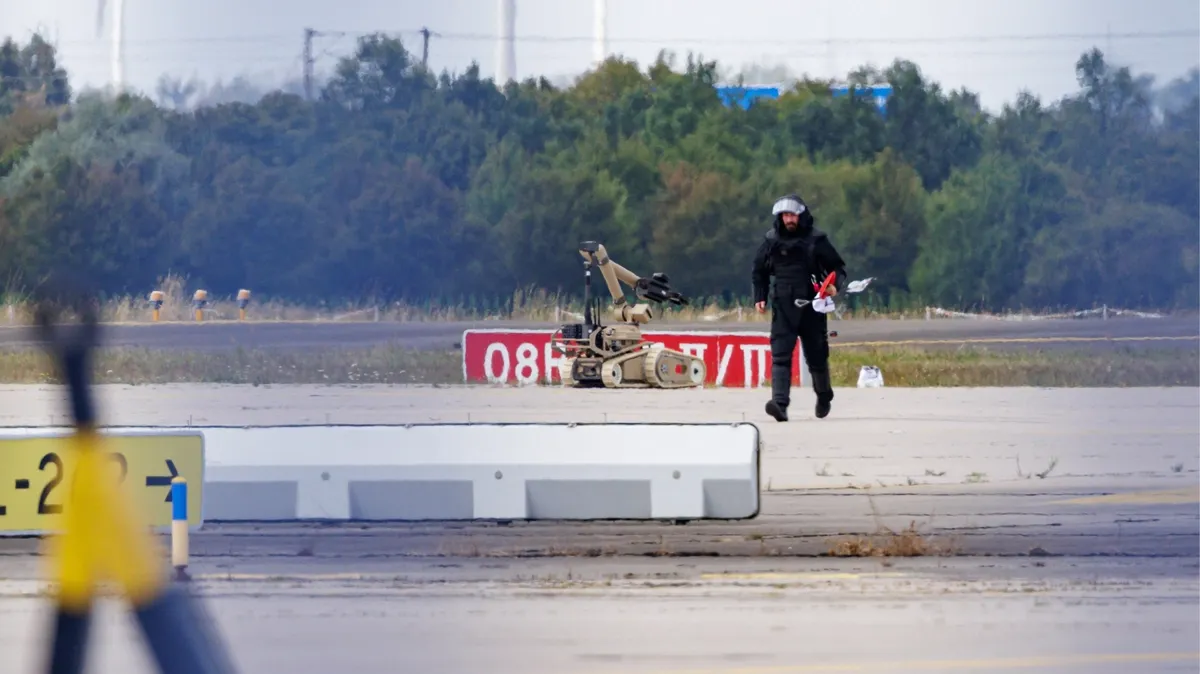 Photo: Ukrainska Pravda
Key points
Russian sabotage operations across Europe rose 16 per cent between October 2025 and September 2026, with more than half targeting critical infrastructure.
Russian sabotage incidents in Europe rose by 16 per cent between October 2025 and September 2026, according to a new study by the International Institute for Strategic Studies. The report warns that these operations could cause a mass casualty event as Moscow steps up sabotage across the continent, and finds that critical infrastructure is increasingly the target.
Poland suffered 24 per cent of all the attacks while Germany faced 20 per cent and the Baltic states including Latvia, Estonia and Lithuania faced 20 per cent. The operations focused on countries that supported Kyiv, with Germany and Poland expected to remain the most frequently targeted countries. Their transport, logistics and industrial networks are crucial to the delivery of aid to Ukraine.
Where the attacks occurred
More than half of the recorded incidents involved attacks on critical infrastructure, particularly defence industry and transport. Violent attacks have also increased significantly, with more arson attacks and more use of improvised explosive devices. Poland suffered 24 per cent of all the attacks, Germany faced 20 per cent, and the Baltic states of Latvia, Estonia and Lithuania faced 20 per cent between them.
While most operations are still carried out by unskilled recruits, a group of semi-skilled operatives is now employing more sophisticated methods. Russian proxies have demonstrated increased capabilities with more complex improvised explosive devices deploying timed and remote detonators. This shift marks a change in tactics compared with previous months, as saboteurs become increasingly skilled in their operations across the continent.
How methods have changed
The report reads that arrests remove proxies but are highly unlikely to deter the Russian intelligence services that direct them. Despite recent attacks and attempted attacks in Estonia, Lithuania and Romania, none has set out red lines, with concern about escalation the primary instinct. The effect is that the first mass-casualty attack would set the terms of Europe's response, with governments acting under pressure.
Europe has also faced cyber-attacks on supermarkets, blood banks and airports. On 19 November, Germany, France and Poland were reported to be stepping up cooperation to protect Europe's transport infrastructure, particularly in detecting hostile drones. In August 2026, a drone carrying explosives and a detonator was found near a Ukrainian aircraft at Germany's Leipzig-Halle airport.
What the report recommends
Sabotage has not yet achieved a strategic effect, but a mass-casualty incident is possible as the space for miscalculation narrows. A single operation that caused fatalities or prolonged disruption would generate demands for retaliation and likely expose divisions between European governments. The report predicted that European governments would be likely to continue responding to Russia's attacks one incident at a time.
The report offered suggestions on how to improve the chances of changing the Kremlin's approach by publicly signalling what level of harm triggers which response. This approach has done little to impact the Kremlin's strategy so far. According to new polling data, 82 per cent of Germans regard Russia as a threat, reflecting the growing concern across member states about the escalating situation.
The explosion took place on board the Merkury, a Russian navy warship docked at the Benghazi naval base in Libya. Satellite images by Vantor showed the ship was a Russian Navy corvette, with most of the vessel capsized and sunk. It came a day after Finland's prime minister, Petteri Orpo, warned that the Russia-Ukraine conflict was spilling over, after a Russian ship was reportedly on fire in Finnish waters the previous Saturday.
It came a day after Finland's prime minister Petteri Orpo warned that the Russia-Ukraine conflict was spilling over after a Russian ship was reportedly on fire in Finnish water on last Saturday. The study notes that concern about escalation remains the primary instinct among European governments. None has set out red lines despite recent attacks and attempted attacks in Estonia, Lithuania and Romania.
Frequently asked questions
How much did Russian sabotage in Europe rise?
Russian sabotage incidents in Europe rose by 16 per cent between October 2025 and September 2026, according to a report by the International Institute for Strategic Studies.
Which countries were most affected?
Poland suffered 24 per cent of all attacks, Germany faced 20 per cent and the Baltic states including Latvia, Estonia and Lithuania faced 20 per cent.
What methods are saboteurs using now?
Russian proxies are using more complex improvised explosive devices with timed and remote detonators, a shift from the unskilled recruits who carry out most operations.