SpaceX Starship reaches orbit despite booster explosion
The 15th test flight lifted off on Friday and deployed 26 satellites even as the Super Heavy booster ended in the water.
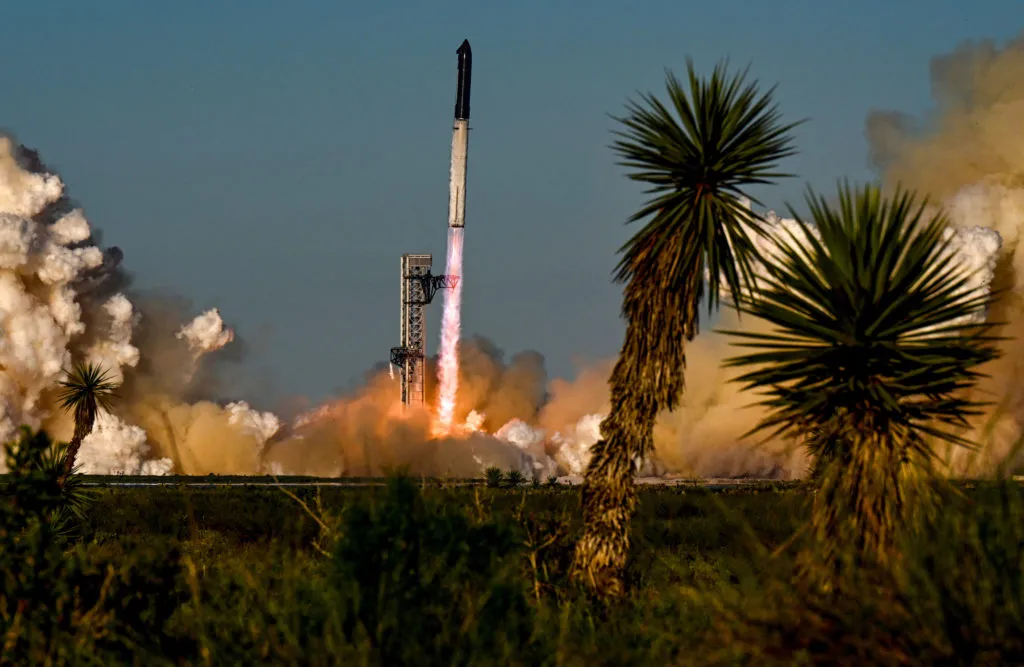 Photo: PBS
Key points
SpaceX Starship completed its 15th test flight and reached orbit while the booster exploded in the Gulf of Mexico.
SpaceX launched the 15th test flight of Starship on Friday as part of Elon Musk's bold mission to build a fully reusable rocket system. The company faced a setback when its Super Heavy booster malfunctioned during its return journey and exploded into a fiery ball in the Gulf of Mexico. Despite this event, the Starship spacecraft still reached orbit on Friday where it deployed 26 advanced Starlink satellites.
The original goal of this flight was to retrieve every single piece of the rocket for recycling purposes something which has never been achieved before. The first part of the double catch failed as the company aborted the planned recovery and diverted the booster towards the Gulf of Mexico. This event marks an end to SpaceX's ambitious plan to catch both components of the Starship rocket in one flight.
The double catch attempt fails
Until now SpaceX had made three booster grabs at the company's Starbase in Texas near the US-Mexico border but never actually caught the spacecraft portion of Starship. The spacecraft of the 14 previous Starships ended up in the ocean either by design at flight's end or by accident in a stream of flaming wreckage. The booster was meant to be caught by two giant mechanical arms called Chopsticks at the launch tower.
The spacecraft portion of the 14 previous Starships ended up in the ocean either by design at flight's end or by accident in a stream of flaming wreckage. During the first full-scale test flight in 2023 multiple engines failed to ignite and the tumbling rocket's self-destruct system was activated. The last test in September was the first to reach orbit but SpaceX did not try to recover any of the rocket stages.
Upon reaching orbit Starship 15 began releasing its cargo of 26 satellites in a payload delivery operation expected to take less than an hour to complete. SpaceX said in a livestream of the operation that the 236-foot spacecraft is expected to cover 15 laps around the world for a period of 22 hours before heading back to the launch site in Texas.
Satellite deployment continues
NASA is paying SpaceX billions of dollars to land Artemis astronauts on the Moon with Starships and SpaceX has put at least 15 billion of its own funds into the rocket's development. Jeff Bezos' Blue Origin is also developing a moon lander for NASA's Artemis programme as the agency prepares to decide whether to use Musk's Starship or Bezos' Blue Moon for future landings.
The launch went on as scheduled despite a nationwide ground stop that disrupted hundreds of flights and caused temporary pauses for flights to the west coast from Hawaii. The island's transportation agency said these pauses were due to space debris from the launch before flights resumed on Friday. SpaceX employees erupted into cheers as smoke plumes wafted from the launch site during the liftoff.
NASA Administrator Jared Isaacman congratulated SpaceX on the Starship launch and said that tomorrow is a big day for the community with a Vulcan launch and Starship's return on deck. He also stated that they are looking forward to some of that on-orbit Starlink capability on Artemis III as the programme seeks to land humans on the moon by 2028.
Implications for Artemis programme
Kate Tice SpaceX's director of quality management said that certainly isn't the news that we had hoped to hear for today but noted the booster's return was in line with rigorous safety checks. The cause of the booster's diversion remains unknown even though SpaceX has not publicly commented on what went wrong with the return process during the flight.
Frequently asked questions
What happened to the booster during flight 15?
The Super Heavy booster malfunctioned during its return journey and was diverted to the Gulf of Mexico where it exploded into a fiery ball instead of being caught by the launch tower arms.
How many satellites were deployed?
The spacecraft deployed 26 advanced Starlink satellites in a payload delivery operation expected to take less than an hour to complete after reaching orbit.
When is the Artemis moon landing targeted?
NASA and SpaceX's plans to land humans on the moon by 2028 have faced major challenges including complex fuel transfers between Starship tanker rockets in orbit.