Spain train crash kills 69 after inexplicable controller order
A rear-end collision between two high-speed trains near Urda, Spain, killed at least 69 people on Wednesday after a security system failed and a command centre ordered a stopped train to resume, officials said.
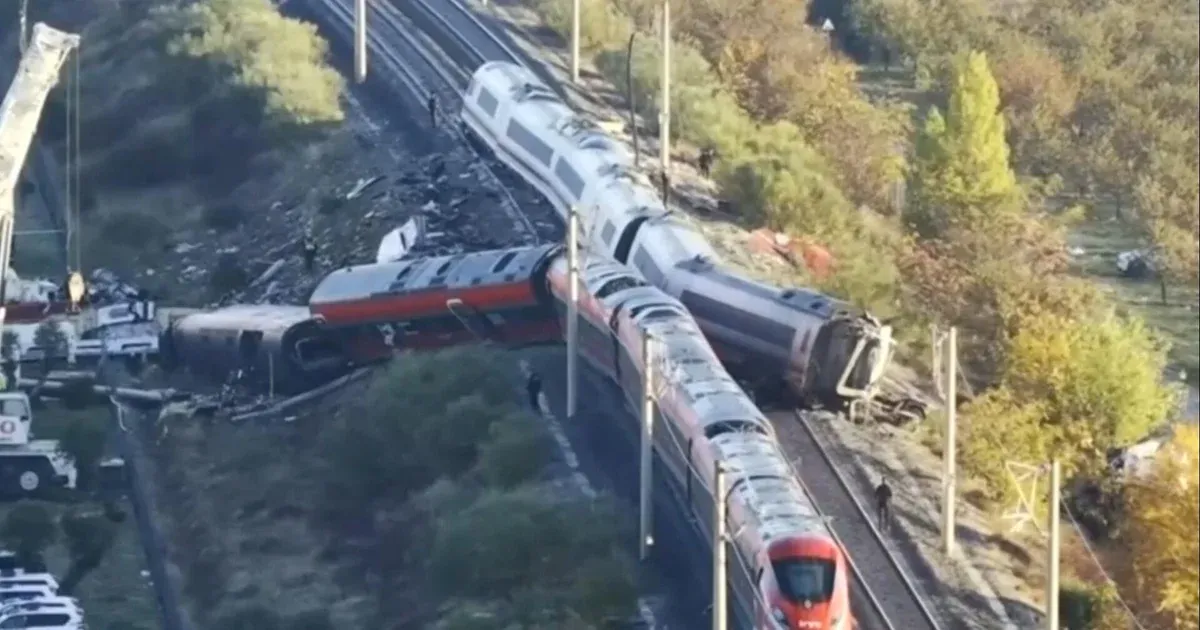 Photo: CBS News
Key points
At least 69 people died in Spain when a high-speed train struck another from behind near Urda after a security system failure and a command centre order.
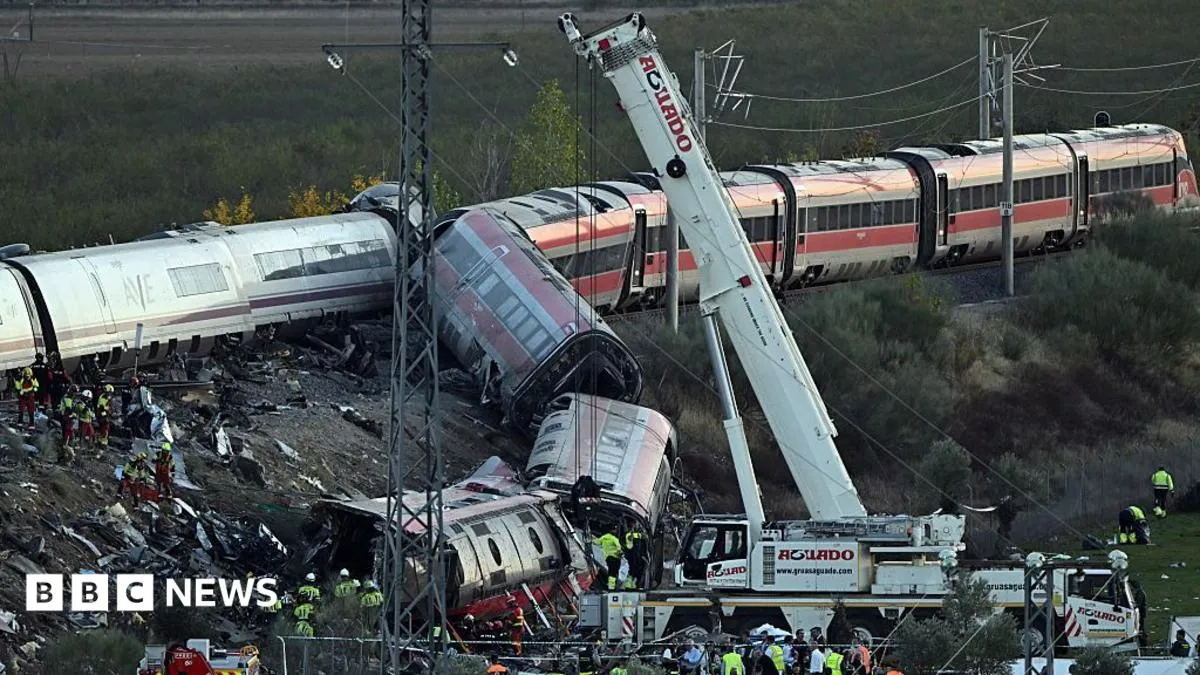
A collision between two high-speed trains near the town of Urda in central Spain's Toledo province killed at least 69 people on Wednesday, when one train struck another from behind. Search teams with sniffer dogs were still looking for victims on Thursday morning, a day after the crash, and cranes were in place to shift carriages thrown down a gravel slope by the impact.
The death toll rose to 69 after one more body was found overnight, according to Emiliano Garcia-Page, regional leader of Castilla La Mancha. The crash is Spain's second high-speed rail disaster of 2026 and its first deadly high-speed crash since the network came into service more than three decades ago. Spain's high-speed rail ranks second to China in track mileage worldwide, and the system carried 45 million travellers last year.
Why the collision happened
Transport minister Oscar Puente said the crash was caused by an "inexplicable" order from a central command centre after a security system failed, and he said the train engineers were not to blame. Puente said that at 8.30am the security system on a stretch of 63km stopped working because of a computer malfunction, which forced all trains on that stretch to stop.
At that point the Iryo train was stopped near Urda while the Renfe train was 25km behind. A few minutes later the central command told the Renfe train to start running again without any speed restrictions, and it collided with the stationary Iryo train at 8.53am. Puente said the train should never have been told to move since a stop signal was still active, and that at minimum it should have been ordered to travel at reduced speed.
A spokeswoman for the Castilla La Mancha region, Esther Padilla, said 50 people remained in hospital on Thursday, 15 of them in critical care. "Emergency workers and the military emergency brigade are still working with much care because we still can't be sure that there aren't more victims," she told national broadcaster TVE. Cranes began moving parts of the damaged trains late on Wednesday, after hundreds of emergency workers, firefighters, police and soldiers worked through the day.
Rescuers search the wreckage
Garcia-Page said: "Yesterday we experienced a catastrophe that without a doubt has left all of Spain in shock." He added that besides bodies, there were body parts that needed to be identified. At least three train carriages were thrown from the track by the impact, landing on a gravel slope strewn with wreckage where police and soldiers helped pick through the debris.
Prime Minister Pedro Sanchez visited the crash site in Toledo and pledged an investigation into the collision and improvements to prevent another tragedy. "It is clear that we need to reinforce the safety of our train service to rebuild the trust in our high-speed rail," Sanchez said. His government declared three days of mourning starting on Thursday, four weeks before a national election.
A second disaster in nine months
The crash came nine months after an accident in Adamuz in January, when a train jumped the track and slammed into another travelling the opposite way, killing 46 people. The investigation into that crash continues, with the main hypothesis pointing to a broken track. Both deadly crashes this year involved a train operated by state-owned Renfe and one from privately owned Iryo, which began service in 2023 after Spain liberalised high-speed rail in 2021.
Fear of rail travel is rising among Spanish passengers. Carlota Rodríguez Font, a 20-year-old student from Córdoba, said she would buy a plane or bus ticket rather than take a train after the crash. Ana Isabel Fernández, a psychologist who treats phobias, said people need time to process such events and that clear explanations and preventive measures can restore confidence.
Rail travel fears and falling passengers
Spanish high-speed rail is going through its worst crisis since 1992, according to the National Commission on Markets and Competition and an Ipsos survey published this summer. High-speed and long-distance services lost 21% of passengers in the first quarter, falling to 8.05 million, with the Madrid–Málaga/Granada corridor down 61% compared with 2025. Almost half of rail passengers are considering stopping using trains, according to a 40dB institute study published in February.
Rail remains one of the safest modes of transport in Spain. The Ministry of Transport recorded 22 deaths on Spain's rail system in 2023, while the Directorate-General for Traffic recorded 1,806 road deaths that year. Eurostat data shows European railway fatalities have fallen 32% since 2010, though Spain's 2026 total now stands at at least 111 fatalities, alongside the January Adamuz crash and this collision.
Frequently asked questions
How many people died in the Spain train crash?
At least 69 people were killed when one high-speed train struck another from behind near Urda in central Spain on Wednesday, according to the regional leader of Castilla La Mancha, Emiliano Garcia-Page.
What caused the Spain high-speed train collision?
Transport minister Oscar Puente said a security system on a 63km stretch failed due to a computer malfunction, and a central command centre then inexplicably ordered a Renfe train to resume without speed restrictions, leading it to strike a stationary Iryo train.
How many people were injured in the Spain train crash?
Fifty people remained in hospital after the crash, 15 of them in critical care, according to Esther Padilla, a spokeswoman for the Castilla La Mancha region, speaking on Thursday.