Spain train crash kills 68 and starts three days of mourning
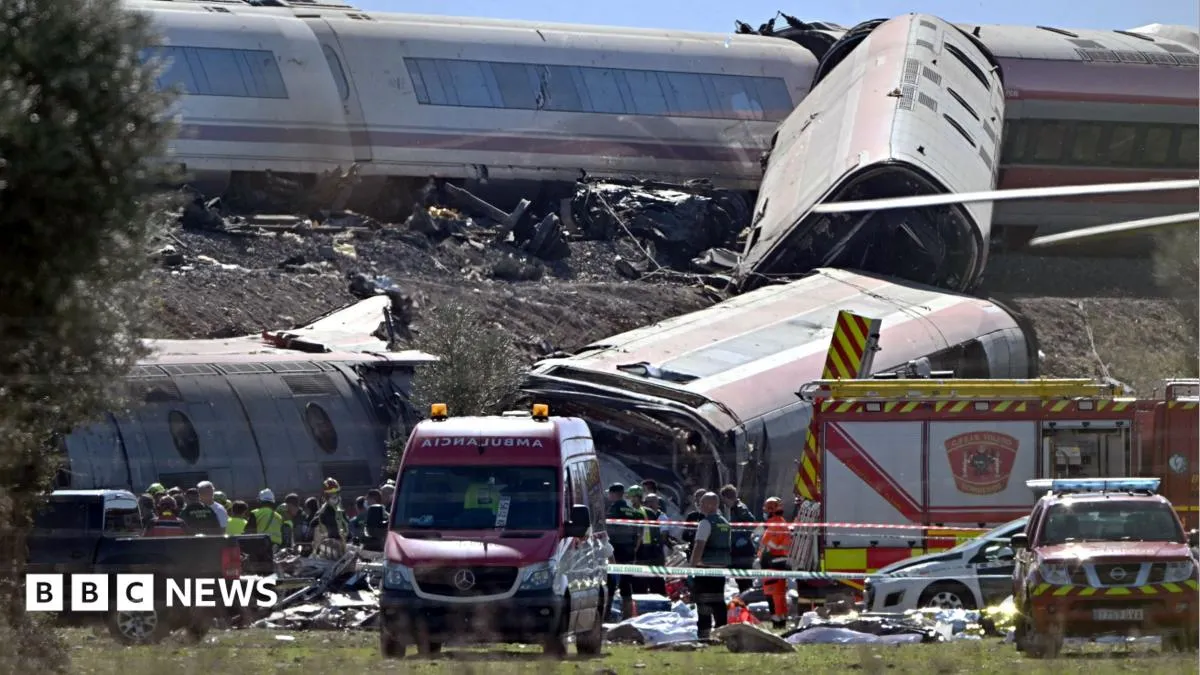
A Renfe high-speed train struck a stationary Iryo train near Toledo on Wednesday morning, killing at least 68 people, and Spain began three days of official mourning on Thursday.
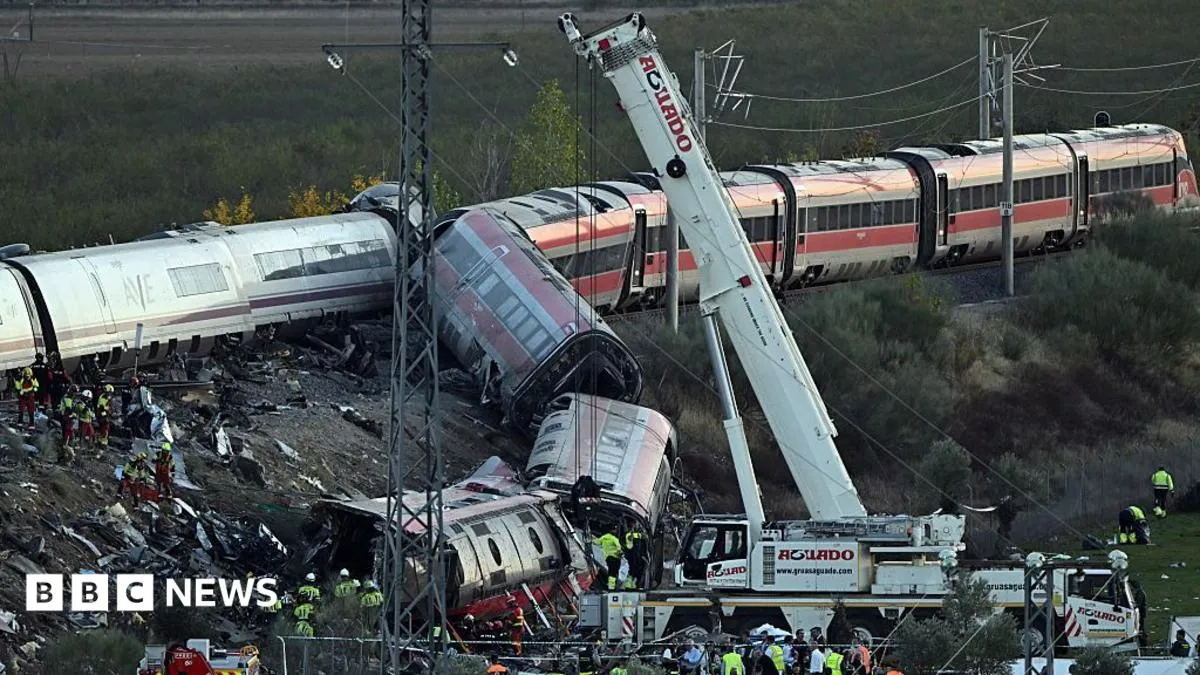 Photo: BBC News
Key points
At least 68 people were killed when a Renfe high-speed train rear-ended a stationary Iryo train near Toledo, prompting three days of national mourning in Spain.
A Renfe high-speed train travelling from Madrid struck a stationary Iryo train between the municipalities of Mora and Orgaz in Toledo province on Wednesday morning, killing at least 68 people. The crash occurred about 140km south of Madrid and left dozens more injured, with 80 people treated at hospitals, 50 in serious condition and 15 in critical condition.
Spain's government declared three days of official mourning starting Thursday. The crash is the worst rail disaster in the country since 2013, when 80 people died near Santiago de Compostela. Transport minister Óscar Puente said a computer malfunction stopped the security system, halting all trains on the section. The Iryo train stopped near the town of Urda while the Renfe train was 25 kilometres behind it.
What the investigation has established
A few minutes later, the central command ordered the Renfe train to resume running without speed restrictions, and it collided with the stationary Iryo train. Puente said the Renfe train should never have been told to move again because a stop signal was still active on the line. He said the train engineers were not to blame and called the control centre's decision inexplicable. Audio recordings between controllers and drivers appear to confirm one train was cleared while another had stalled ahead.
The Iryo train was carrying 147 passengers and the Renfe train was carrying 397, according to Spain's transport minister and the government of Castilla-La Mancha region. Iryo said its train was struck from behind by the Renfe service. The force of the impact caused several carriages to fall down an embankment, and one carriage caught fire. Emergency crews worked through the night under floodlights to cut open carriages and recover victims.
How the control centre failed
Emergency crews worked through the night under floodlights to cut open carriages and recover victims, with hundreds of personnel deployed along with drones and helicopters. The Spanish Civil Guard set up bureaus in Madrid, Toledo, Seville and Córdoba to investigate missing persons, saying identification of the dead and DNA sampling to locate relatives was the top priority. Hospitals in the area suspended planned surgeries.
Prime Minister Pedro Sánchez visited the crash site and said the whole of Spain was grieving, adding that lives had been shattered and families torn apart. He pledged an investigation and said any negligence would come to light. Sánchez called it unacceptable that Spain had suffered two serious rail disasters this year on high-speed lines.
Most political parties suspended campaigning for the upcoming national election. The Vox party did not, with leader Santiago Abascal refusing to participate in what he called attempts to use mourning to silence criticism of rail infrastructure. Opposition leader Alberto Núñez Feijóo demanded a full investigation while cancelling his party's events for the day. About 1,500 people gathered outside the Spanish Transport Ministry in Madrid on Wednesday night.
Political fallout before the election
About 1,500 people gathered outside the Spanish Transport Ministry in Madrid on Wednesday night, according to broadcaster TVE, calling for the resignations of Sánchez and Puente. Police used tear gas to disperse crowds after bottles and flares were thrown, with no injuries or arrests reported. Rail drivers' union Semaf said a planned strike on Thursday would go ahead in defence of railway safety.
Spain's high-speed rail network ranks second worldwide in track mileage behind China and had not seen a deadly crash in over three decades before 2026. The network carried 45 million travellers last year. Spain liberalised high-speed rail in 2021, with Italian operator Iryo starting service the following year alongside state-owned Renfe.
European Union flags flew at half-mast in Brussels as a sign of solidarity during Spain's mourning period. In Toledo, near the crash site, locals held a minute's silence at a vigil for the victims. Rail services between Madrid, Ciudad Real and Andalusia remained suspended as investigators worked to determine the cause of the collision.
Frequently asked questions
How many people died in the Spain train crash?
At least 68 people were killed when a Renfe high-speed train struck a stationary Iryo train between Mora and Orgaz in Toledo province on Wednesday morning. Eighty people were injured, with 50 in serious condition and 15 in critical condition.
What caused the Spain train crash?
Transport minister Óscar Puente said a computer malfunction disabled the security system on a stretch of track, halting trains. The central control centre then ordered the Renfe train to resume without speed restrictions while a stop signal was still active, and it struck the stationary Iryo train.
When did Spain's three days of mourning begin?
Spain's government declared three days of official mourning starting Thursday, the day after the crash that killed at least 68 people. European Union flags in Brussels flew at half-mast during the mourning period.