Supreme Court allows border wall construction in Big Bend
The Supreme Court on 9 November cleared the way for the Trump administration to resume border wall construction in Big Bend, Texas, including parts of Big Bend National Park.
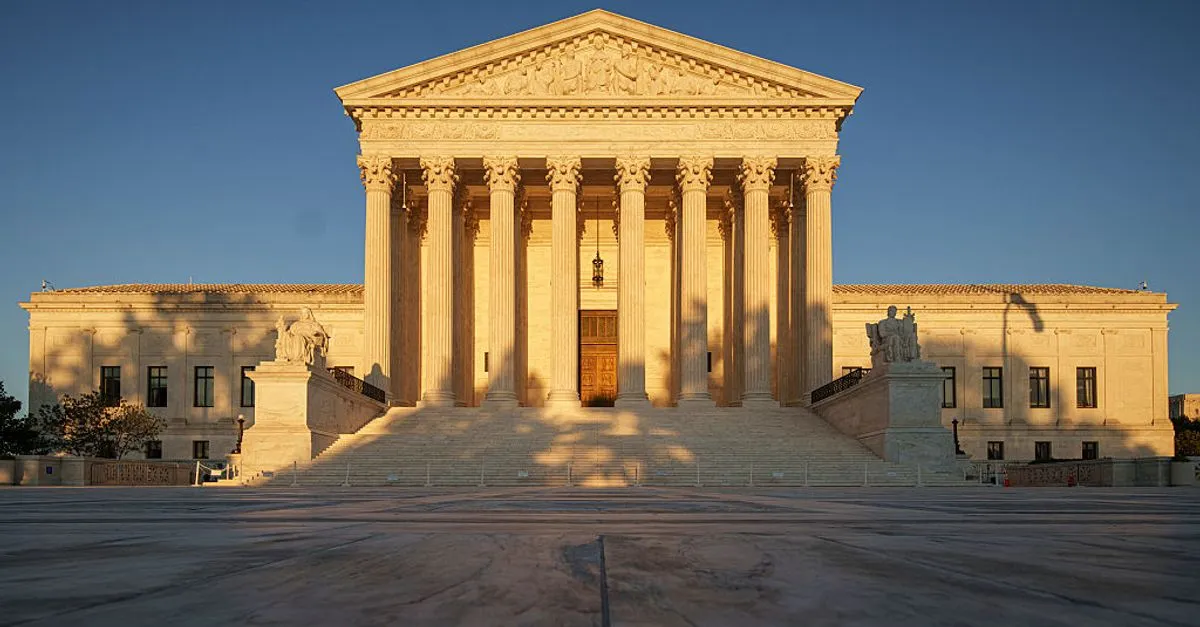 Photo: SCOTUSblog
Key points
The Supreme Court cleared the way for the Trump administration to resume border wall construction in Big Bend, Texas, on 9 November.
The Supreme Court on Monday cleared the way for the Trump administration to resume construction of a border wall in the Big Bend region of southwestern Texas. In a four-page, unsigned opinion, the justices granted the government's request to pause an order by a federal district judge that had temporarily halted the project. Only Justice Ketanji Brown Jackson indicated, without explanation, that she would have denied the government's request.
The ruling allows construction to proceed in parts of Big Bend National Park, a remote area that includes mountain ranges and desert home to endangered species like the Mexican long-nosed bat. The justices wrote that the plaintiffs, which include the Center for Biological Diversity, a Big Bend river guide, and a church preservation group, 'claim that construction in the Big Bend sector will diminish their ability to use and enjoy the area.' However, they noted that Congress's enactment of immigration law 'reflects a clear preference for expeditious border construction over the very harms respondents assert.'
The ruling's reasoning
The court denied the government's request to summarily reverse the lower court's ruling but granted its request to put it on hold. 'The Government,' the court explained, 'is exceedingly likely to prevail on its argument' that the lower court did not have the power to consider the challengers' 'so-called major-questions-doctrine claim.' That claim, the court emphasized, contends only 'that the Secretary exceeded his statutory authority,' which is not a constitutional claim. 'There is no such thing as a “constitutional” major-questions claim,' the court wrote.
The dispute began earlier this year, when then-Homeland Security Secretary Kristi Noem and her successor, Markwayne Mullin, issued three waivers of various environmental and conservation laws to authorize construction of the wall in the Big Bend region. Noem and Mullin relied on a provision of the Illegal Immigration Reform and Immigrant Responsibility Act of 1996 that gives the DHS secretary the power to 'waive all legal requirements' necessary 'to ensure expeditious construction' of border walls and roads. When they announced the waivers, they indicated that the Big Bend area 'is an area of high illegal entry' requiring additional walls and barriers.
The legal dispute
Cardone emphasized that the Big Bend region is not an area with a high number of illegal entries. Although it 'comprises over 25% of the U.S.-Mexico border,' it makes up only a tiny percentage ('between 0.3% and 2.2%') of the migrants apprehended while crossing the border. Therefore, she wrote, 'if the Big Bend Sector is an area of high illegal entry, so is every other sector, and the waiver authority would apply to the entire U.S.-Mexico border.' The major questions doctrine instructs courts to avoid 'interpretations that would render limiting language meaningless,' Cardone concluded.
The Trump administration plans to construct more than 300 miles of six-foot-tall vehicle barriers and supporting roads, relying on the 1996 law that authorizes the homeland security secretary to waive legal requirements in areas designated as having high levels of illegal border crossings. According to Rodney Scott, the CBP commissioner, the wall, which is being built out at about 12 miles a week, is expected to be completed by the end of Trump's second term. CBP has awarded five contracts worth more than $6 billion for border security upgrades in Big Bend, including 30-ft steel fencing, vehicle barriers and surveillance technology, which the agency calls its 'smart wall'.
The plaintiffs argue that the project threatens wildlife and public lands, could destroy 'iconic sections' of the Rio Grande's protected river corridor, and would undermine the 'carefully wrought web of laws meant to protect a vast universe of biological, historic, cultural, and other interests.' Eric Glitzenstein, a lawyer representing the plaintiffs, told the justices in a 40-page filing that if the lower court's order were paused or lifted, it would permit the Trump administration to 'immediately resume blasting, bulldozing, road construction, and other border barrier-related construction across one of the most remote and ecologically and culturally significant landscapes in the United States.'
Opposition and next steps
The Center for Biological Diversity condemned the Supreme Court's decision, saying: 'This horrific decision clears the way for contractors to bulldoze pristine desert and dynamite canyon walls before the courts have even decided whether this destruction is legal. They're signing off on the permanent destruction of the wildest place in Texas, and the theft of a great American river from all of us.' The group added that 'the destruction we've already seen in Big Bend unleashed a firestorm of outrage so severe that the administration was forced to pause its plans.'
The border wall plans have also faced bipartisan opposition from local residents, many of whom warn that construction could threaten their livelihoods and disrupt their communities. A Customs and Border Protections map shows plans for barriers and patrol roads across Big Bend National Park, including remote areas that would require extensive dynamite blasting. Construction is also planned in isolated canyons where there have been no documented unauthorized vehicle crossings and where vehicles cannot reach the US-Mexico border, the Center for Biological Diversity noted.
Following the Supreme Court's ruling, the case will return to the lower courts for further proceedings on the merits of the challengers' claims. The justices denied the government's request to summarily reverse Cardone's ruling, meaning the district court will continue to consider the case. The administration has said it expects the wall to be completed by the end of Trump's second term, and construction is likely to resume immediately in the Big Bend region.
Frequently asked questions
What did the Supreme Court decide about the border wall in Big Bend?
The Supreme Court on 9 November granted the Trump administration's emergency request to lift a lower court's injunction that had paused construction of the border wall in Big Bend, Texas, including parts of Big Bend National Park.
Why did the lower court block the border wall construction?
U.S. District Judge Kathleen Cardone blocked construction in October, ruling that the DHS secretary did not have authority to issue waivers under the major questions doctrine, noting the Big Bend sector accounts for only 0.3 to 2.2 percent of migrant apprehensions.
What is the major questions doctrine?
The major questions doctrine is a legal principle that if Congress intends to give a federal agency the power to make decisions of vast economic or political significance, it must say so very clearly. The Supreme Court ruled that the challengers' claim was not a constitutional claim under this doctrine.