Supreme Court lets New Hampshire bar student IDs for voting
The Supreme Court on 22 October 2026 blocked a lower court order and let New Hampshire bar student IDs as identification for voters in the November midterm election.
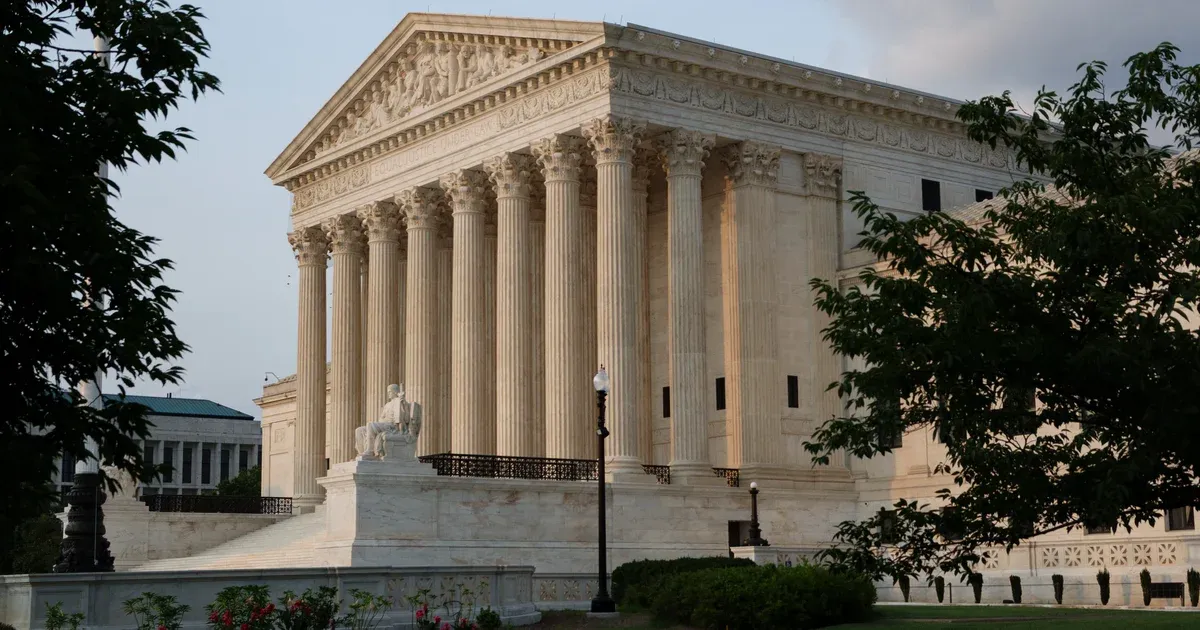 Photo: CBS News
Key points
The Supreme Court on 22 October 2026 let New Hampshire bar student IDs as voter identification in the November midterm election.
The Supreme Court on 22 October 2026 cleared the way for New Hampshire to bar student IDs as a form of identification for voting in the November midterm election. The justices granted a Republican-backed emergency appeal and blocked the use of student IDs as a backup method of identification, in an unsigned one-paragraph decision.
The ruling matters because it lets the state enforce its identification rules in a closely contested U.S. Senate race, with voters heading to the polls in less than two weeks. New Hampshire passed a law this year saying student IDs would no longer be an expressly accepted form of identification for obtaining a ballot, and the secretary of state then issued guidance barring them as a backup way to prove a voter's identity.
What the order changed
The state enacted its law in June 2026, removing student IDs from the list of expressly valid photo identification. The law took effect in April and stayed in place for the state's primary elections in September. After the legislature passed HB 323 and it went into effect, the secretary of state issued guidance in April 2026 confirming student IDs could not be used to register to vote or obtain a ballot, and trainings on that guidance were conducted.
A federal judge left the law in place but blocked the secretary of state's guidance in early October, prompting the appeal to the Supreme Court. Voting rights groups and state officials disagree over a safety valve provision that lets election officials use the cards as secondary evidence to verify a voter's identity. The lower court ordered Secretary of State David Scanlan to revise his guidance announcing that student IDs could no longer be used for any purpose at all.
Scanlan asked the Supreme Court to intervene, arguing the lower court ignored rules prohibiting federal courts from interfering with voting rules too close to an election. He wrote that the district court's disagreement with his interpretation of state law is nuanced and the public could misunderstand it, creating a risk that voters show up with only student IDs. He claimed re-educating local election officials was practically impossible and risked voter confusion.
How the dispute reached the court
The Supreme Court invoked the longstanding Purcell principle, quoting a 2020 decision that lower federal courts should ordinarily not alter election rules on the eve of an election. The court wrote that the district court did not point to anything that would justify deviating from that principle. Justice Ketanji Brown Jackson was the only justice to publicly dissent, arguing the Purcell principle did not necessarily apply here.
Where the justices disagreed
Jackson wrote that a case involving a court order that left the state election rule untouched does not necessarily fall within Purcell's concern about federal courts changing election rules at the last minute. She said the lower court made a determination that correcting a publicised misstatement about New Hampshire's election rules was necessary to ensure certain citizens were not unduly burdened in voting.
What happens next on appeal
Attorney General John Formella praised the ruling, saying New Hampshire has a responsibility to protect the integrity of its elections and ensure election laws are applied as written. He called it an important victory for defending those laws and preventing last-minute court orders from creating uncertainty. Bryan Sells, attorney for the Coalition for Open Democracy, said the decision authorises an unconstitutional policy that will deprive young voters of their right to vote. The stay will remain pending the disposition of the appeal in the First Circuit Court of Appeals. New Hampshire voters will cast ballots in a closely contested U.S. Senate race in the November midterm election, with the ruling settling which identification rules apply at the polls.
Frequently asked questions
What did the Supreme Court decide about New Hampshire student IDs?
On 22 October 2026, the Supreme Court granted an emergency appeal and blocked a lower court order, letting New Hampshire bar student IDs as a backup form of identification for voters in the November midterm election.
Why did Justice Jackson dissent?
Justice Ketanji Brown Jackson, the only justice to publicly dissent, argued the Purcell principle did not necessarily apply because the lower court order left the state election rule untouched and aimed to correct a publicised misstatement about the rules.
What happens next after the Supreme Court's order?
The stay remains pending the disposition of the appeal in the First Circuit Court of Appeals, while New Hampshire voters cast ballots in a closely contested U.S. Senate race in the November midterm election.