Taiwan voters choose mayors in tight Taipei race
Voters across Taiwan's 22 cities and counties cast ballots on 28 November 2026 in a nine-in-one election for about 11,000 posts, with Taipei's mayoral race too close to call.
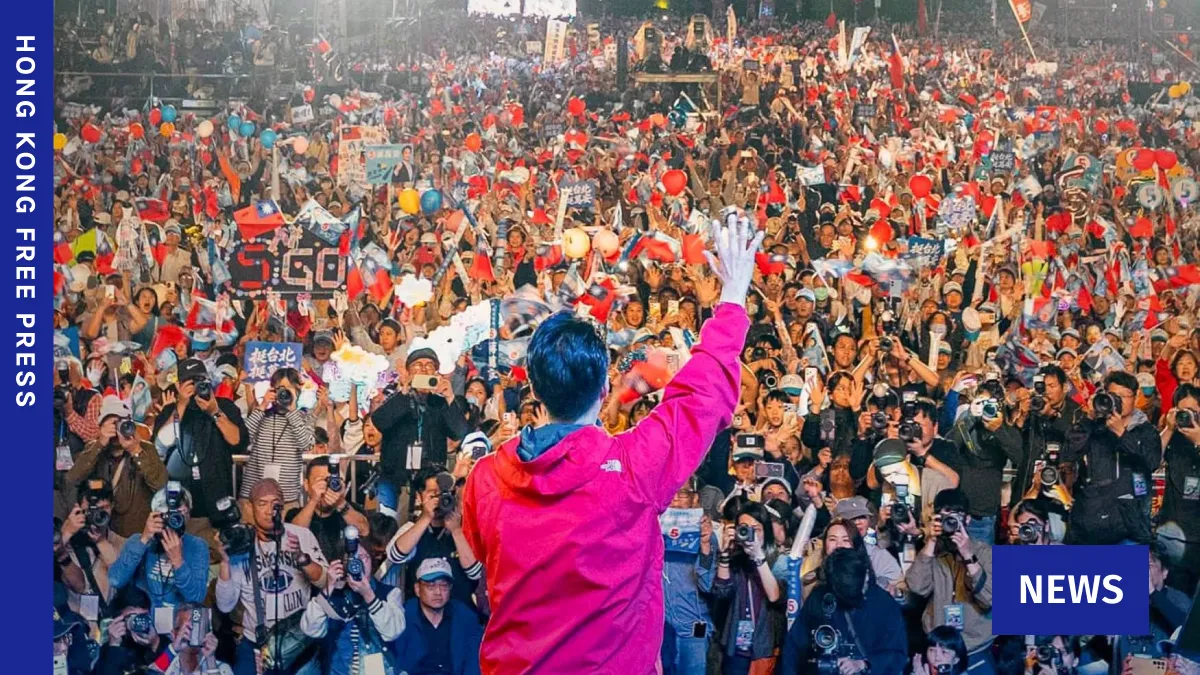 Photo: Hong Kong Free Press
Key points
On 28 November 2026, Taiwanese voters cast ballots in a nine-in-one election for about 11,000 posts across 22 cities and counties, with Taipei's mayoral race too close to call.
Taiwanese voters cast ballots on Saturday, 28 November 2026, in a nine-in-one local election that will decide about 11,000 posts, including mayors and magistrates, across 22 cities and counties. Polls opened at 8am (00:00 GMT) and closed at 4pm (08:00 GMT), with results expected early in the evening and winners serving four-year terms. Voters lined up at schools, temples and community centres, and the election has been unusually competitive in some of the island's biggest cities.
The key contest is for the mayor of Taipei, a traditional stronghold of the opposition Kuomintang (KMT). Incumbent Chiang Wan-an, who won by a double-digit margin in the last election and is seen as a possible future presidential candidate, faces a strong challenge from Puma Shen of the governing Democratic Progressive Party (DPP). Shen is an academic-turned-lawmaker and an expert on China's information warfare. He entered the race as the underdog but drew huge crowds at his rallies.
The Taipei mayoral race
Shen's social media savviness sparked a frenzy of support dubbed 'Ocean Current', a play on his name, that spread across the island. Supporters designed, made and shared ribbons, usually several centimetres wide and more than half a metre long, to show backing for him. Coffee shop owner Jason Yang, in his 60s, printed around 1,000 ribbons in various designs after he could not get hold of official ones. Wang Tai-li, an expert in political communication at National Taiwan University's Graduate Institute of Journalism, said it was the first time she had observed ribbons used to express 'identification with a particular candidate'.
Chiang, by contrast, 'doesn't need to work especially hard to establish name recognition because he is already very well known', Wang said. At a food market in Taipei, Yinny Fan, 46, displayed Chiang's official campaign ribbons at her tofu stall, saying they look 'special and pretty' and that 'you can tell right away, at a glance, which party it belongs to'. Lily Chang, 41, described the election as 'a bit like a carnival' and called Shen 'my first political crush'.
Shen cancelled a final rally over traffic concerns and held an online event instead, which drew more than 500,000 viewers on YouTube. President William Lai Ching-te of the DPP urged voters at a rally in neighbouring New Taipei City to back the party's candidates there. Chiang told supporters the race was 'very close'. Shen is also a former civil defence activist and has long been a thorn in Beijing's side.
China's pressure campaign
China is paying close attention, despite not featuring as a key campaign issue. The government has warned that Beijing is trying to influence the outcome through 'cognitive warfare' and 'transnational repression'. Taiwan's Ministry of National Defense counted some 33 sorties from China's People's Liberation Army warplanes between Friday and Saturday flying toward Taiwan, including bombers and fighter jets. China's Defence Ministry said this week that 'reunification' is an unstoppable trend.
Shen is wanted by Chinese police for alleged criminal 'separatist activities' and is barred from entering the country. China denounced him, and Austin Wang, a political science professor at the University of Nevada, said a Shen victory in the KMT's heartland could be seen as 'quite shameful' in Beijing. Shen's supporters included Michelle Wang, 48, who said he is 'a very trustworthy young man', and 82-year-old Chen Sung-sung, who voted for Chiang and called him 'honest and decent'.
The KMT faces the challenge of defending the 14 city and county seats it won in 2022, while the DPP is seeking to improve on the five seats it holds. In the last local elections four years ago, the KMT won 14 cities and counties, the DPP five and other parties or independents three. A major upset could also be brewing in New Taipei, Taiwan's largest city and another KMT stronghold, while Kaohsiung's mayoral office is held by the DPP.
What the result could mean
Analysts caution that local results are not a reliable barometer of how people might vote in the 2028 presidential election, with history showing repeatedly that it can be the reverse. Liu Jia-wei, a political science professor at National Taipei University, said Saturday's turnout of undecided and young voters will determine the outcome of the 'very tight race'. President Lai is expected to seek a second term.
The KMT could begin debating its presidential ticket soon after the vote. The most likely candidates are outgoing Taichung Mayor Lu Shiow-yen and parliamentary speaker Han Kuo-yu. KMT chairwoman Cheng Li-wun, who met Chinese President Xi Jinping in April, is also seen as a possible challenger, though she could face pressure to step down if the party does badly. President Lai's DPP is likely to rally behind him for reelection.
Frequently asked questions
What is being decided in Taiwan's local elections?
About 11,000 posts, including mayors and magistrates, across 22 cities and counties in a nine-in-one election.
Who is running for Taipei mayor?
KMT incumbent Chiang Wan-an and DPP challenger Puma Shen, with the race described as very tight.
When are results expected?
Polls closed at 4pm (08:00 GMT) on 28 November 2026, with results expected early in the evening.