Tesla says it will sell Cybercabs to customers by end of 2026
Tesla said on its 21 October 2026 earnings call it will start selling the steering-wheel-free Cybercab by the end of 2026, while a federal safety probe into the vehicle remains open.
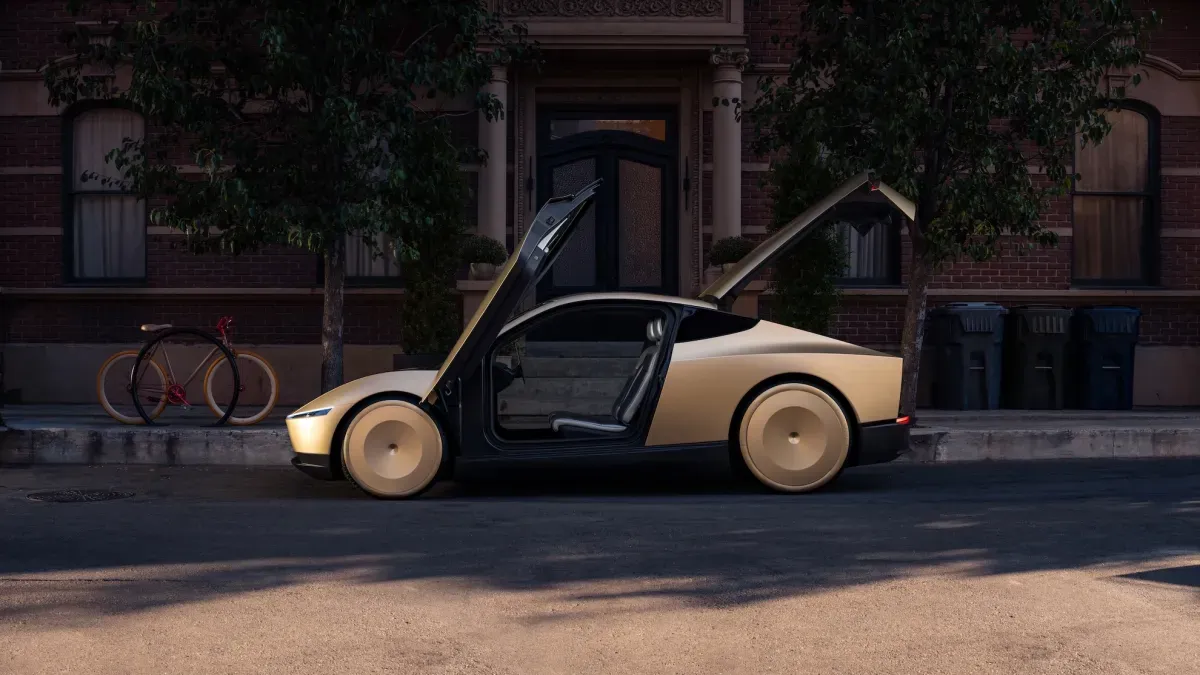 Photo: TechCrunch
Key points
Tesla said it plans to start selling its autonomous, steering-wheel-free Cybercab to customers by the end of 2026, while a federal safety probe remains open.
Tesla said on its third-quarter earnings call on 21 October 2026 that it will start selling its autonomous Cybercab to customers by the end of 2026, even as federal regulators investigate whether the vehicle meets safety standards. Lars Moravy, Tesla's vice president of engineering, said the company is trying to get Cybercabs to customers by the end of this year, 2026.
The announcement matters because the Cybercab is a gold-hued, autonomous two-seater with no steering wheel and no traditional controls, and no such car has been sold at scale in the United States without manual driving controls. Until now, Tesla had only floated the idea of selling the vehicle to third parties. The company first raised the possibility around its Cybercab event in Austin and posted a form for people interested in buying robotaxis, but it was not clear whether Tesla would follow through, or how.
What the earnings call changed
Moravy said the Cybercabs produced today are all destined for Tesla's own robotaxi fleet, and the company will start small as it delivers fully designed autonomous vehicles to customers. Tesla is already manufacturing Cybercabs at its Gigafactory in Texas, and validation builds are rolling off the line there. As the fleet grows, Moravy said, Tesla will scale up as it learns about delivery, ownership and fleet management of autonomous vehicles in customer hands.
Musk drew a sharp line between the Cybercab and Tesla's other cars. He said the Cybercab is primarily going to be something offered as transport as a service, whereas cars like the Model 3, Model Y and Roadster are the ones a person would want to own. Musk said the vast majority of the Cybercab stuff will be essentially Tesla-owned and transported as a service, which means most units will stay inside Tesla's own ride-hailing operation rather than sit in private driveways.
Tesla's earlier plan centred on turning privately owned Tesla vehicles into self-driving taxis through a software update, and that plan has yet to materialise. Today, Tesla owners can subscribe to Full Self-Driving (Supervised), an advanced driver-assistance system that automates many driving tasks but still requires the driver to take control. The company continues to push software updates to improve its capabilities, but a human driver must remain engaged and ready to take over at all times.
Where the fleet plans stand
Musk said an unsupervised version of Full Self-Driving would be rolled out to customers sometime in the second quarter of next year, another delay for owners who bought or subscribed to the software years ago. Ashok Elluswamy, Tesla's director of AI, said the company believes it can start switching on Unsupervised Full Self-Driving on some of the first customer vehicles to be part of the Robotaxi fleet around the second quarter of 2027. If both timelines hold, third-party fleet customers could operate the Cybercab as a robotaxi service before Tesla owners get the same capability in their own cars.
Tesla first unveiled the Cybercab in 2024, and it began offering rides through its Robotaxi app in Austin, Texas in September this year. The company has also started taking inquiries from entities interested in buying units, specifically those who can help build its robotaxi network, indicating it will initially sell to companies that can purchase whole fleets. The vehicle has no steering wheel, accelerator or brake pedals, and relies entirely on Tesla's camera-based Full Self-Driving software to operate.
The federal safety investigation
The National Highway Traffic Safety Administration, the federal auto safety regulator, announced last month that it had opened an investigation into the Cybercab, just hours after the vehicles began operating on public streets in Austin. Federal Motor Vehicle Safety Standards require manual controls like brake pedals, as well as rearview and side mirrors. Automakers traditionally self-certify whether their vehicles comply with these rules, and Tesla did the same for the Cybercab.
Current regulations do not accommodate vehicles without manual controls, though the Department of Transportation recently proposed removing those requirements for vehicles designed to be autonomously driven. In the meantime, the National Highway Traffic Safety Administration said it would investigate the Cybercab to examine the process and technical data on which Tesla relied when certifying the vehicle. The outcome of that investigation could affect whether Tesla, or anyone else, can legally operate the Cybercab.
Vehicles lacking manual controls typically require an exemption from the National Highway Traffic Safety Administration, which historically caps production at 2,500 vehicles per year per manufacturer unless new rulemaking is passed. The agency has also opened multiple probes into Tesla's Full Self-Driving system related to crashes, traffic violations, and operation in low-visibility conditions, and has sought detailed information from Tesla on the Cybercab's deployment plans, remote supervision, and compliance strategy.
If Tesla hits its end-of-2026 sales target, it would be the first mass-market car sold in the United States without manual driving controls, a milestone that could force a rewrite of federal vehicle safety rules. Safety advocates say the coming weeks will be closely watched as the National Highway Traffic Safety Administration decides whether Cybercabs belong in private hands or remain confined to tightly controlled fleets. The next dated event on the calendar is the second quarter of 2027, when Elluswamy said customer vehicles could join the Robotaxi fleet.
Frequently asked questions
When will Tesla start selling the Cybercab?
Tesla vice president of engineering Lars Moravy said on the company's third-quarter earnings call on 21 October 2026 that Tesla is trying to get Cybercabs to customers by the end of 2026. Sales will start small before scaling up.
Can anyone buy a Cybercab and drive it themselves?
No. The Cybercab has no steering wheel, accelerator or brake pedals, and relies entirely on Tesla's Full Self-Driving software. Elon Musk said the vast majority of Cybercabs will be essentially Tesla-owned and offered as transport as a service.
Is there a federal investigation into the Cybercab?
Yes. The National Highway Traffic Safety Administration opened an investigation into the Cybercab last month, just hours after the vehicles began operating on public streets in Austin, to examine the process and data Tesla used to self-certify the vehicle.