Tesla unveils Roadster with SpaceX cold-gas thrusters in Texas
Tesla unveiled a new Roadster fitted with SpaceX-derived cold-gas thrusters at its McGregor, Texas test site, with production planned for 2028 and reservations open at $5,000.
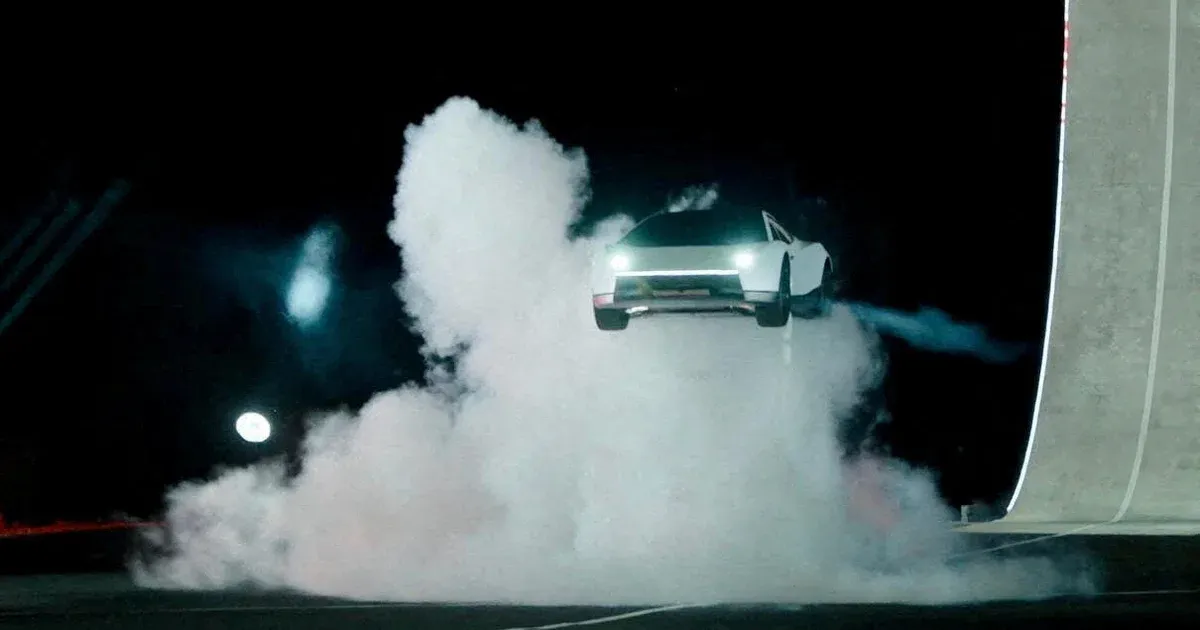 Photo: CBS News
Key points
Tesla unveiled a new Roadster with SpaceX-derived cold-gas thrusters at its McGregor, Texas test site, going into production in 2028.
Tesla unveiled its new Roadster at a SpaceX test site in McGregor, Texas, during a livestreamed event, with the vehicle driving up a C-shaped ramp, hanging upside-down, then jumping off and hovering to the ground using cold-gas thrusters. Elon Musk said the car would go into production in 2028. Prices for the base vehicle were not announced at the event, though Tesla's website opened reservations at a $5,000 deposit.
The demonstration matters because it shows Tesla and SpaceX combining engineering on a single product, nine years after Tesla first showed a Roadster concept prototype and after years of launch delays. Musk described the collaboration as one between "the world's best car company and the world's best rocket company." The vehicle's flight capability is unproven: Musk said its "success is not guaranteed" but "it will probably work."
What the stunt demonstrated
The stunt itself was carefully staged. The Roadster drove up the C-shaped ramp twice, stopping on the section perpendicular to the ground while hanging upside-down, then jumped from the top, rolled over midair, and hovered down on its thrusters. It also jumped over several parked Tesla vehicles and, near the end of the presentation, launched from a stationary position, flipped in the air, and hovered back down. The stunts were programmed into the vehicle.
An Optimus robot was seated in the driver's seat when the door opened, but it was only for show. Tesla explained on its website that a multi-mode fan and ground sealing system pulls air from beneath the vehicle, acting as a downforce generator that provides enough suction to hold the car upside-down on the ramp even when stationary. This suction system, rather than the thrusters, is what allowed the vehicle to cling to the vertical ramp surface.
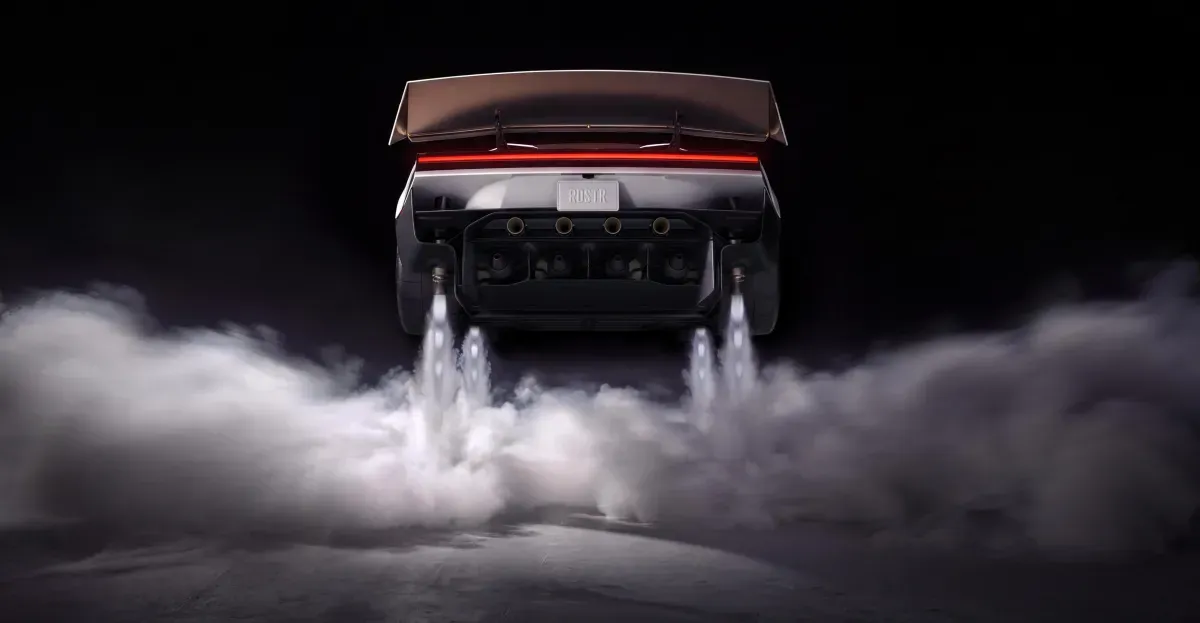
The thrusters handle a different job. Attitude-control thrusters and rear thrusters, using technology borrowed from SpaceX, enabled the jump and controlled hover back to the ground. These cold-gas thrusters use all-electric actuators that Tesla says enable precise thrust and "micro adjustments within a fraction of a second." Musk said the car is equipped with "ultra high-pressure air tanks" to propel it into the air, rather than combustion or jet engines.
How the thrusters work
Regulatory oversight of the vehicle remains unclear. The Federal Aviation Administration said the Roadster does not meet the agency's definition of an aircraft. The National Highway Traffic Safety Administration typically oversees vehicles but delegates safety certification to the automaker, and did not immediately respond to a request for comment. A senior U.S. Transportation Department official expressed skepticism that the vehicle can actually take off but acknowledged there was no clear answer on which agency would regulate it.
Tesla's website notes the planned flying model is not approved for public road use. Buyers can place a reservation online with a $5,000 deposit for a non-flying base Roadster, with $45,000 due within 10 days. The limited-edition Thrust model, which adds the suction system and acceleration thrusters, requires an additional $245,000 within 10 days of reservation, bringing the total to $250,000. The Rocket model, with its full flight system, is offered by invitation only.
Wall Street analyst Dan Ives of Yorkville Ives wrote in a research note that the Roadster "will not move the volume or revenue needle, with production likely limited," and that investors should not model it as a growth driver. Ives said the vehicle restores the brand halo at the top of the market and puts a spotlight on the engineering stack ahead of Tesla's third-quarter earnings, scheduled for October 21.
What it costs to reserve
The flying car concept is not new: American aviation pioneer Glenn Curtiss debuted the first flying car prototype in 1917, though serious designs have advanced only recently as electric motors and high-performance batteries improved. Technical and regulatory challenges have so far kept the flying car sector from taking off broadly. The Federal Aviation Administration's position that the Roadster is not an aircraft leaves open which body, if any, will certify a car that can hover. Tesla has not announced a price for the base Roadster. Reservations are open now, with production planned for 2028. The next dated event on Tesla's calendar is its third-quarter earnings report on October 21, where the Roadster's engineering and its limited production outlook are likely to draw analyst questions.
Frequently asked questions
What did Tesla unveil at its SpaceX test site?
Tesla unveiled a new Roadster with cold-gas thrusters and a suction system, demonstrated at a SpaceX test site in McGregor, Texas. The car drove up a C-shaped ramp, hung upside-down, jumped off, and hovered down using thrusters borrowed from SpaceX technology.
How much does it cost to reserve the new Tesla Roadster?
A base Roadster reservation costs $5,000, with $45,000 due within 10 days. The Thrust package, adding the suction system and acceleration thrusters, costs $250,000 total at reservation. The full-flight Rocket model is invite-only and cannot be reserved online.
When will the new Tesla Roadster go into production?
Elon Musk said the new Roadster will go into production in 2028. Tesla has not announced a base price for the vehicle, and the flying model is not approved for public road use according to Tesla's website.