Toledo chemical tank leak forces nearly 1,000 to evacuate
A ruptured tank at MC Tank Transport in Toledo vented glycidyl methacrylate on 21 October, forcing nearly 1,000 residents to evacuate and more than 50,000 to shelter in place.
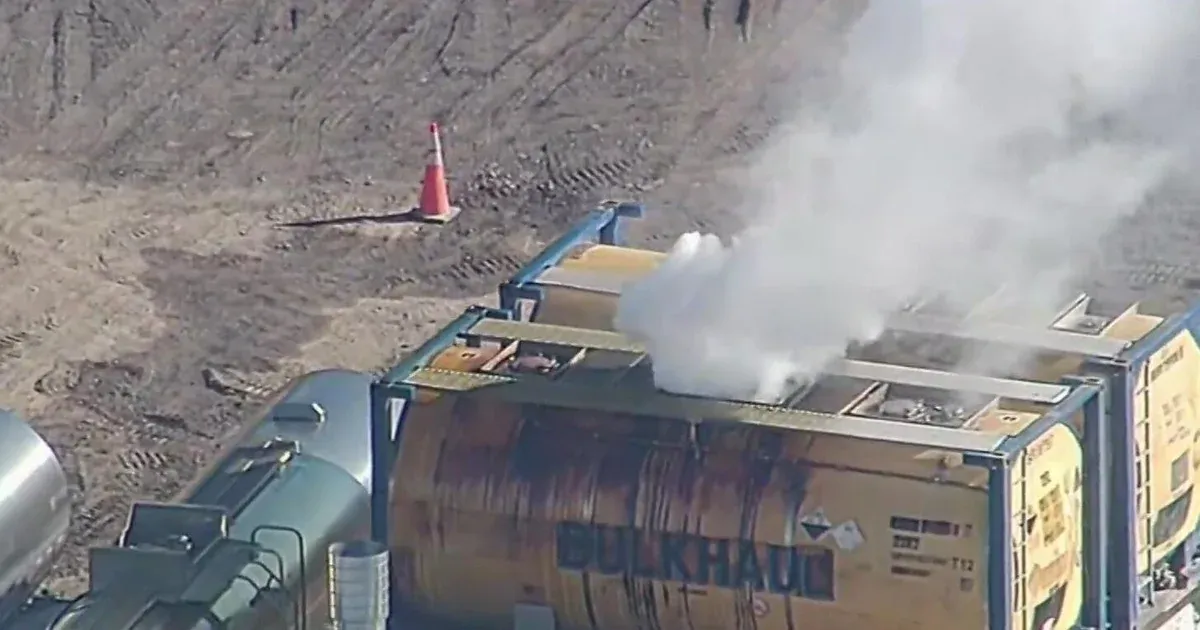 Photo: CBS News
Key points
A ruptured tank in Toledo vented glycidyl methacrylate on 21 October, forcing nearly 1,000 residents to evacuate and more than 50,000 to shelter in place.
A ruptured chemical tank at the MC Tank Transport terminal in Toledo, Ohio, vented a white plume of glycidyl methacrylate into the air for hours on 21 October, forcing nearly 1,000 residents to evacuate and more than 50,000 to shelter in place. The initial event happened around 9:30 p.m. EDT on Tuesday evening at M.C. Tank Terminal, according to Toledo Mayor Wade Kapszukiewicz.
Toledo Fire and Rescue ordered everyone within a one-mile radius of 1266 Progress Ave. to evacuate at 10:48 p.m. Tuesday. At 4:24 a.m. Wednesday, the department told those within a three-mile radius to shelter in place, close all doors and windows and shut off ventilation that draws in outside air. The evacuation and shelter-in-place orders remained in effect on Wednesday evening.
What the tank released
MC Tank Transport said in a statement that equipment associated with its operations is involved in the incident. The company and the City of Toledo identified the chemical as glycidyl methacrylate, a colourless liquid with a fruity smell used to make certain plastics, paints and coatings perform better. It is also used in industrial coatings, resins, adhesives and dental materials.
The Ohio Environmental Protection Agency said on Wednesday that an error during transfer led to the incident. The agency did not elaborate. The tank can hold 5,500 gallons of the chemical, Kapszukiewicz said. The chemical is liquid inside the tank but becomes a gas when released. City leaders chose to let the tank vent rather than send crews to stop the leak. Kapszukiewicz said crews stayed back because of the risk of an explosion.
Why crews stayed back
Kapszukiewicz said early on that the tank had the potential within 12 hours of the incident to be explosive. By around 4:30 p.m. ET on Wednesday, he said that officials did not see that as a very real possibility. Drones monitoring the site about every half-hour showed conditions improving and less gas being released.
A small seal resembling a manhole on the tank was not visible a few hours earlier because of gas emission, the mayor said. In a drone reading around 1 p.m., he said, the manhole was visible clearly enough that crews were reading serial numbers off it, indicating significantly less gas was escaping. The temperature in the tank continued to drop.
Kapszukiewicz said officials had not determined whether the initial event was an explosion, and that they were investigating what may have happened. He said they could find out later that it was an explosion but did not know that yet. The mayor said early on that the tank had the potential within 12 hours of the incident to be explosive, and by around 4:30 p.m. ET on Wednesday he said officials did not see that as a very real possibility.
Health effects and testing
One Lucas County sheriff's deputy who responded to the scene was injured during the response and drove himself to a hospital after not feeling well. ProMedica, which operates hospitals and urgent care centres in the Toledo area, said it evaluated about 30 people who reported symptoms that might have been related to the leak. Most were treated and released.
Breathing vapour from the chemical may cause coughing, throat burning, headache or shortness of breath, according to the Toledo-Lucas County Health Department. Contact with the skin or eyes can lead to severe irritation or chemical burns as well as allergic skin reactions. Residents whose skin or eyes were exposed should remove contaminated clothing and rinse with clean running water for at least 15 minutes.
Karim Baroudi, director of the Toledo-Lucas County Health Department, said the chemical is really toxic if touched or ingested. Testing was ongoing to determine the chemical's concentration in the air and whether it posed additional health risks. City officials said smelling an odour does not always mean toxic levels of exposure.
Toledo public schools were closed on Wednesday. Automaker Stellantis shut down production at its nearby Jeep assembly plant. CSX rail lines in the area were shut down, Kapszukiewicz said, and someone from CSX offered its own air monitoring. The shelter-in-place zone included neighbourhoods along the Lake Erie shoreline and stretched just across the state line into Michigan.
MC Tank is based in West Chester, Ohio, and specialises in transporting bulk liquid chemicals. Kapszukiewicz said executives were on their way to the area from Arkansas to help officials better understand the dangers. Company representatives were on their way to Toledo, he said. The city said crews were not able to move in as quickly as hoped to mitigate the situation.
Frequently asked questions
What chemical leaked in Toledo?
Glycidyl methacrylate, a colourless liquid with a fruity smell used to make plastics, paints, coatings, resins, adhesives and dental materials. MC Tank Transport and the City of Toledo identified the chemical. It causes irritation and possibly burning in the eyes.
How many people were evacuated in Toledo?
Nearly 1,000 residents were told to evacuate within a one-mile radius of 1266 Progress Ave. More than 50,000 people were advised to shelter in place within a three-mile radius. The orders were issued at 10:48 p.m. Tuesday and 4:24 a.m. Wednesday respectively.
Why did crews let the tank vent instead of stopping the leak?
Toledo Mayor Wade Kapszukiewicz said intervention leaves a slim potential for an explosion, whereas waiting it out has no negative impact. Emergency and hazardous material crews were not approaching the tank because of the risk of an explosion.