UK approves Jackdaw gasfield, adding 36m tonnes of carbon emissions
The UK government approved Jackdaw gasfield production on 21 October 2026, adding an estimated 36m tonnes of carbon emissions, as energy secretary Miatta Fahnbulleh leaned towards rejecting the larger Rosebank oilfield.
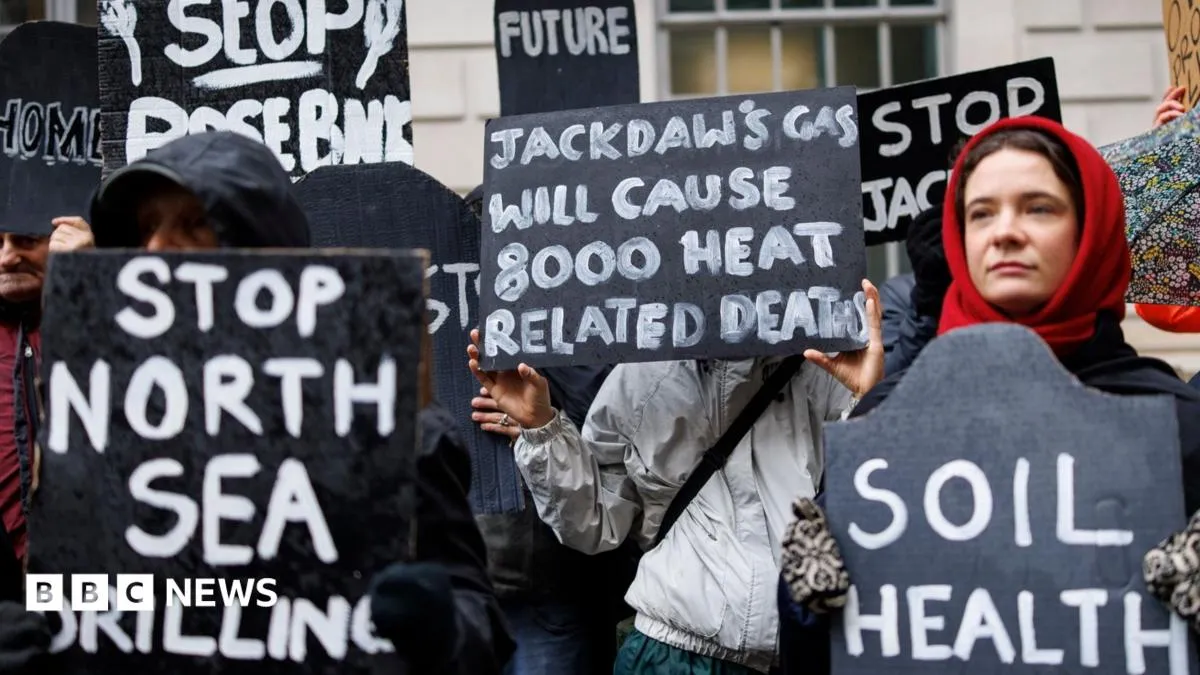 Photo: BBC News
Key points
The UK government approved the Jackdaw gasfield on 21 October 2026, a decision expected to add an estimated 36m tonnes of carbon emissions.
The UK government approved extraction from the Jackdaw gasfield in the North Sea on 21 October 2026, a decision that will add an estimated 36m tonnes of carbon emissions. Energy secretary Miatta Fahnbulleh said she was satisfied the project would not violate the UK's climate commitments. Jackdaw is due to begin producing gas within weeks, and the approval came as officials signalled she was leaning towards rejecting the larger Rosebank oilfield.
The approval matters because it tests whether the government can expand domestic gas production while holding to its net zero targets. Fahnbulleh argued the UK will need gas during the transition and that it is better sourced from relatively low-carbon North Sea fields than imported. She also conceded the project would not help lower household energy bills, saying plainly: "This is not about bills."
Why the government says Jackdaw is needed
Fahnbulleh defended the decision on a visit to Aberdeen, tying it to energy security. "As we make the transition, we are going to need gas," she said. "At a point when we have got conflict in the Middle East that is triggering an energy crisis, energy security is vital, and homegrown energy is key." The field will add an estimated 36m tonnes of carbon emissions once production starts within weeks.
The carbon figure gives the climate row its scale. The UN Environment Programme has recommended global carbon emissions be cut by nearly a fifth in the next four years, and by close to half within a decade, to avoid overshooting climate targets by a disastrous margin. Against that trajectory, Jackdaw's 36m tonnes lands as the UK approves new fossil fuel production rather than cutting it.
Rosebank, a far larger project, remains undecided. Officials said Fahnbulleh is minded to reject it, and a final decision is expected before the end of this year. She could still be overruled by Andy Burnham, who may hear different representations from the chancellor, John Healey. Rosebank would emit about seven times the carbon of Jackdaw, and most of its oil would be exported rather than used domestically.
Rosebank decision still open
Fahnbulleh drew a sharp line between the two fields. "One is a gasfield that caters for the domestic market, while the other is an oilfield that is mainly for export," she said, adding each application must be judged on its own merits and be consistent with climate obligations and carbon budgets. A Department for Energy Security and Net Zero spokesperson called reports on Rosebank speculation.
Labour MPs split over the decision. Afzal Khan, chair of the all-party parliamentary group on climate change, said approving projects on the scale of Rosebank on top of Jackdaw cannot be justified. Former minister Catherine West said climate change is a present reality and that job losses should not be met by doubling down on new fossil fuel developments.
Where Labour MPs disagree
Others in Labour backed the approval. Andy Burnham accused the Conservatives of not carrying out the process properly, saying his party had made a pragmatic decision. At Prime Minister's Questions, Kemi Badenoch accused the government of dithering, noting the Conservative government first approved Jackdaw in 2022. One Labour MP said Fahnbulleh knew her credibility was on the line.
Campaigners prepared to fight back. Shruti Suresh of the watchdog Global Witness urged those at a Guardian climate event to protest against Jackdaw and Rosebank. Columnist Zoe Williams wrote that the announcement will face immediate protest and legal challenge. Chris Stark, former chief executive of the Climate Change Committee, said these projects have sucked all the oxygen out of the debate on climate action.
The decision may help Labour in north-east Scotland, where the industry is based and unions campaigned for the permits. It is likely to cause angst among MPs in seats facing challenges from the Green party. Labour's 2024 election manifesto committed to a ban on new drilling licences, but the companies behind Jackdaw and Rosebank sought approval for existing licences.
The next decision lands on Rosebank. Officials say Fahnbulleh has not yet made a final call, and Burnham would be expected to make it if there is conflict. Labour MPs have discussed ways of forcing or encouraging a parliamentary vote on Rosebank if it is approved. Chancellor John Healey told ITV he expected oil and gas revenues to contribute to a new energy wealth fund.
Frequently asked questions
Why did the UK government approve Jackdaw gasfield?
Energy secretary Miatta Fahnbulleh said she was satisfied Jackdaw would not violate the UK's climate commitments, arguing the UK will need gas during the transition to net zero and that it is better to take it from relatively low-carbon North Sea sources than to import it.
How much carbon will Jackdaw produce?
Jackdaw will add an estimated 36m tonnes of carbon emissions once it begins producing gas, which is due within weeks of the approval on 21 October 2026. By comparison, the Rosebank oilfield would emit about seven times the carbon of Jackdaw.
What happens next with the Rosebank oilfield?
Officials say energy secretary Miatta Fahnbulleh is leaning towards rejecting Rosebank, with a final decision expected before the end of 2026. She could be overruled by Andy Burnham, and Labour MPs have discussed forcing or encouraging a parliamentary vote if it is approved.