Trump in Manila for Quad, then Shenzhen summit with Xi and Putin
US President Donald Trump arrives in the Philippines on 17 November for his first Quad meeting, ahead of a trilateral summit with Xi Jinping and Vladimir Putin in Shenzhen on 19 November.
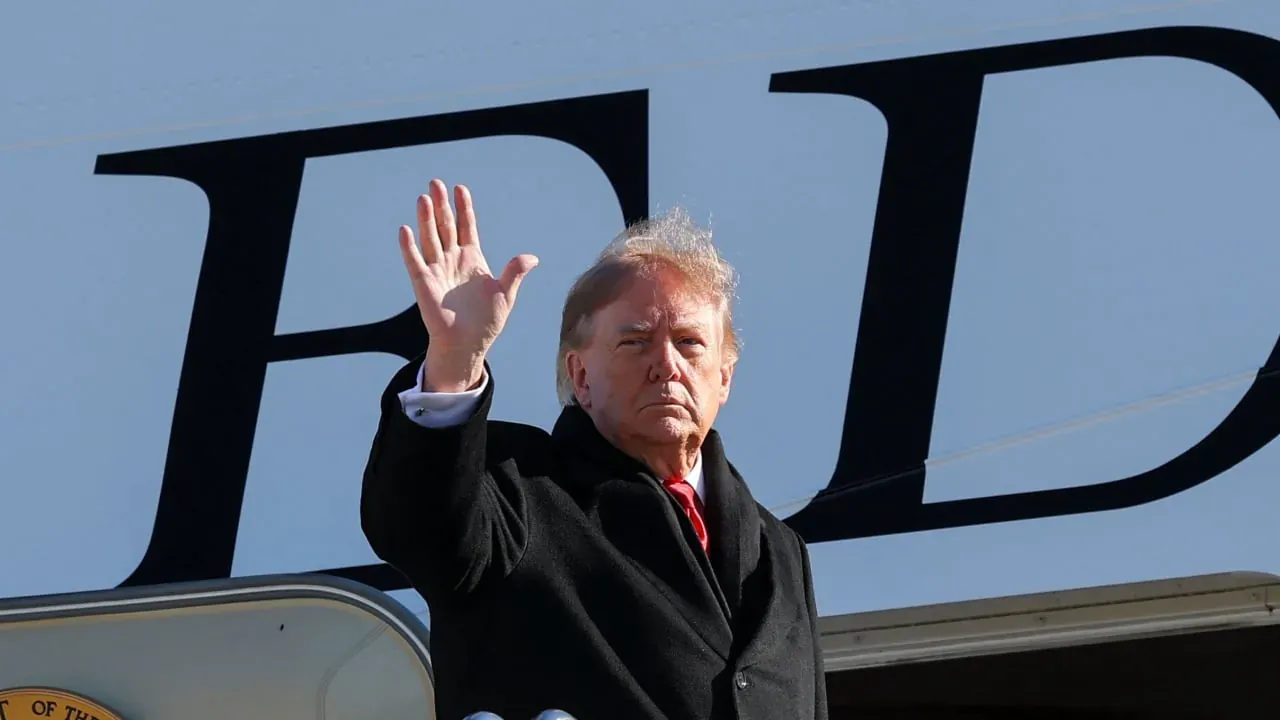 Photo: The Jerusalem Post
Key points
Trump begins his Asia trip in Manila for the Quad meeting, then travels to Shenzhen for a first-ever trilateral summit with Xi and Putin.
US President Donald Trump flies into the Philippines on Tuesday at the tail end of a Southeast Asian summit, where he could face protests ahead of the first meeting in two years of the leaders of the Quad group of Indo-Pacific countries. His Asia trip also includes the Asia-Pacific Economic Cooperation forum in Shenzhen and a much-anticipated trilateral meeting with his Chinese and Russian counterparts.
Trump's arrival in Manila comes after his Republican Party's defeat in midterm elections and spy allegations that could complicate a fragile trade-war truce between the US and China. There could be protests in Manila against Trump's visit, after days of demonstrations that have included the burning of effigies of the president and calls for an end to the Middle East war and the scrapping of the US-led Pax Silica initiative.
First Quad meeting
The meeting of the Quad – the US, Japan, Australia and India – will be Trump's first and takes place two years after the last gathering of the group, which his predecessor Joe Biden regarded as a signature foreign policy initiative. It comes just ahead of the APEC gathering hosted by Chinese President Xi Jinping, who has previously objected to the Quad as an effort to encircle Beijing. Quad members have said the grouping is not directed against any one country.
Former US Deputy Secretary of State Kurt Campbell credited Washington's top diplomat, Marco Rubio, with the timing and reconvening of the Quad, which he said had lost ambition under Trump. "Part of what he (Rubio) is thinking is that this is probably the best possible signal if you're going to go into a trilateral meeting," said Campbell, co-founder of The Asia Group, referring to Thursday's US-China-Russia talks.
White House spokesperson Olivia Wales on Friday said that under Trump's leadership, the Quad had demonstrated it is "a partnership of action, tackling the region's toughest challenges and driving opportunities to ensure a free and open Indo-Pacific." A Japanese foreign ministry official last week said it was expected that Quad leaders would try to show unity, with maritime security, export restrictions, critical-minerals supply-chain diversification and AI among potential discussion points.
Trilateral agenda
In the first-ever meeting between the leaders of the US, China and Russia, Trump revealed that he planned to talk about the Russia-Ukraine conflict during the meeting with Putin and Xi. Ukraine had earlier expressed concerns that the meeting would sideline Kyiv and "encourage Putin to continue this war". His remarks come after his administration officials said the three leaders would discuss nuclear disarmament and the Iran war, but steer clear of Russia's war with Ukraine.
On Monday, China said the three leaders would discuss "world peace" when they hold their first trilateral summit in Shenzhen, without mentioning either Iran or Ukraine. China's foreign ministry spokeswoman Mao Ning said that these discussions would focus on "promoting strategic stability in major-power relations". Soon afterwards, Trump said the discussion would cover denuclearisation and the conflict with Iran. This came as the Trump administration repeatedly criticised China's rapidly expanding arsenal and demanded that Beijing be part of a formal arms control treaty.
Trump also said he might meet North Korean leader Kim Jong Un in China, which could dramatically reshape his trip through East Asia. The US president said Kim "may come" to Shenzhen but "that's up to President Xi." Trump met with Kim on three occasions during his first term before nuclear talks between the two leaders collapsed. However, Trump has not been able to get Kim to meaningfully engage since his return to the White House last year.
Chip export curbs
The Trump administration said on Monday, November 16, it would further restrict China's access to advanced AI chips from companies like Nvidia, tightening controls as President Donald Trump headed to China for talks with President Xi Jinping. The new rule restricts shipments of advanced chips to data centers like those in Thailand and Malaysia, which Chinese companies have used to access computing power to train AI models. It also imposes new requirements on overseas data centers that supply "significant volumes of computing power" to firms headquartered in China.
Commerce Secretary Howard Lutnick, who has faced criticism for his oversight of export controls on chips to China in the wake of the Nvidia scandal, is among administration officials joining Trump on the trip to Asia, a White House official said. But Trump told reporters on Monday as he departed the White House for the trip to the Philippines and China that he has no plans to replace Lutnick.
The trilateral meeting in Shenzhen has drawn comparisons to the Yalta Conference, the 1945 gathering at which the leaders of the US, Britain and the Soviet Union agreed to divide Germany and Berlin into four military occupation zones. Ukrainian President Volodymyr Zelenskyy is among those who have warned against a repeat of the Yalta arrangement that will potentially redraw spheres of influence. "We really don't want this to turn into 'Yalta 2, 3, 4,' with a redistribution of influence," he said in October.
Russia has dismissed references to the Yalta Conference, saying the decisions made by the three leaders won't be imposed on other countries. "These are the games of political scientists and have nothing to do with reality," Kremlin spokesman Dmitry Peskov, quoted by Interfax news agency, told journalists. The Kremlin spokesperson said at least Russia and China stood for a "multi-polar world order" with no decisions imposed on other nations.
Frequently asked questions
What will Trump discuss with Xi and Putin?
Trump said he plans to discuss the Ukraine war, despite officials previously saying the leaders would discuss nuclear disarmament and the Iran war but steer clear of Ukraine. China said the leaders would discuss 'world peace' and 'promoting strategic stability in major-power relations'.
What is the new US rule on AI chips to China?
The Trump administration announced on 16 November it would further restrict China's access to advanced AI chips. The rule restricts shipments to data centers in Thailand and Malaysia, and imposes new requirements on overseas data centers supplying significant computing power to Chinese firms.