Trump cancels Kansas and Iowa rallies, plans 19-state tele-rallies
President Donald Trump cancelled rallies in Kansas and Iowa on Thursday and will hold more than 20 tele-rallies across 19 states before Election Day, the Republican National Committee said.
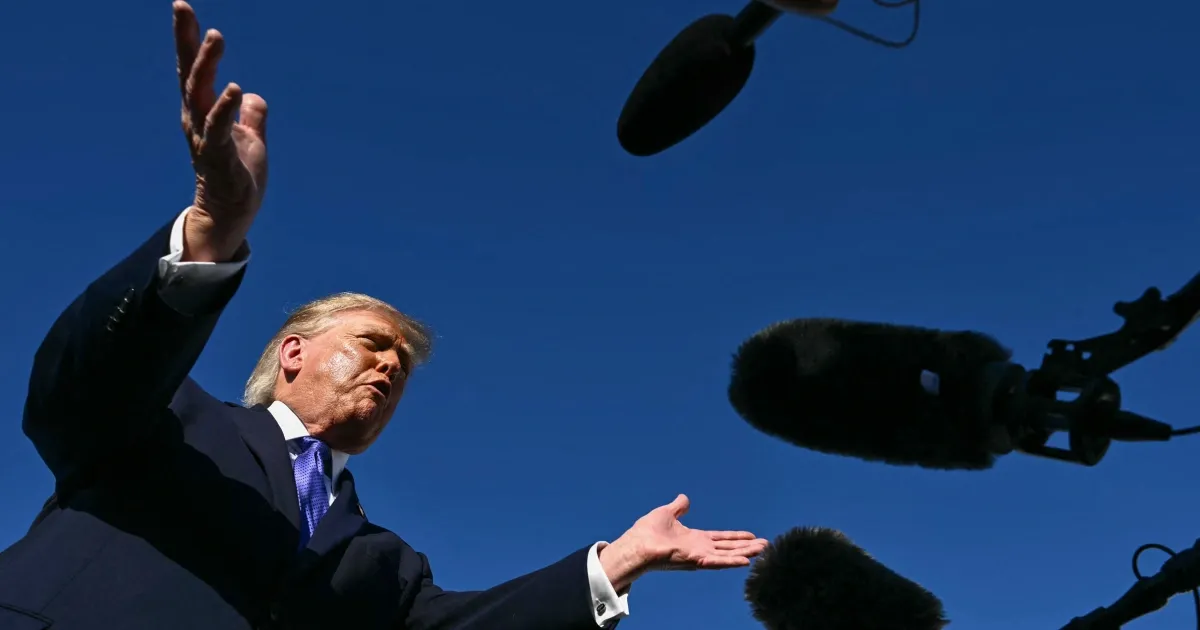 Photo: NBC News
Key points
Trump cancelled weekend rallies in Kansas and Iowa and plans more than 20 tele-rallies across 19 states before Election Day.
President Donald Trump announced on Thursday he was cancelling his rallies in Kansas and Iowa this weekend, where he had been set to stump for Republican candidates in competitive Senate races, opting instead to hold tele-rallies. The Republican National Committee said the rallies were cancelled to maximise opportunities for Trump to speak to voters across the country. Trump is aiming to hold more than 20 tele-rallies by Election Day, two White House officials said on Thursday.
The cancellations matter because Senate races in both Kansas and Iowa are considered toss-ups and could be key in either party's path to control of Congress. Trump had planned a midterm blitz in which he would travel to 35 places across the country to help raise turnout for Republican candidates. Concerns over high costs connected to the war in Iran have helped turn the Kansas race into a toss-up in a state that hasn't sent a Democrat to the Senate for nearly a century.
Why the cancellations matter
Trump said he didn't feel he had to go to Kansas, adding that he thinks Republican Senator Roger Marshall, who's locked in a tight race with Democrat Adam Hamilton, is doing well. The rally in Kansas was scheduled for Salina on Saturday, and the Iowa rally was set for Dubuque on Sunday. Trump's rally Saturday would have been in Dubuque, in the contested 2nd Congressional District. GOP operatives in Iowa said that in-person rallies would have been helpful.
The Republican National Committee said in a news release that the rallies were canceled with the goal of maximizing opportunities for President Donald J. Trump to speak to voters across the country. Party chairman Joe Gruters said that with Republicans in a strong position in Kansas and Iowa, previously planned in-person rallies in those states will no longer take place as scheduled. Trump is expected to participate in a large number of tele-rallies, which can reach more voters in the limited time left before polls close.
The Republican Party named 19 states where the tele-rallies would take place. Trump is scheduled to call into one tele-rally from Air Force One while en route to Florida on Friday. MAGA Inc, Trump's campaign funding group, plans to organise tele-rallies featuring the President across at least 19 states, including Kansas and Iowa, before Election Day. A tele-rally will be helpful in boosting turnout, but an in-person rally would have been really helpful, one Iowa operative said.
The tele-rally plan across 19 states
Trump has campaigned at 25 rallies in the past month, holding rallies nearly every day since the start of October across 19 states. He has admitted that the blitz has not been easy, saying through a hoarse voice on Monday that God didn't make your vocal cords to do a rally every day. Trump insisted on Thursday that he felt perfect and lashed out at a reporter who pressed him about whether the rally cancellation in Kansas was tied to his health.
You've been following me for two weeks. I feel perfect. You are disgusting. Put yourself in shape. You look like hell, Trump said journalist Jacob Bogage. The confrontation began when Bogage asked whether Trump's decision not to travel to Kansas was linked to him feeling unwell after weeks of campaigning. Trump called the question sick and remarked that Reuters is terrible, by the way.
Polls released on Thursday suggested Republicans faced a reckoning that could see it lose control of the Senate, as well as the House of Representatives. Surveys of likely voters in key states by CNN and polling outfit SSRS showed Democrats ahead in Michigan, Texas, Maine and even deep-red Kansas. Democrat James Talarico was leading Republican Ken Paxton 49 per cent to 43 per cent in Texas, which last sent a Democrat to the US Senate in 1988.
What polls show in key states
Abdul El-Sayed was ahead of Republican Mike Rogers in Michigan by 49 per cent to 42 per cent, while Democrats Troy Jackson and Adam Hamilton were leading their Republican rivals 49-45 in Maine and Kansas. The CNN/SSRS polls, conducted online and by phone over the past seven to 10 days, had a margin of error of between 4.2 and 4.7 percentage points in each of those states. Democrats need a net gain of four seats to take control of the Senate.
Trump is still scheduled to hold an event in Daytona Beach, Florida on Friday, campaigning for Republican Rep. Randy Fine and Sen. Ashley Moody, who are running in races rated solidly Republican by the nonpartisan Cook Political Report. No events have been announced for Monday. During the 2018 midterm elections, Trump held seven in-person rallies in the final 72 hours, compared with none planned for the final three days of this campaign.
Frequently asked questions
Why did Trump cancel his Kansas and Iowa rallies?
Trump said he didn't feel he had to go to Kansas, adding that Republican Senator Roger Marshall is doing well. The Republican National Committee said the cancellations were aimed at maximising opportunities for Trump to speak to voters across the country through tele-rallies.
How many tele-rallies will Trump hold?
Trump is aiming to hold more than 20 tele-rallies by Election Day, according to two White House officials. The Republican Party named 19 states where the tele-rallies would take place, including Kansas and Iowa.
What do polls show in key Senate races?
CNN/SSRS polls showed Democrats ahead in Michigan, Texas, Maine and Kansas. James Talarico led Ken Paxton 49 to 43 per cent in Texas, while Abdul El-Sayed led Mike Rogers 49 to 42 per cent in Michigan. Democrats need a net gain of four seats to take the Senate.