US and Japan agree to build joint missile assembly facility in Japan
Japan and the United States agreed on 28 October to assemble advanced medium-range air-to-air missiles in Japan, part of a joint effort called Operation Supercharge, Defence Minister Shinjiro Koizumi said in Cebu.
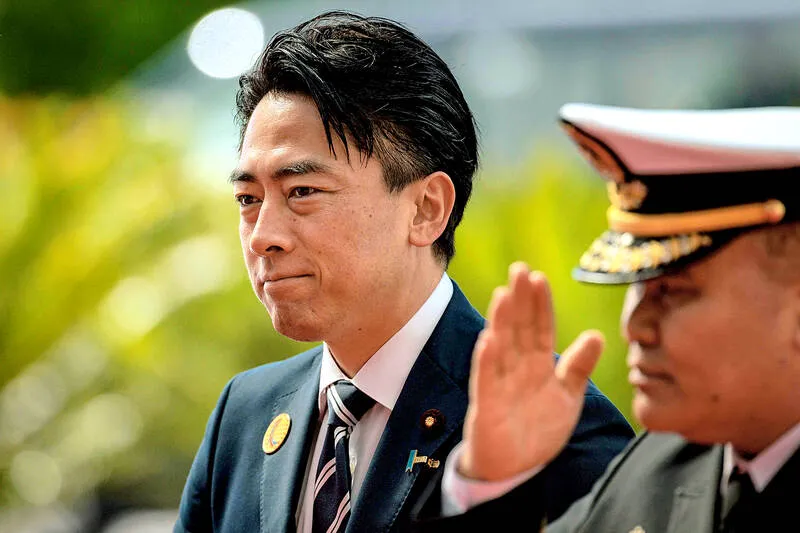 Photo: Taipei Times
Key points
The United States and Japan agreed to establish a facility in Japan for joint production of advanced medium-range air-to-air missiles, announced by Defence Minister Shinjiro Koizumi on 28 October.
Japan and the United States agreed to establish a facility in Japan for joint production of advanced medium-range air-to-air missiles, Japanese Defence Minister Shinjiro Koizumi said on 28 October. Koizumi announced the agreement at a news conference in Cebu, in the central Philippines, after meeting US Defence Secretary Pete Hegseth on the sidelines of an annual meeting of Southeast Asian defence chiefs. The missiles are part of a joint initiative called Operation Supercharge.
The agreement matters because it would place final assembly of a key Western air-to-air missile inside Japan, strengthening Tokyo's defence industrial base at a time of high global demand for munitions. Koizumi called it a groundbreaking agreement that will ensure the acquisition of equipment needed by both Japan and the United States and strengthen Japan's defence industry base. The missile is essential for the F-35 Joint Strike Fighter, which both countries operate.
What the agreement covers
Koizumi confirmed the agreement covers the establishment of a final assembly and inspection facility in Japan for the Advanced Medium-Range Air-to-Air Missile, known as AMRAAM. The weapon can be fired by aircraft and ground-based launchers and is manufactured by RTX subsidiary Raytheon. Koizumi did not name the Japanese industry partner picked to assemble the missile, did not give a timeline for opening the facility, and did not provide its expected output.
The two countries also agreed to share the necessary technical information to achieve increased production of the Standard Missile-3 Block IIA, a ship-based interceptor used to shoot down ballistic missiles. The SM-3 Block IIA is a joint programme between the United States and Japan. Koizumi did not say how much the agreement might raise the interceptor's production rate. Both agreements fall under Operation Supercharge, a joint US-Japan effort to boost defence technology cooperation.
China's Foreign Ministry spokesman Guo Jiakun said on 29 October in Beijing that US-Japan security cooperation should not damage peace and stability in the region, nor be directed against other countries or damage their interests. Guo said the current Japanese administration has repeatedly violated international law and domestic regulations under the pretext of responding to threats, and called on the international community to remain highly vigilant and resolutely contain such actions.
China's response to the plan
The AMRAAM agreement follows a September contract award to Raytheon worth up to over $20 billion under a five-year agreement, with options for an additional two years of production. The Pentagon said at the time that the contract would nearly double the weapon's production, as long as US lawmakers provide the necessary funding. The missile is in high demand amid conflicts in Ukraine and the Middle East, and ramping up its production is a key focus of military planners.
A Pentagon readout of a Hegseth meeting published on 27 October did not discuss the AMRAAM or SM-3 agreements. It said Hegseth welcomed Japan's efforts to strengthen its defence industrial capacity and that both leaders committed to continue close coordination on critical munitions production. RTX deferred to the US Defense Department when asked to comment, and a Pentagon spokesperson did not respond to an inquiry by press time.
Production context and constraints
During his meeting with Hegseth, Koizumi said the two sides shared a sense of crisis regarding the increasingly severe regional situation and agreed to strengthen the deterrence and response capabilities of the Japan-US alliance with greater speed and intensity than ever before. He said they reaffirmed the importance of a free and open international order based on the rule of law, and that their discussions were not directed at any specific country.
Speaking to ASEAN defence ministers, Hegseth said the US approach was strong, quiet and clear — strong enough to deter coercion and aggression, quiet enough to avoid needless escalation. Australian Defence Minister Richard Marles said Australia and allies would continue efforts to uphold the rule of law despite China's growing assertiveness in the South China Sea. Koizumi did not disclose a date for breaking ground on the facility.
Frequently asked questions
What did the US and Japan agree to produce jointly?
The two countries agreed to establish a final assembly and inspection facility in Japan for the Advanced Medium-Range Air-to-Air Missile (AMRAAM), which is essential for the F-35 fighter jet, Japanese Defence Minister Shinjiro Koizumi said on 28 October.
When and where was the agreement announced?
Koizumi announced the agreement at a news conference on 28 October in Cebu, in the central Philippines, after meeting US Defence Secretary Pete Hegseth on the sidelines of an annual meeting of Southeast Asian defence chiefs.
How did China respond to the agreement?
Chinese Foreign Ministry spokesman Guo Jiakun said on 29 October that US-Japan security cooperation should not damage peace and stability in the region, nor be directed against other countries or damage their interests.