Trump says Iran war effectively over on 9 November, keeps status quo
President Trump said on 9 November that the Iran war is militarily effectively over, keeping the status quo of sanctions, blockade and targeted strikes.
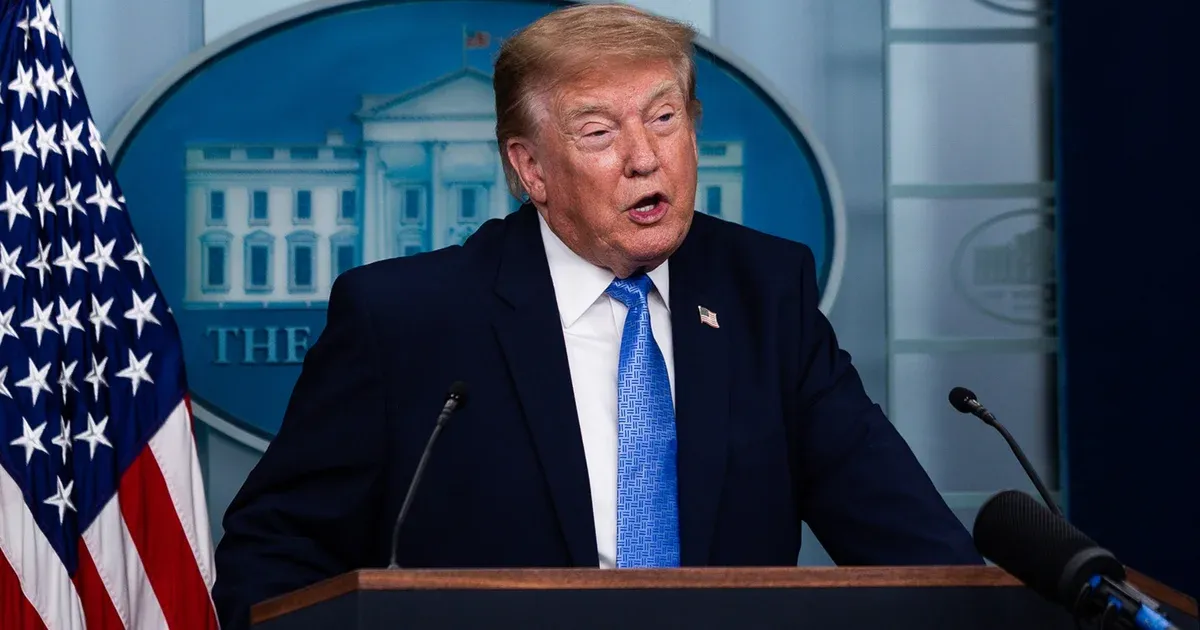 Photo: CBS News
Key points
Trump declared the Iran war militarily effectively over, continuing the status quo of sanctions, blockade and targeted strikes.
President Donald Trump said on Monday that the Iran war is "effectively over," declaring the US will keep the current status quo of sanctions, a naval blockade and targeted strikes. "Iran, militarily, is effectively over," Trump told reporters at a White House briefing. "We're just keeping it the status quo." The remarks came shortly after a meeting with Qatari Prime Minister Sheikh Mohammed bin Abdulrahman bin Jassim Al Thani, a key US partner in the region.
The declaration is Trump's most definitive on the eight-month-old war since the Republican Party lost control of both chambers of Congress in last week's midterm elections. It appeared to dispel speculation about a fresh wave of strikes, described by some as a "final blow." Trump said the US is "locked and loaded" if the situation changes, but suggested major combat operations are unlikely to resume.
Status quo continues
Trump defended the war and his embattled Defence Secretary Pete Hegseth, who faces an impeachment resolution in Congress. "It's a failing country, it's got 301 per cent inflation," Trump said, without offering evidence. "It's got problems like you don't want to even think about. They're not paying their military, they're not paying their [Revolutionary] Guard, their navy is gone, their air force is gone."
The US has restricted its operations in Iran to sanctions, a naval blockade and targeted strikes since July 2026. Other than limited strikes in the Strait of Hormuz, there has been little kinetic action in the war for months. While shipments of oil through the strait have increased under US Navy protection, a long-term plan for safe, toll-free passage without ships being fired upon by the Islamic Revolutionary Guard Corps remains elusive.
Trump's meeting with Qatar's prime minister was a key development in US-Iran talks. Last week, Iran sent a nuclear proposal to the US via Qatar, one of the mediators alongside Pakistan, subject to Washington meeting seven conditions laid out by Tehran. Trump did not reveal details of the meeting, but said there is "positive momentum" in the talks. "The military action doesn't seem to be a very necessary thing, but we're locked and loaded, ready to go for any reason that changes," the 80-year-old said.
Iran's response
Iran's security chief responded sharply. Mohsen Rezaei, secretary of Iran's Supreme National Security Council, said in an X post that the US is spreading fake news and acting like a "desperate gambler." He urged Washington to "surrender" to its seven demands. "The war on Iran has already wrecked the US government. But Washington flails like a desperate gambler," Rezaei wrote. "FOLD YOUR HAND. STOP manufacturing FAKE NEWS about imaginary talks."
In an interview with CBS's 60 Minutes on Sunday, Trump said the US could bomb Iran's Pickaxe Mountain if needed, but there had been "very little activity there." "It would be done in one hour, it would be taken care of," he said. The mountain and the three other Iranian nuclear sites bombed by the US last year were under constant surveillance, he added. Trump also said the war was started in 1979 by Iran, not the US.
Midterm fallout
Trump acknowledged the unpopular war cost his party votes at the midterms. "They didn't like that [the price of] gasoline went up," he said. "There's a great dislike, incredibly, for Israel ... You have that, you have the war itself, you have the gas prices." The war has been a central issue in American politics, with critics questioning the cost and duration of the conflict.
Qatar's Sheikh Mohammed said in an X post that the meeting with Trump went "great." He wrote: "We discussed the situation in the region and ways to progress the US-Iran talks. Grateful for the positive discussions on reaching a deal and bringing peace to the region." The talks are part of broader diplomatic efforts, with the US also seeing a "very strong inclination" to end Russia's war in Ukraine, Trump said on Monday.
Trump's comments on Iran come as the US prepares for three-sided talks in Abu Dhabi on Ukraine, where both sides are showing flexibility on territory. The Iran war, which began with US strikes last year, has entered a phase of reduced hostilities, but the underlying tensions remain. The next steps depend on the progress of the Qatari-mediated talks and whether Iran's conditions are met.
The status quo means the US will continue its sanctions, naval blockade and targeted strikes, but without a major escalation. Trump's declaration is a signal to both domestic and international audiences that the war is winding down, at least for now. The next steps depend on the progress of the Qatari-mediated talks and whether Iran's conditions are met.
Frequently asked questions
What did Trump say about the Iran war?
Trump said on 9 November that the Iran war is militarily effectively over, keeping the status quo of sanctions, blockade and targeted strikes. He added the US is locked and loaded if needed.
Why did Trump declare the war effectively over?
Trump cited positive momentum in talks with Iran, mediated by Qatar. He met Qatar's PM before the announcement. The US has restricted operations since July 2026, and further strikes seem unlikely.
How did Iran respond to Trump's statement?
Iran's security chief Mohsen Rezaei called the US a 'desperate gambler' and urged Washington to surrender to seven conditions. He accused the US of spreading fake news about talks.