Judge lets Trump's $15 billion New York Times defamation suit proceed
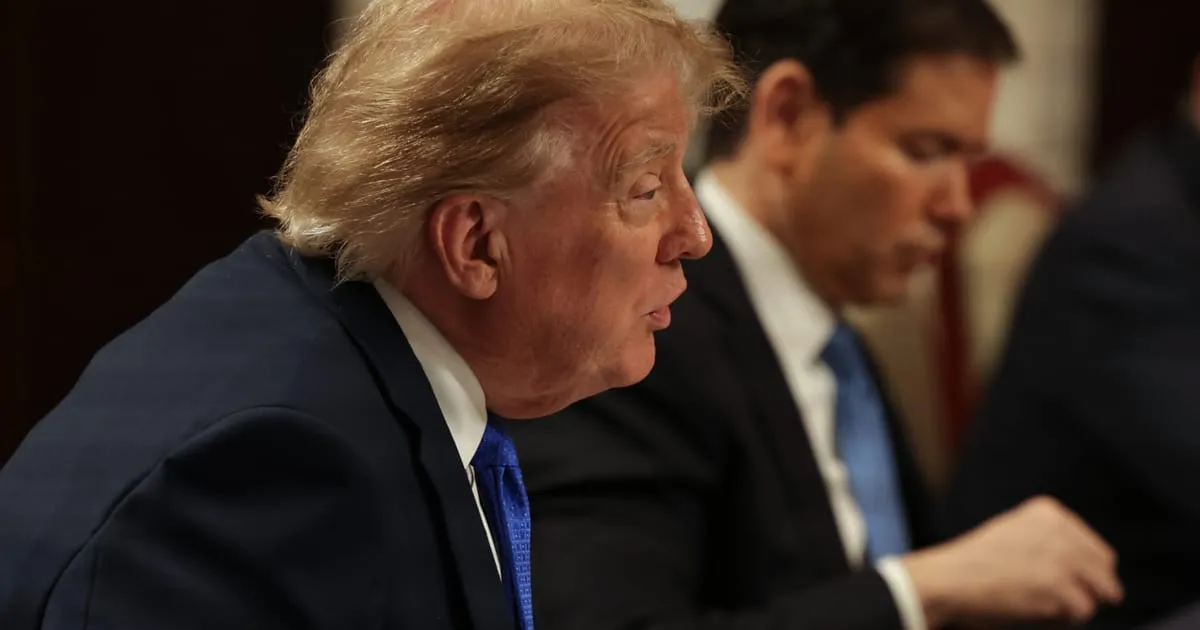
A federal judge on 19 November allowed President Trump to pursue $15 billion in defamation claims over seven statements in a book and article.
 Photo: Washington Examiner
Key points
A federal judge allowed parts of Trump's $15 billion defamation suit against the New York Times and Penguin Random House to proceed, keeping seven statements in play.
A federal judge on 19 November allowed President Donald Trump's $15 billion defamation lawsuit against the New York Times and Penguin Random House to proceed, ruling that Trump plausibly alleged two reporters lacked adequate support for statements in a book suggesting he had committed complex tax crimes. U.S. District Judge Steven Merryday, a George H.W. Bush appointee in Tampa, Florida, denied the request from the newspaper and publisher to dismiss all of the lawsuit. The ruling moves the case a step closer to a potential trial.
Merryday dismissed claims over two of the newspaper's articles, one by reporters Russ Buettner and Susanne Craig and the other by Peter Baker, the paper's chief White House correspondent. The ruling significantly narrowed the case by eliminating 27 of the 34 challenged statements, though all seven remaining statements in the suit were written by Times journalists: six were in the book 'Lucky Loser' by Craig and Buettner, and one was in a Times article by Baker. Trump sued in September 2025, alleging the Times tarnished his reputation in articles about his background and business dealings, as well as the book.
Seven statements survive
The surviving claims relate to statements accusing Trump of tax fraud, tax evasion, money laundering or related criminal conduct. Merryday ruled that Trump plausibly alleged that the journalists made decisive allegations of complex crimes without obtaining the kind of explicit expert opinion the judge said was necessary to support them. 'They know that they don't know, but they are undeterred,' said Merryday, an appointee of former President George H.W. Bush. The judge wrote that the seven statements were 'based on incomplete, minimal information.'
Merryday held that the surviving statements accuse Trump of complex financial crimes without the defendants having obtained an 'explicit opinion from a qualified source after a thorough examination of pertinent facts.' 'Knowing of the necessity for that opinion but failing to procure that opinion is a fine example of the purposeful avoidance of the truth,' the judge said. The ruling does not find that the New York Times or Penguin Random House defamed Trump, but it holds that the allegations are sufficient to survive the newspaper's motion to dismiss.
Merryday ruled Trump had sufficiently alleged 'actual malice' in connection with the seven remaining disputed statements, which requires showing that the authors and publishers knew the statements were false or recklessly disregarded whether they were false. It's a high bar that must be met by public figures who sue for defamation, established by the Supreme Court decades ago to protect press freedoms. The decision means the case is now on track for a potential trial in which opposing views of the First Amendment's press protections are expected to feature heavily.
Actual malice standard
A spokesman for the Times said the judge dismissed almost all of the claims against the newspaper, and the remaining claims have no merit. 'We look forward to making this argument as we continue to defend ourselves against this baseless attack on The Times and the rights of the free and independent press,' Times spokesman Charlie Stadtlander said in a statement. Penguin Random House didn't immediately respond to a request for comment. In seeking to dismiss the suit, the Times had argued that Trump had filed a frivolous lawsuit aimed at 'scoring political points' against the press rather than 'identifying facts to support a viable legal claim.'
Trump's legal team welcomed the ruling. 'Judge Merryday has correctly denied the motion to dismiss filed by The New York Times, Penguin Publishing, and their writers, as to President Trump's powerhouse defamation lawsuit,' Trump's legal team said in a statement. 'These defendants will now have to answer for intentionally and maliciously defaming President Trump.' The lawsuit is one of several filed by Trump against the media since the start of his second term.
A US$10 billion defamation suit Trump filed against the Wall Street Journal was thrown out by a different judge in a ruling that barred him from refiling it, and Trump is appealing that ruling. The British Broadcasting Corp lost its move to dismiss a US$10 billion suit brought by Trump. The Times could appeal the ruling. For now, the decision sets up the case for a potential trial, with the next dated event being a deposition in the BBC lawsuit ordered by a US judge for 22 January.
Other media suits
The lawsuit, which was originally dismissed as unnecessarily lengthy and digressive, was refiled in October 2025. The named defendants include The Times reporters Susanne Craig, Russ Buettner and Peter Baker; Craig and Buettner wrote the book in the case, 'Lucky Loser.' The book, published in 2024, is titled 'Lucky Loser: How Donald Trump Squandered His Father's Fortune and Created the Illusion of Success.' Trump accused the publication of tarnishing his reputation with false stories about his business acumen before the 2024 presidential election.
Frequently asked questions
What did the judge rule in Trump's defamation suit against the New York Times?
On 19 November, Judge Steven Merryday allowed parts of Trump's $15 billion suit to proceed, keeping seven statements in play while dismissing 27 others. He ruled Trump plausibly alleged actual malice over tax fraud claims.
Which statements survived the judge's ruling?
Seven statements survived, all written by Times journalists: six from the book 'Lucky Loser' by Susanne Craig and Russ Buettner, and one from an October 2024 article by Peter Baker. They relate to accusations of tax fraud, tax evasion, and money laundering.
What is the 'actual malice' standard in defamation cases?
It requires showing that the authors and publishers knew the statements were false or recklessly disregarded whether they were false. It's a high bar for public figures, established by the Supreme Court to protect press freedoms.