Trump, Xi and Putin summit in Shenzhen yields no breakthroughs
The first trilateral summit of US, Chinese and Russian leaders in Shenzhen on 19 November produced no breakthroughs, only a joint declaration on nuclear risks and courts.
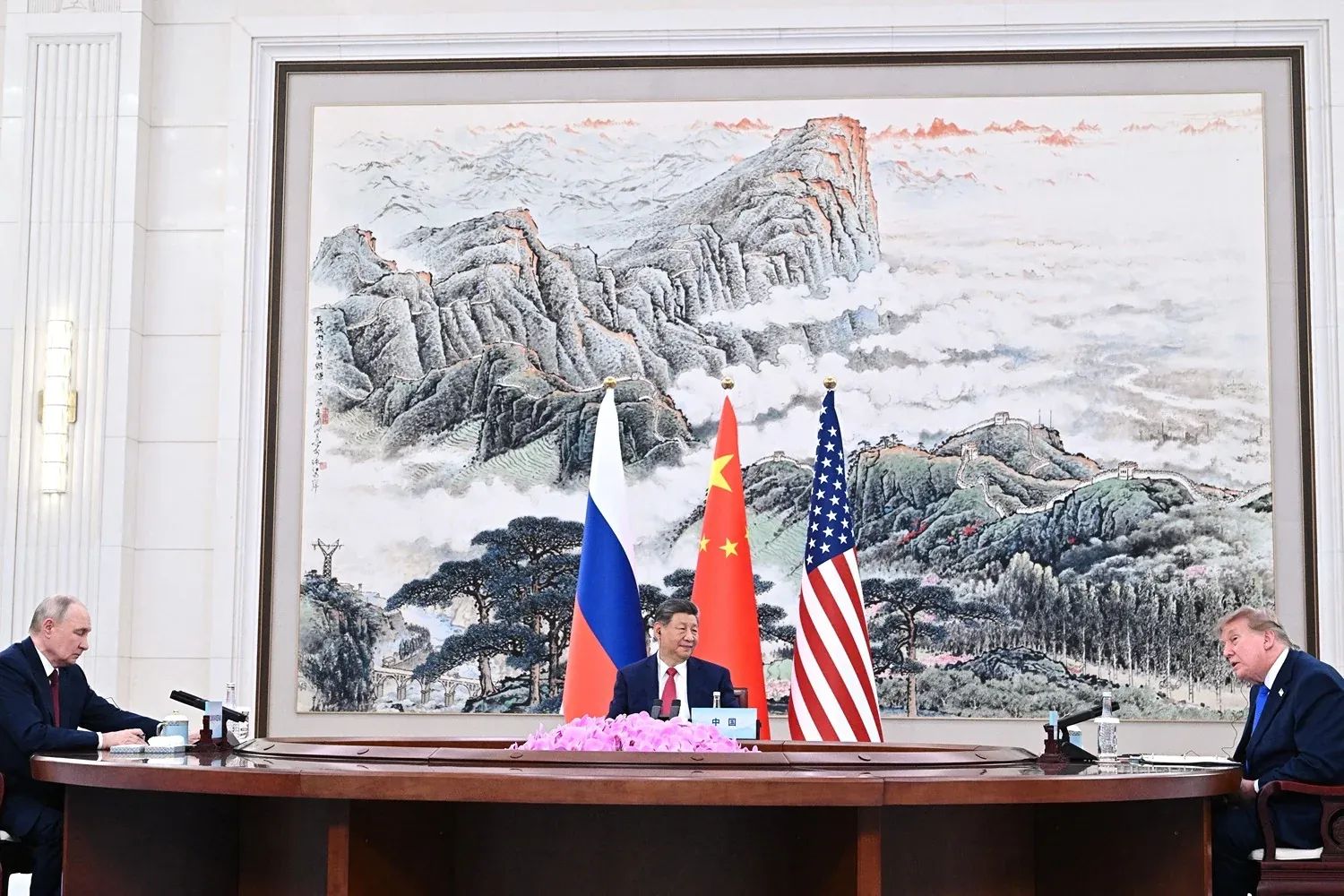 Photo: Foreign Policy
Key points
The first trilateral summit of US, Chinese and Russian leaders in Shenzhen produced no concrete agreements, only a joint declaration on nuclear risks and courts.
The presidents of the United States, China and Russia met on 19 November for an unprecedented trilateral gathering on the sidelines of the Asia-Pacific Economic Cooperation summit in Shenzhen, China. The meeting ended without an announced breakthrough or concrete agreement on the main issues. The session lasted more than an hour, and Donald Trump, Xi Jinping and Vladimir Putin touched on nuclear weapons, the war in Ukraine and wider international security.
The three leaders lead the world's three major nuclear powers, and their decisions have far-reaching consequences for global security. The official joint statement from the summit, issued by Chinese state news agency Xinhua, echoed themes that Xi has promoted throughout Trump's second term: strategic stability, opposition to Cold War thinking and economic decoupling, and respect for the outcomes of World War II.
No breakthroughs on major issues
Before the meeting, there was talk that the Shenzhen trilateral might amount to a new Yalta Conference, the 1945 summit at which the three main victors of World War II divided up Europe. But the idea that a new Yalta is possible at all is fundamentally misguided, the analysis said. Two of the three great powers today are bogged down in economically devastating wars of choice against smaller countries, and it is clear that the world is not theirs to divide.
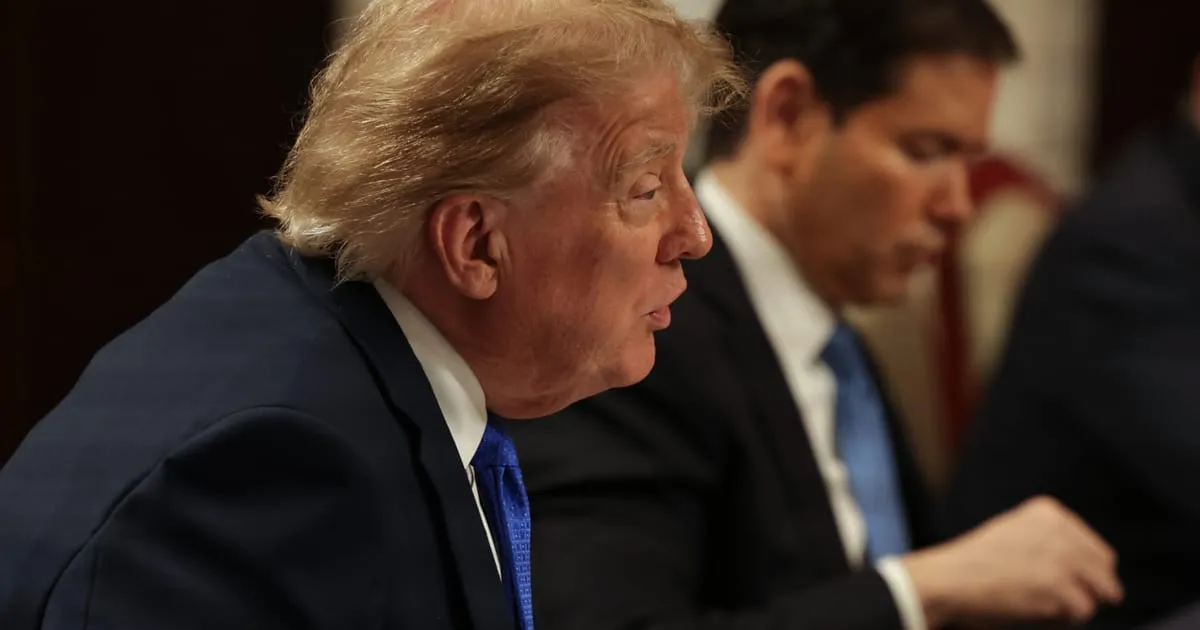
Trump opened the talks by telling Xi and Putin that "we are really making history." He described the US, China and Russia as "uniquely positioned" to discuss reducing their nuclear stockpiles and lowering the risk of such weapons being used. It was an unusually high-profile display of cooperation between three countries whose relations have been marked by significant tensions, especially over Ukraine, trade disputes and the Nvidia scandal.
Nuclear arms control was a central issue. The talks came against the backdrop of the New Start nuclear agreement expiring in February. The treaty limits the arsenals of the US and Russia, capping each side at 1,550 deployed strategic nuclear warheads. In September last year, Putin proposed voluntarily maintaining these limits for another year, but Trump rejected that approach, calling instead for a new agreement that would include China. No new arms control agreement was announced.
Nuclear risks and the ICC
In the meeting, Xi called for every effort to be made to prevent nuclear war and for nuclear weapons to be completely prohibited and thoroughly destroyed. The three leaders said that a nuclear war cannot be won and must not be fought. The joint declaration called for dialogue on reducing nuclear risks and preventing nuclear proliferation. Trump said that a deal to limit nuclear weapons would be hard to reach but he will keep working on it.
Ukraine was raised, without a breakthrough. Putin told Trump and Xi that their countries had "many converging interests" when it came to resolving conflicts, explicitly mentioning the war in Ukraine. He also spoke of their shared responsibility for international peace and security. The meeting offered little indication of progress toward ending the war in Ukraine, and Kyiv was not mentioned in the subsequent joint peace declaration.
Trump attacked the International Criminal Court, describing it as "out of control," criticising what he regards as the court's excessive overreach. His remarks carry particular significance given that Putin is wanted by the ICC on charges of war crimes. The court issued an arrest warrant for the Russian president in March 2023, accusing him of unlawfully deporting and transferring Ukrainian children from occupied territories to Russia.
Reactions from Washington and Europe
A joint "peace declaration" issued after the meeting by Chinese and Russian state media called for UN reform "so that it may respond more effectively to global challenges." The statement said the shake-up would range from boosting fuel supplies to engaging in "dialogue to reduce nuclear risks." The declaration also took aim at the ICC, saying the court and similar bodies "must not abuse their jurisdiction." It emphasised state consent and respect for the immunity of officials.
Chuck Schumer, the Senate minority leader, said Trump failed to "secure any meaningful commitments from China or Russia that will last even a millisecond." He added that the US president was "eating out of the palm of their hand" of Putin and Xi during remarks on the Senate floor Thursday. "Trump calls the trilateral meeting with Xi and Putin 'historic.' Yes, it's a historic embarrassment that people will remember long into the future," Schumer said.
European leaders responded with their own summit in Berlin led by the Coalition of the Willing. In a joint statement, the leaders called on Russia to agree to an energy ceasefire for the duration of winter. "Ahead of the winter, the leaders will make extra efforts, along with third countries, to provide Ukraine with additional missile defence," the statement read. They added: "As a first step towards a cessation of hostilities, the leaders called on Russia to agree to an energy ceasefire for the duration of the winter."
Donald Tusk claimed that Trump's comments after his meeting with Putin and Xi sounded "quite optimistic." The Polish prime minister was on his way back to Poland when he told reporters that Trump's "faith in Putin's good will is probably unshakeable." However, Tusk warned that he did not think that "it's likely that Russia will sit down at the negotiating table in any serious way before the winter is over." Trump called his visit to China a "great and highly consequential trip" and announced he would hold a news conference at the White House on his return.
Frequently asked questions
What was the outcome of the Trump-Xi-Putin summit in Shenzhen?
The first trilateral summit of US, Chinese and Russian leaders on 19 November ended without an announced breakthrough or concrete agreement. The leaders issued a joint declaration calling for dialogue on reducing nuclear risks and criticizing the International Criminal Court.
Why did the summit produce little substance?
According to a Foreign Policy analysis, the idea of a new Yalta is fundamentally misguided because two of the three great powers are bogged down in economically devastating wars of choice, and the world is not theirs to divide. No advance diplomatic work was done on nuclear arms control.
How did US and European leaders react to the summit?
Senate minority leader Chuck Schumer called it a historic embarrassment and a betrayal. European leaders, meeting in Berlin, called on Russia to agree to an energy ceasefire for the winter and promised additional missile defence for Ukraine.