Candidates make final push as early voting nears 50 million
With one day until the US midterms, nearly 50 million Americans have voted early, surpassing the 2022 record, as Trump rallies in Iowa and Kansas.
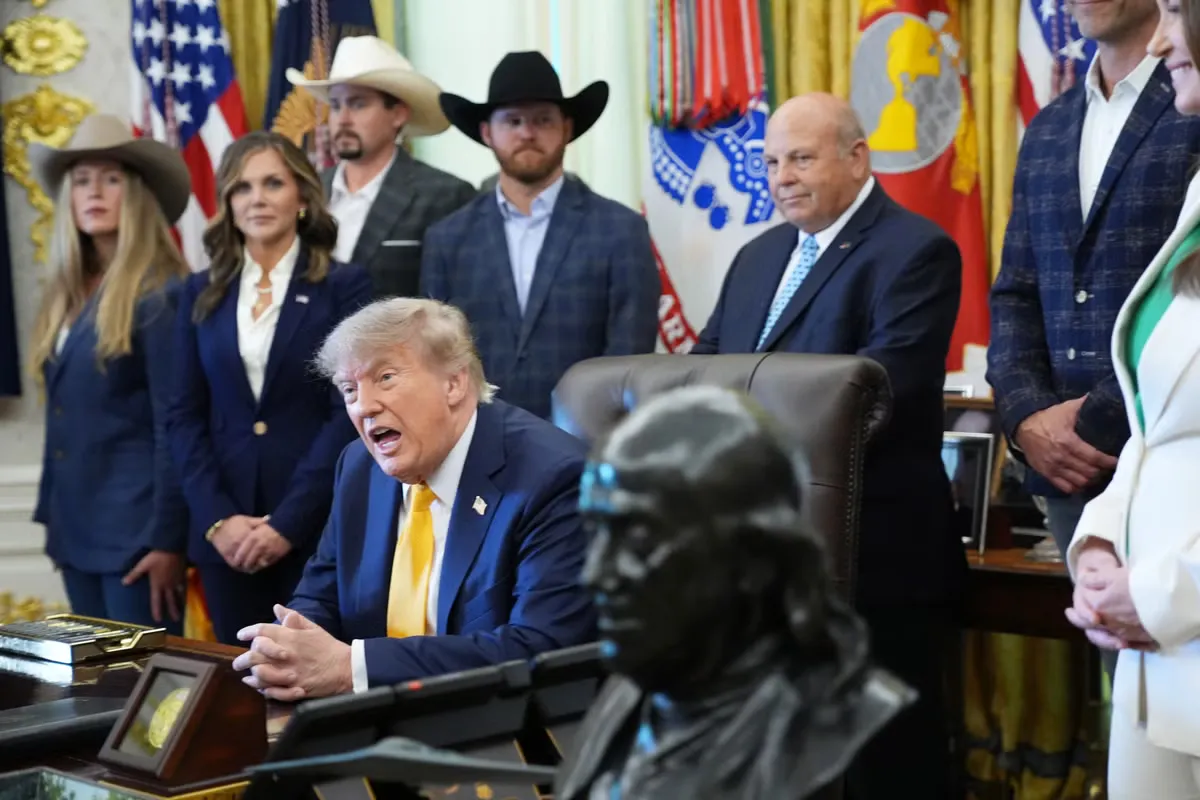 Photo: The Independent
Key points
Nearly 50 million Americans voted early in the US midterms, surpassing the 2022 record, as candidates made final appeals one day before Election Day.
With one day until the US midterm elections, nearly 50 million Americans have already voted early, surpassing the record set in 2022, according to a report by ICICI Bank. Democrats are the majority among those who have already gone to the polls, but experts warn that it is still not possible to predict the outcome. The figure comes as candidates make their final appeals to voters before Election Day on 3 November.
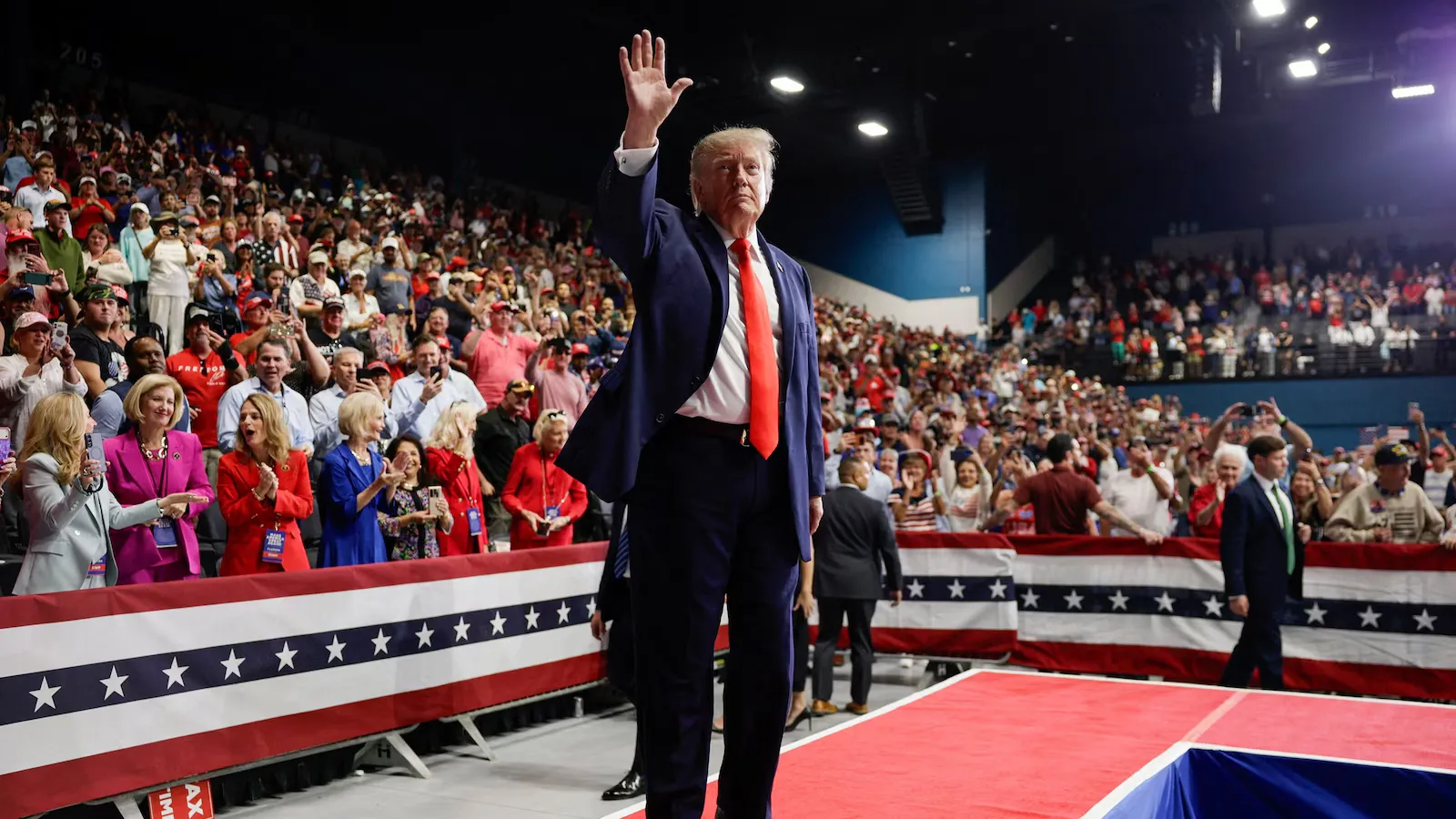
President Donald Trump spent part of the weekend at his Mar-a-Lago estate in Florida, throwing a jungle-themed Halloween bash, before returning to the campaign trail with rallies in Iowa and Kansas, where Republicans are fighting to retain US Senate seats. His costume was himself, complete with navy suit and red tie. "I didn't have time to get — people spent a lot of time and money. Rich people. They spent nine hours getting ready. I had 10 minutes, so I came as Donald Trump," he said.
Early voting records
The early vote total of nearly 50 million has already surpassed the record set in 2022, according to the ICICI Bank report. The report said Democrats have a 63 per cent probability of gaining control of both chambers of Congress, with their chances of winning the House of Representatives at 90.9 per cent and the Senate at 64 per cent. A Democratic sweep could lead to greater scrutiny of the Trump administration's policies, particularly on tariffs, immigration and government spending.
In Texas, the Senate race between Republican candidate Ken Paxton and Democrat James Talarico has become the most expensive US Senate race ever, with combined advertising spending topping $US500 million. Elon Musk, a Texas resident with major business interests in the state, gave $US158 million to a group backing Paxton. Talarico has tried to seize on this, arguing Musk wants his own senator to control in Congress. Polling appears to be tightening between the two candidates.
The last time Texas voted for a Democratic senator was 1988, but Paxton has been plagued by scandals. He was impeached by his own party over bribery allegations but later acquitted, his wife accused him of adultery and filed for divorce on "biblical grounds", and he faced securities fraud charges (he pleaded not guilty) but they were dismissed after he reached a deal to avoid a trial. He has Trump's endorsement but Republicans have not united around him. Talarico is a Presbyterian seminarian who has raised a lot of money.
Trump's rural push
The Trump administration has pledged $15 billion to agricultural producers in the final weeks before the midterm elections, aiming to help farmers offset elevated diesel and fertilizer costs stemming largely from tariffs and the war in Iran. Of the $15 billion, more than half will go toward an $8 billion one-time payment plan for farmers buffeted by soaring diesel prices. The US Department of Agriculture said it will release more details about the payments this month. On Friday, diesel was averaging $6.32 per gallon, down slightly from its peak in September but 70% higher than the price a year ago.
Gregg Ibendahl, a farm management specialist at Kansas State University, said he estimates the payments to "more than cover the increase in fuel costs," and that the money could help with high fertilizer prices. He said he expects these ad hoc payments to be a big help for farmers who otherwise would not make a profit this year, but they do not address the broader issues driving up prices. "It's hard to go to your lender in the next spring and say, 'OK, well, we're looking pretty good this year, but it's all because of these extra temporary government payments, so how much can you make me a loan (for) next year for my crop?'" he said.
Rural voters, including farmers and those who rely on the agricultural economy, have been an instrumental voting group for Trump. Michael Smith, a political science professor at Emporia State University, said many rural voters like the president, but some of his policies have hurt the agriculture industry. Immigrant deportations have threatened the agricultural labor force, and cuts to foreign aid and SNAP food stamps hurt the market for agricultural products. "Some people who admire Trump really just admire the person, the man," he said. "But it doesn't mean they necessarily like his policies. Well, Trump himself isn't on the ballot this year. His policies are."
Legal battles over ballots
A federal judge has thrown out a lawsuit filed by the Trump administration that sought to block Alaska from certifying election results if Republican senator Dan Sullivan lost. A second Dan Sullivan is running in the same race, and Trump says it is part of a ploy to confuse voters. The Justice Department on Sunday said it plans to appeal a court ruling dismissing a lawsuit against teacher Daniel J. Sullivan, who entered Alaska's US Senate race alongside incumbent Republican Sen. Dan Sullivan. The DOJ argued that the dismissal was based on procedural grounds rather than the merits of the case.
In California, Governor Gavin Newsom has warned federal judges in his state that Trump may try to block the certification of Democratic wins. The Trump administration says California may have thousands of non-citizens on its voter rolls. A federal judge has rejected a Department of Justice request to block the counting of more than 20,000 ballots on these grounds, and the Trump administration has signalled it will likely ask the US Supreme Court to take up the case. An outside analysis found many of the names collated by the US Department of Homeland Security did not appear to match up with anyone on the rolls.
In Michigan, Democratic representative Haley Stevens endorsed the Republican candidate Mike Rogers over her party colleague Abdul El-Sayed, who beat her in the primary. House Speaker Mike Johnson praised the move as "courageous," saying: "I think Haley did a heroic and important thing for the country." Senate Democratic Minority Leader Chuck Schumer condemned the move on social media as a "despicable betrayal." Michigan Democratic Party Chair Curtis Hertel said on X that Stevens "is not a current member of the Michigan Democratic Party, nor will she be in the future."
El-Sayed brushed off the sudden political betrayal by his former primary rival, declaring: "None of this matters". The rift deepened after a bitter August primary that El-Sayed won by less than a percentage point, and escalated when Stevens demanded an apology for El-Sayed's recent comments criticizing Israel. Trump said he would welcome Stevens into the Republican Party, adding: "That was a big move because nobody expected that. But it's a smart thing to do because El-Sayed would destroy our country. So I thought that was fantastic." Voters head to the polls on 3 November.
Frequently asked questions
How many Americans have voted early in the 2026 midterms?
Nearly 50 million Americans have already voted early, surpassing the record set in 2022. Democrats are the majority among those who have already gone to the polls, but experts warn the outcome is still unpredictable.
What is the $15 billion Trump administration pledge to farmers?
The Trump administration pledged $15 billion to agricultural producers in the final weeks before the midterms. More than half will go toward an $8 billion one-time payment plan for farmers hit by soaring diesel prices, with additional funds for loans, conservation and fertilizer projects.
Why did Haley Stevens endorse a Republican in Michigan?
Democratic Representative Haley Stevens endorsed Republican Mike Rogers over her party colleague Abdul El-Sayed, who beat her in the primary. The move followed tension over El-Sayed's comments criticizing Israel, and drew condemnation from Democratic leaders including Nancy Pelosi and Chuck Schumer.