Tusk vows to push through Poland court overhaul despite protests
Poland's Prime Minister Donald Tusk pledged on 31 October 2026 to see through a contested overhaul of the constitutional court, after judges suspended its president and riot police guarded the building.
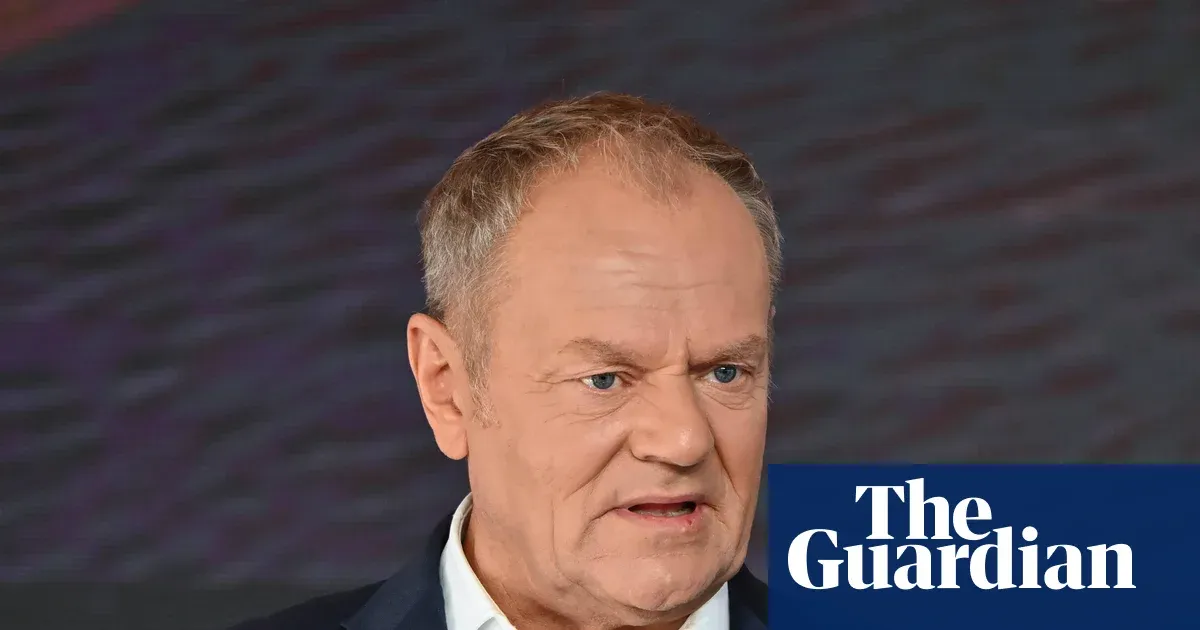 Photo: The Guardian
Key points
Poland's Prime Minister Donald Tusk vowed to push through a contested constitutional court overhaul after judges suspended the tribunal's president, prompting street protests and crisis talks.
Poland's Prime Minister Donald Tusk vowed on Saturday night to push through a contested overhaul of the country's constitutional court, despite overnight protests that brought riot police to the court's building in Warsaw. In a prime-time television address, Tusk declared that "in certain matters, there can be no compromise", saying the shake-up was vital to restore a tribunal crippled by years of political disputes.
The crisis flared on Friday when a group of government-backed judges moved to seize procedural control of the tribunal, suspending its PiS-appointed chief judge Bogdan Swieczkowski and his deputy. The Constitutional Tribunal's longest-serving judge, Anna Korwin-Piotrowska, announced the suspension and said she was now in charge of the court. The tribunal's official X account described the government's move as a "coup d'etat".
What the suspension changed
Tusk defended the action, saying "there was never any doubt that the court in the form imposed by PiS was not a genuine court", citing adverse rulings from European tribunals. He compared the opposition's outrage to "a thief snatching an elderly woman's handbag, running off, and when he is caught, he screams that he is subjected to violence". He also said his government was seeking to restore the rule of law.
President Karol Nawrocki, an ally of the previous hard-right government, accused Tusk of staging a forced takeover of the court. Late on Friday, Nawrocki turned back his plane while heading to Senegal and went to the court headquarters in central Warsaw. "Tonight, there was a breach of public order in the Republic of Poland and a forcible takeover of a constitutional body," Nawrocki said in a statement read by an aide outside the court early on Saturday.
Riot police have guarded the court since Friday afternoon, with several hundred protesters gathered to demand Swieczkowski's reinstatement. Followers of the opposition Law and Justice party gathered outside the court on Saturday, extending protests that have been running for weeks in support of PiS-friendly judges. Nawrocki held political consultations throughout Saturday at the presidential palace, with no apparent breakthrough by Saturday afternoon.
Where the numbers came from
The dispute dates back to 2015, when Law and Justice sought to appoint judges to seats already filled by the previous government. Its nominees gained a majority on the Constitutional Tribunal, while critics at home and abroad said the court no longer met the standards of an independent and impartial tribunal. Since returning to office in 2023, Tusk has sought to unwind those judicial changes, but his agenda has been frustrated by opposition-aligned presidents with extensive veto powers.
Earlier this year, President Nawrocki refused to swear in three of six judges nominated by parliament, while Swieczkowski, a former deputy justice minister in the Law and Justice administration, declined to seat judges elected by the current parliamentary majority. Last month, parliament appointed Tusk ally Maciej Berek to the tribunal, which critics said undermined the government's stated goal of restoring checks and balances.
Experts remain divided over whether the government's procedural gambit at the court is lawful. Poland's Helsinki Foundation for Human Rights said on Saturday the legal basis for the temporary suspension was "questionable", warning it would "not contribute" to restoring the court. Foreign Minister Radosław Sikorski conceded that the events outside the court were "not elegant", but insisted the alternative was to concede an unconstitutional transformation of Poland into a presidential republic.
What happens next
Tusk also criticised Nawrocki for joining the protests on Friday night and forcing his entry into the court's building. "In a democratic state, no politician can enter a court to issue orders or intimidate judges – not even the president," Tusk said. Nawrocki's senior aide, Zbigniew Bogucki, called the prime minister "a pathological liar, who is setting Poland ablaze".
The European Commission urged Nawrocki on Saturday to approve the new judges nominated by parliament, so the court could function in line with the constitution and EU law. US Ambassador to Poland Tom Rose called for calm on all sides, writing on X that "the last thing Poland needs is a confrontation that spirals into something far worse". The confrontation sets the battle lines before next year's parliamentary election, with polls pointing to a close race between Tusk's broad coalition and the nationalist right. Nawrocki held cross-party political talks on Saturday with no apparent breakthrough, and the dispute over the court's independence showed no sign of resolution.
Frequently asked questions
Why is Poland's constitutional court in crisis?
On Friday, government-backed judges suspended Constitutional Tribunal president Bogdan Swieczkowski, prompting street protests and riot police deployment. President Nawrocki called it a forcible takeover, while Tusk said the court under PiS was not a genuine court.
What did Tusk say about the court overhaul?
In a prime-time television address on Saturday night, Tusk vowed to see through the overhaul, saying "in certain matters, there can be no compromise" and that restoring the tribunal was vital after years of political disputes.
How did Poland's president respond to the suspension?
President Karol Nawrocki turned back a plane heading to Senegal, went to the court in Warsaw, and held crisis talks at the presidential palace on Saturday. He called the suspension a forcible takeover of a constitutional body.