India opposition stages mock impeachment of election chief Gyanesh Kumar
India's opposition bloc staged a symbolic impeachment of Chief Election Commissioner Gyanesh Kumar in New Delhi on 31 October, protesting a voter-list revision before a 1 November rally.
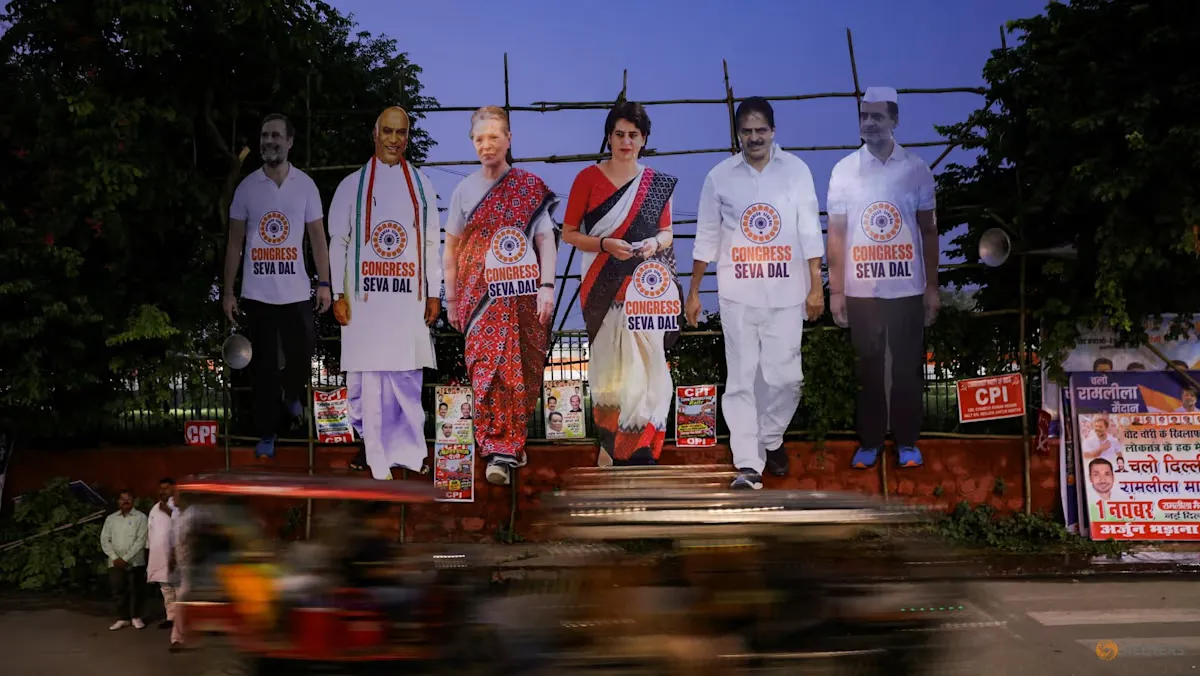 Photo: Channel NewsAsia
Key points
India's opposition staged a symbolic impeachment of Chief Election Commissioner Gyanesh Kumar on 31 October to protest a voter-list revision, ahead of a 1 November rally.
India's opposition staged a symbolic impeachment of Chief Election Commissioner Gyanesh Kumar in New Delhi on 31 October, protesting a nationwide revision of voter lists that the opposition says could unfairly benefit the ruling Bharatiya Janata Party. The proceedings, held at the residence of Congress president Mallikarjun Kharge, carried no constitutional or legal force. Under the constitution, the chief election commissioner can be removed only through a parliamentary process requiring a special majority.
The INDIA bloc re-enacted a parliamentary session to argue that the Special Intensive Revision of electoral rolls, a nationwide exercise to update voter lists, is being manipulated to favour Prime Minister Narendra Modi's party. The Election Commission says the revision is necessary to ensure accurate voter lists, and both the commission and the Bharatiya Janata Party deny the allegations. The dispute has produced political conflict and street protests over the last month in the world's largest democracy.
What the symbolic proceedings alleged
Former Lok Sabha Speaker Meira Kumar presided over the proceedings, which were modelled on parliamentary debates. Kharge moved a resolution accusing Kumar of facilitating alleged electoral manipulation, large-scale deletion of voters and undermining the Election Commission's independence, and called for his removal. Kharge also demanded repeal of the Chief Election Commissioner and Other Election Commissioners (Appointment, Conditions of Service and Term of Office) Act, 2023, and an end to the revision exercise.
Kharge alleged the 2023 law shields the chief election commissioner from action and was passed after 145 opposition MPs were suspended from Parliament, preventing them from participating in the proceedings. He claimed the revision had intentionally deleted around 14 crore voters from electoral rolls, and accused Kumar of illegally amending Form 6, used to register electors, without consulting Parliament. He also alleged Kumar centralised control over electoral rolls, keeping the other two Election Commissioners out of decisions.
Kharge said opposition MPs representing 60 per cent of the population had decided the chief election commissioner should face a treason trial in court, and said notices seeking Kumar's removal had been rejected in both Houses of Parliament. Rahul Gandhi said the opposition had turned to the symbolic exercise because the bloc has "nowhere else to go" and that every institution is closed to them. The Election Commission and the Bharatiya Janata Party deny the allegations.
Where the numbers came from
The stage was built to resemble the Lok Sabha, with a wooden-panelled backdrop, semi-circular seating and microphones in the first three rows. The programme had been scheduled for Friday but was postponed by a day because of rain in the national capital. Participants included INDIA bloc leaders, MPs, civil society members and people who said their names had been removed from voter lists.
The rally on 1 November at Ramlila Maidan is expected to draw up to 10 lakh people, according to opposition projections, while Delhi Police expects around 50,000. Officials estimate the ground holds 45,000 to 50,000 people when empty, falling to 30,000 to 40,000 with chairs and enclosures in place. More than 4,000 police personnel and Central Armed Police Forces companies will be deployed, with over 200 CCTV cameras, drones and body-worn cameras for surveillance.
What follows on 1 November
The rally programme begins with a 'Chalo Dilli' march from the Minto Road-Connaught Place junction to Ramlila Maidan at noon, with the rally itself scheduled from 10am to 5pm. Ramlila Maidan has been divided into 14 security zones, each supervised by an assistant commissioner of police-rank officer. Delhi Police granted permission for the rally but said it had not received an application for the proposed procession. The Cockroach Janta Party, founded by Abhijeet Dipke, supports the mobilisation.
Home Minister Amit Shah said the Bharatiya Janata Party was ready to hold a special session of parliament to discuss the revision, but accused the opposition of having no intention of speaking there and refusing to let parliament function. The opposition's campaign, branded 'Vote Bachao, Desh Bachao', demands Kumar's removal, repeal of the 2023 law and an end to the revision exercise.
The rally at Ramlila Maidan on 1 November is the next set piece in the opposition's campaign against the voter-roll revision, with the bloc seeking to sustain pressure on the Election Commission and the government. Traffic restrictions will be in force across parts of Delhi between 10am and 5pm on 1 November, with diversions at ITO, Delhi Gate, Rajghat, Ajmeri Gate and Turkman Gate.
Frequently asked questions
What happened in India's mock impeachment of the election chief?
India's opposition INDIA bloc staged a symbolic impeachment of Chief Election Commissioner Gyanesh Kumar at Congress president Mallikarjun Kharge's residence in New Delhi on 31 October. The proceedings, presided over by former Lok Sabha Speaker Meira Kumar, have no constitutional or legal force.
Why is the opposition protesting the voter-list revision?
The opposition says the Special Intensive Revision of electoral rolls is being manipulated to favour Prime Minister Narendra Modi's Bharatiya Janata Party. The Election Commission says the revision is necessary to ensure accurate voter lists, and both the commission and the BJP deny the allegations.
When is the next opposition rally and what is expected?
A rally at Ramlila Maidan in Delhi is scheduled for 1 November, with opposition parties targeting 10 lakh turnout. Delhi Police expects around 50,000 people and is deploying more than 4,000 personnel, with over 200 CCTV cameras for surveillance.