Voyager 1 reaches one light-day from Earth after 49 years
NASA's Voyager 1 probe reached one light-day from Earth on 18 November, a distance of about 16.1 billion miles, after more than 49 years of travel.
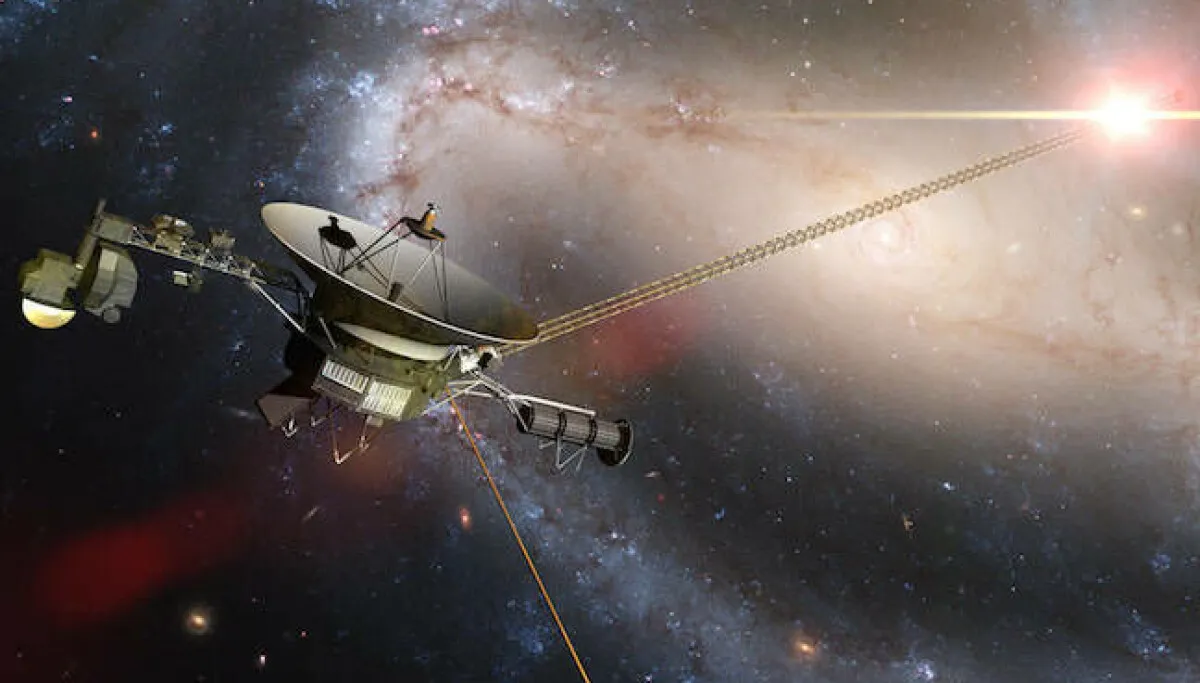 Photo: The Register
Key points
Voyager 1 reached one light-day from Earth on 18 November, a distance of about 16.1 billion miles, after more than 49 years of travel.
NASA's Voyager 1 probe, humanity's farthest-flying spacecraft, reached one light-day from Earth on 18 November, after more than 49 years of constant travel. The spacecraft achieved the milestone at 2:16 a.m. PST (5:16 a.m. EST) Nov. 18, according to a NASA news release. A light-day is the distance light travels in 24 hours, equaling about 16.1 billion miles (25.9 billion kilometers).
Voyager team members at NASA's Jet Propulsion Laboratory in Southern California, managed by Caltech, heard from the probe 24 hours later, the time it took for the spacecraft's radio signal traveling at the speed of light to reach Earth, early Thursday. The day's delay neatly illustrates a major headache for engineers: communication latency. It now takes more than 24 hours for commands to reach the spacecraft, and the same amount of time for a response to be received.
A silent milestone
Even though the team has not received science and engineering data from Voyager 1 since Nov. 14, the spacecraft is sending what is called a carrier signal, which typically conveys that data to Earth. Mission engineers used the carrier signal and trajectory calculations to confirm the light-day milestone. They continue to analyze the issue impacting the science and engineering data.
On November 14, the mission team noticed that the veteran spacecraft had stopped returning science and engineering data. A Deep Space Network antenna in Canberra, Australia, picked up its carrier signal, but no data. The carrier signal indicates that Voyager 1 can still keep its antenna pointed at Earth and operate its transmitting equipment. However, something could be amiss with the system responsible for collecting and collating data from the spacecraft.
Something similar happened in 2023. After a few months of troubleshooting, engineers managed to coax a response from the probe, and by June 2024, NASA was delighted to announce that the spacecraft was back in action. The problem was traced to a faulty computer chip, and engineers devised a software update to work around the defective hardware. That experience will stand the team in good stead this time around.
The distance explained
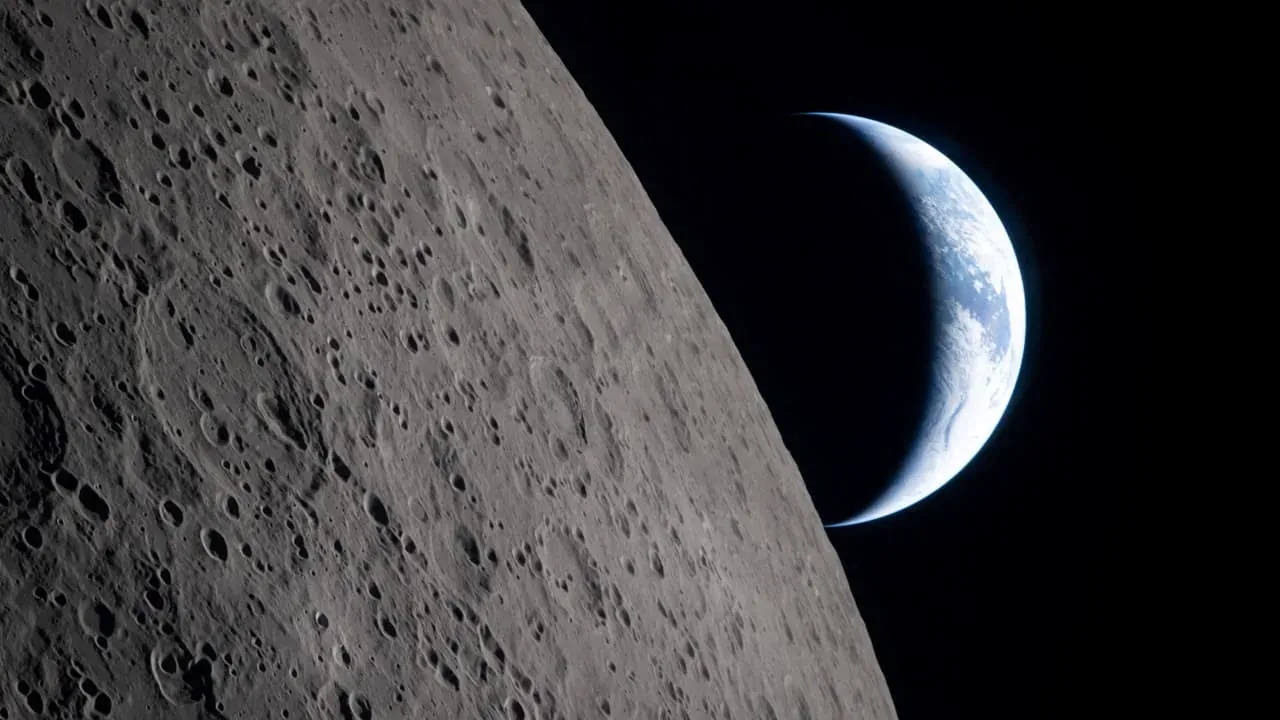
Scientists use light to measure the vast distances of space. Light travels at about 186,000 miles (299,000 kilometers) a second in a vacuum. A ray of sunlight passing Earth takes about 1.3 seconds to reach the Moon, about four hours to reach Neptune, and another 20 hours to reach Voyager 1. For comparison, a light-year is 5.88 trillion miles (9.46 trillion kilometers).
Voyager 1 launched on September 5, 1977, heading for Jupiter and Saturn. In 2012, Voyager 1 became the first human-made spacecraft to enter interstellar space. Voyager 2, taking a different trajectory, crossed the boundary in 2018. The Voyagers were only the third and fourth spacecraft to visit Jupiter and Saturn, and the first to return high-resolution imagery, transforming our understanding of these worlds and their moons.
Traveling about 38,000 mph (61,155 kph), Voyager 1 in 2012 became the first spacecraft to leave the heliosphere, the bubble of particles and magnetic fields created by the Sun that deflects cosmic radiation, and enter interstellar space. The Voyagers are revolutionizing our understanding of interstellar space, a previously unexplored region outside the heliosphere.
What happens next
Creative engineering solutions have enabled the probes to conserve energy and overcome challenges related to aging hardware, including clogged thrusters and a malfunctioning computer on the spacecraft. Earlier this year, engineers successfully turned off three devices on Voyager 1 and substituted them with three lower-power alternatives — a move not without risk — to help the spacecraft make the most of its 50-year-old radioisotope thermal generator. Essentially a nuclear battery, the generator converts heat from decaying plutonium into electricity.
There was also a brief interruption in communications with Voyager 1 in October, which could have been caused by the spacecraft dropping into safe mode after a thruster failover occurred. Engineers are investigating whether the two incidents are connected. The Voyagers have an impressive amount of fault protection built in, which has contributed to their extraordinary longevity. It will be half a century in 2027 since the spacecraft were launched, so glitches are understandable and likely.
NASA expects to confirm on November 19 that Voyager 1 was still operating when it reached one light-day from Earth on November 18, using its carrier signal and trajectory calculations. Diagnosing the fault could therefore take weeks or longer. The Voyager probes carry a Golden Record, a gold-plated copper phonograph compiling images and sounds from Earth, as a message to any advanced civilization that might one day find it.
Frequently asked questions
What is a light-day?
A light-day is the distance light travels in 24 hours, equaling about 16.1 billion miles (25.9 billion kilometers). Voyager 1 reached this distance from Earth on 18 November.
Why did NASA wait a day to confirm the milestone?
It takes about 24 hours for Voyager 1's radio signal, traveling at the speed of light, to reach Earth. NASA confirmed the milestone on 19 November using the carrier signal and trajectory calculations.
What is wrong with Voyager 1's data?
Since 14 November, Voyager 1 has not returned science and engineering data. It is sending a carrier signal, indicating it can keep its antenna pointed at Earth, but the system collecting data may be faulty. Engineers are investigating.