Waymo begins Toronto robotaxi testing under Ontario permit
Waymo received an Ontario permit on 16 October 2026 to test self-driving vehicles in Toronto, starting with street mapping, aiming to carry first riders in 2028.
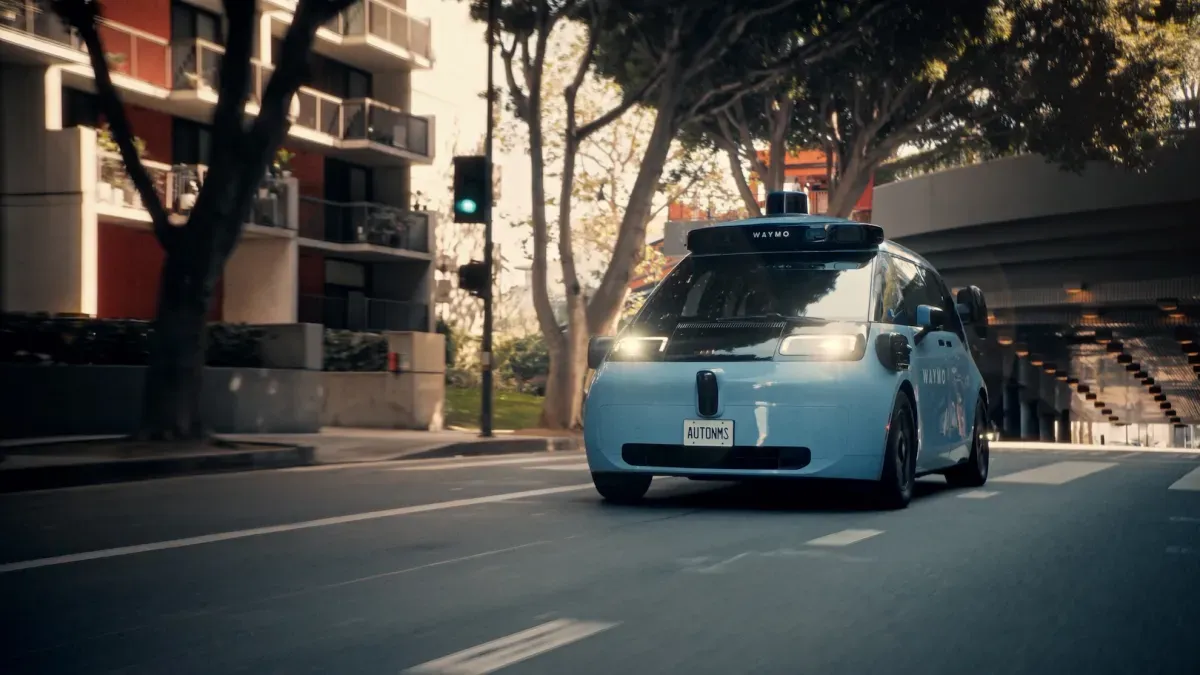 Photo: TechCrunch
Key points
Waymo received an Ontario permit to begin testing self-driving vehicles on Toronto streets, starting with mapping and aiming to carry first riders in 2028.
Waymo will begin testing self-driving vehicles on Toronto streets after receiving approval to join Ontario's Automated Vehicle Pilot Program, the company announced on 16 October 2026. The California-based company, owned by Google parent Alphabet, received a provincial permit from Ontario's Ministry of Transportation. The permit covers manual driving and testing, and Waymo expects to welcome its first Toronto riders in 2028.
The approval marks Waymo's first Canadian market and its entry into a regulated provincial pilot governing autonomous vehicle testing. Unlike a commercial launch, the permit authorises a staged rollout: manual mapping first, then autonomous testing with a trained safety operator aboard, and only later public rides. The sequence mirrors how Waymo has entered other cities, moving from mapping to testing before opening a commercial service.
What the permit authorises
Waymo said in a blog post on Friday that its vehicles will be manually driven in Toronto to create high-definition maps of local street networks. High-definition mapping records precise lane positions, signs and road geometry so the self-driving system can compare what it sees against a detailed reference. After mapping, Waymo will test autonomous vehicles on public roads with a human safety operator on board.
Testing in Toronto will run 24 hours a day, seven days a week, according to Waymo's statements to Metroland Media. The company said it will begin mapping select neighbourhoods including St. Lawrence Market, Harbourfront, Roncesvalles Village, Parkdale, Liberty Village, Don Mills, Yorkdale, Leaside, East York, Summerhill, Yonge & Eglinton, Weston, Mimico and Etobicoke. Trained autonomous specialists will drive during tests this fall as the company studies Toronto's driving conditions.
Toronto is the northernmost city Waymo has attempted to operate in, with winter conditions that its technology has not faced in California. Sidney Givigi, a professor of robotics and machine learning at Queen's University's School of Computing, said harsh weather remains a real concern. "All the sensors can get occluded by snow ... which is something that they don't have in California," Givigi said.
Where mapping will begin
Givigi also raised questions about ice and blizzards: "What if there is ice on the road, or you have a very strong blizzard and then you try to stop your car on a hill — and it does not stop?" Waymo's latest taxis carry 13 cameras, six radar units and four lidar devices — lidar being laser-based distance measurement — versus nine cameras and no radar or lidar on most Tesla models.
Waymo said its cars were involved in 95% fewer crashes causing serious injury or death compared with humans in cities where the service operates, citing internal data from more than 400 million fully autonomous kilometres driven. The company has robotaxi services in 15 U.S. cities and is testing in London and Tokyo. Two years ago it operated in only three commercial markets, with expansion beginning in March 2025 in Austin and later Atlanta.
For its Canadian launch, Waymo is partnering with Toronto-based Element Fleet Management, which will provide maintenance, customer service and other support functions. Waymo said it expects to support hundreds of jobs in fleet maintenance, validation driving, customer service and operations. Flavio Volpe, president of the Automotive Parts Manufacturers' Association, called Waymo's arrival "a big victory" for mobility technology companies in Canada.
How safe Waymo says it is
Concerns persist around safety and job security. Marc-André Way, president of the Canadian Taxi Association, acknowledged "a possibility that some drivers would be replaced at one point in time," while adding "No one should be pressing the panic button." Laura Miller, Uber Canada's head of policy, said the company believes "the future of mobility will be hybrid, with human drivers and autonomous vehicles operating side by side."
Robotaxis could also improve urban travel for people who are blind or partially sighted. Michelle McQuigge, CEO of Toronto-based non-profit Balance for Blind Adults, said service denials by human drivers are "remarkably common" — she estimates at least once a month with her guide dog — but said self-driving rideshares are not a "magic bullet" given cost and ease-of-use pitfalls. She remains "cautiously optimistic."
Waymo has been lobbying the B.C. government to allow its vehicles into the province and has acknowledged talks with officials across Canada to bring its service to other parts of the country. The company's first international market is Tokyo, where it began preparations and street mapping in 2025 and is scheduled to launch to riders in 2027. In the U.K., Waymo started testing on London streets in April 2026.
Frequently asked questions
When will Waymo robotaxis carry passengers in Toronto?
Waymo expects to welcome its first Toronto riders in 2028, following street mapping and autonomous testing with a safety operator aboard under Ontario's Automated Vehicle Pilot Program.
How will Waymo test its vehicles in Toronto?
Waymo will first manually drive vehicles to create high-definition maps of Toronto streets, then test autonomous vehicles on public roads with a human safety operator, running 24 hours a day, seven days a week.
What safety record does Waymo claim?
Waymo says its cars were involved in 95% fewer crashes causing serious injury or death compared with humans, citing internal data from more than 400 million fully autonomous kilometres driven.