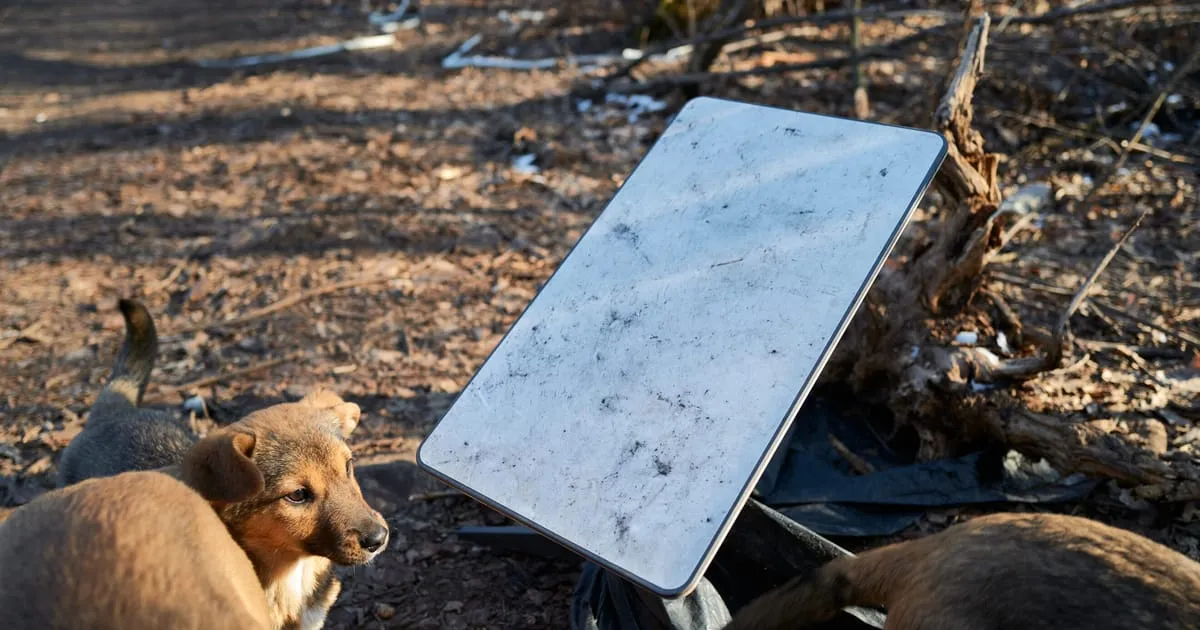
Zelenskyy says Starlink speed caps in Ukraine are a planned operation
Ukrainian President Volodymyr Zelenskyy said on 17 October 2026 that Starlink terminals shut down above 161 km/h in Ukraine but work at 180 km/h inside the European Union, disabling interceptor drones against Russian Shahed attacks.
 Photo: POLITICO
Key points
Zelenskyy said Starlink speed restrictions in Ukraine, capping terminals at 161 km/h, are a planned operation after tests showed the system working normally at 180 km/h in EU countries.
Ukrainian President Volodymyr Zelenskyy said on Saturday that Starlink restrictions hampering Ukraine's war effort are a planned operation, after a test showed the satellite service works normally at 180 km/h inside European Union countries but shuts down above 161 km/h inside Ukraine. The cap disables Ukrainian interceptor drones built to shoot down Russian jet-powered Shahed drones, Zelenskyy told reporters in a WhatsApp chat.
The claim matters because Ukraine's air defence and frontline communications depend on a satellite system operated by SpaceX, a U.S. company, while Kyiv and Washington are in dispute over sanctions policy on Russia. Zelenskyy's test is meant to show the slowdown is a deliberate geographic restriction rather than the technical fault Kyiv says Washington described, and it puts pressure on the European Union to supply an alternative before winter.
What the speed test showed
Zelenskyy said Ukrainian technical specialists drove vehicles equipped with Starlink terminals into EU territory and ran them at 180 km/h, and the satellite links functioned without disconnections. Inside Ukraine, terminals disconnect whenever a platform exceeds 161 km/h. "The conclusion is this: the restrictions are in effect in Ukraine, but they are not in effect in European Union countries. So, this is a planned operation," Zelenskyy said.
The European Union is under growing pressure to give Ukraine an alternative to Starlink. Negotiations between Brussels and Kyiv over access to Govsatcom, a programme that gives participating governments secure communications capabilities, have been stalling, and have been ongoing since March with no breakthrough. Norway and Iceland secured such an agreement earlier this year, according to a Politico report of 16 October 2026.
The mechanism Zelenskyy describes is a speed threshold on the terminal link: above 161 km/h, or 100 mph, the Starlink connection cuts out and the drone is lost. Russian jet-powered Shahed loitering munitions cruise at several hundred kilometres per hour, so interceptors built to chase them cannot hold a link at the speeds the cap allows. Zelenskyy said the cap also affects robotic supply runs delivering food and water to frontline infantry.
Why interceptors stop working
Zelenskyy said Ukrainian commanders, the Ministry of Defense and diplomats are in contact at military, defence and diplomatic levels, including with SpaceX, and no one is responding. Kyiv is awaiting clarifications from the Pentagon and SpaceX on when the military-grade Starshield variant will be restored to unrestricted function, according to the Kyiv Post report of 17 October 2026. SpaceX did not immediately respond to a request for comment.
Reporting on who ordered the restriction is disputed. Trump denied involvement, saying neither he nor Musk ordered limits and that "everything is the same as it's always been." Musk said any limits were decided by the U.S. military and ultimately the president.
Who Zelenskyy says is not answering
Zelenskyy tied the Starlink dispute to a wider argument about sanctions and Russian strikes. He said Russia carried out attacks on Ukraine's energy sector with more than 320 jet-powered Shahed drones, loitering munitions, cruise and ballistic missiles, cutting power for about 1 million people. He accused Russia of trying to cause a blackout before winter, and criticised U.S. President Donald Trump's executive order on Friday waiving key sanctions on Russia.
European lawmakers are pressing the EU executive to move faster. Christophe Grudler, a French Member of the European Parliament, said it is unacceptable for Ukraine's defence to depend on the goodwill of a single American billionaire or on Trump's decisions, and called for faster work on IRIS², the EU's in-house satellite network, which is only expected to come online in 2030. Commission spokesperson Thomas Regnier said the EU is in talks to fully associate Ukraine with Govsatcom.
The dispute over who ordered it
Zelenskyy said he has seen progress on European alternatives. "The Europeans are now raising the question of alternatives themselves. And they're already working on them. They're already making progress, and they'll succeed in this area," he said. He also said partners told him there were signals from the White House that the restricted capabilities would return, and that Ukraine is working bilaterally with EU countries, citing France.
The next dated development to watch is the restoration of unrestricted Starshield function, which Kyiv is awaiting from the Pentagon and SpaceX without a stated timeline. The EU's IRIS² network is expected to come online in 2030, and Govsatcom negotiations with Ukraine, under way since March, have produced no breakthrough date.
Frequently asked questions
Why does the Starlink speed cap stop Ukraine's interceptor drones?
Zelenskyy said Starlink terminals disconnect above 161 km/h in Ukraine, cutting the link to interceptor drones mid-flight. Russian jet-powered Shahed drones cruise at several hundred kilometres per hour, so interceptors cannot hold a connection at the capped speed.
What test did Ukraine run to show the restriction is deliberate?
Ukrainian specialists drove Starlink-equipped vehicles into EU countries and ran them at 180 km/h, and the links worked without disconnection. Inside Ukraine, terminals shut down above 161 km/h, which Zelenskyy said shows the restriction applies only in Ukraine.
Who does Zelenskyy say ordered the Starlink restrictions?
Zelenskyy did not name an author; he called it a planned operation. Trump denied involvement, saying neither he nor Musk ordered limits. Musk said any limits were decided by the U.S. military and ultimately the president.