Albanian protesters demand Rama resign as Tirana clashes enter seventh day
Protesters demanding Prime Minister Edi Rama's resignation battled police in Tirana for seven days through 20 October 2026, after fires hit the Education Ministry and Supreme Court offices.
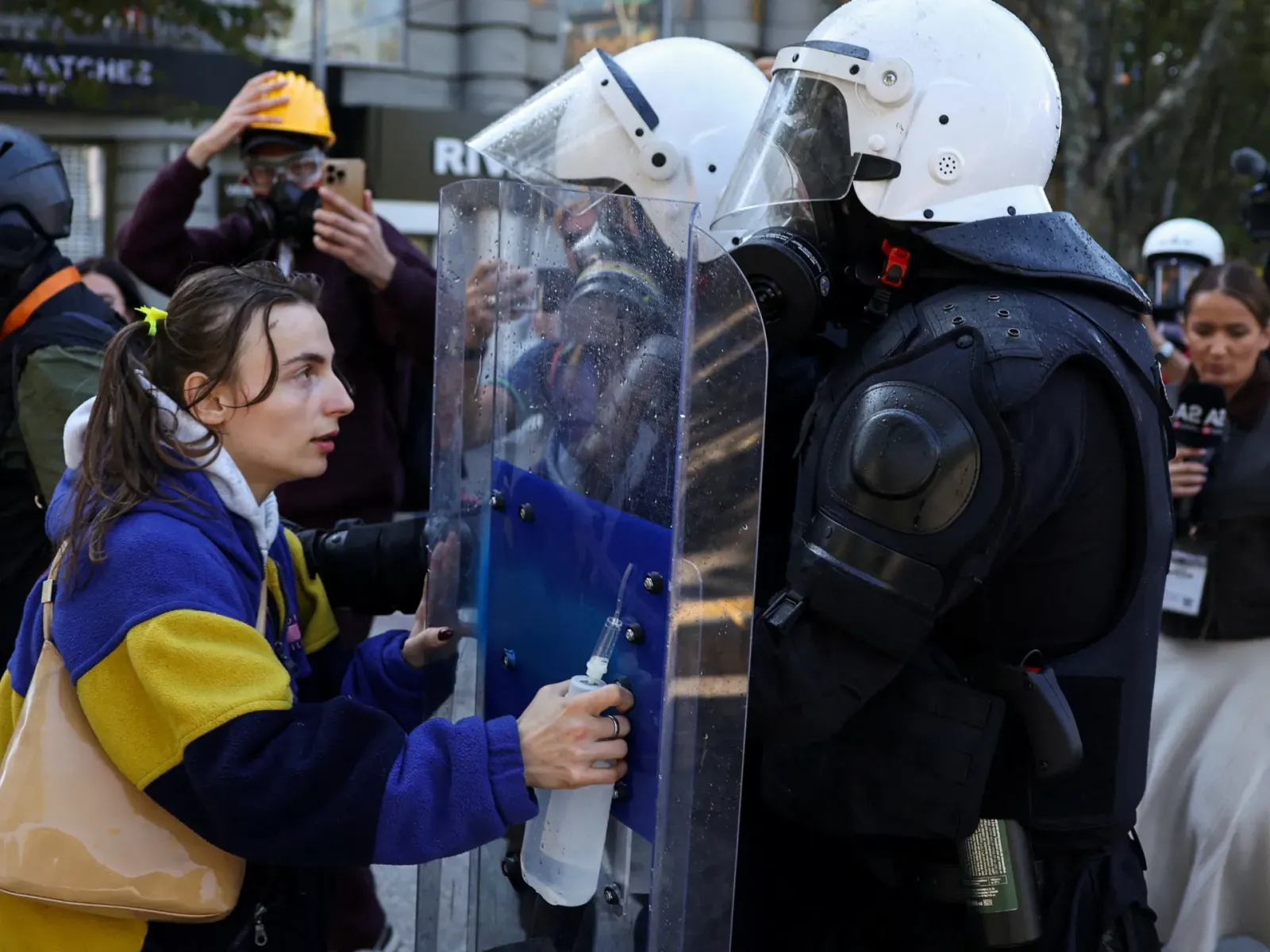 Photo: Al Jazeera
Key points
Albanian protesters demanding PM Edi Rama's resignation battled police in Tirana for seven days, with fires at the Education Ministry and Supreme Court offices.
Albanian protesters demanding Prime Minister Edi Rama's resignation battled police in Tirana for seven days through 20 October 2026, throwing Molotov cocktails, stones and other projectiles while police responded with tear gas, water cannons and rubber bullets. The unrest, led in part by students, marks one of the most serious political challenges facing Rama in more than a decade in power.
The protests matter because they have grown from a targeted environmental demonstration in May into a broad youth-led movement rejecting the entire political class, with no single leadership group for the government to negotiate with. Fires reached offices at the Supreme Court over the weekend, days after protesters set fire to the Education Ministry and bank branches, escalating the crisis beyond earlier demonstrations.
Seven days of clashes in Tirana
Violence has spread across Tirana's city centre, with crowds targeting government buildings, banks and commercial establishments, vandalising storefronts and starting fires. The ruling party's headquarters also came under attack. On October 14, tens of thousands of students took to the streets of Tirana, where demonstrators set fire to the Education Ministry building and two bank branches and threw stones at police, who responded with tear gas and water cannon.
The unrest spread beyond the capital, with protests also reported in other Albanian cities. Some protesters were seen carrying and using firearms during confrontations. Reports describe serious damage to public and private property, but do not establish that Parliament has been seized by demonstrators, and have not established that the Supreme Court was destroyed or that the government has lost control of the country.
Prime Minister Edi Rama on Tuesday accused some young demonstrators of being ideological extremists at a meeting with secondary school principals from Tirana and Education Minister Mirela Kumbaro. "There are students who are extremist in their point of views, students who are bound to politically extremist ideologies," Rama said, insisting that students who exercise their right to protest are not the problem.
Rama blames foreign hands
Rama has claimed the protests were incited by foreign intelligence services, alleging Russia and Iran have been seeking to destabilise Albania, and has accused the Albanian opposition of involvement, without presenting concrete evidence. He has also called the allegations against him conspiracy theories and manipulated disinformation spread through social media by foreign hands. At the weekend, he described the protest violence as a threat to Albania's goal of joining the European Union by 2030.
Rama has strongly backed the State Police's response despite accusations of disproportionate force, pledging a 2,500-euro bonus for police officers at a meeting with police chiefs on Monday. He warned of financial and administrative penalties for protesters, saying families of minors would be held liable for damage and students would lose scholarships and access to free education. The prime minister's press office told BIRN the remarks referred to acts of violence, not the right to protest.
Where the movement began
The movement began as the Flamingo Revolution in May, an environmental protest against luxury development projects in the protected area of Zvernec and a planned resort on Sazan Island by the firm of Jared Kushner, United States President Donald Trump's son-in-law. The flamingo, native to these coastal lagoons, became a symbol of resistance against the perceived commodification of public lands.
Environmental concerns converged with student anger over high tuition fees, inadequate dormitory conditions and low educational competitiveness, alongside grievances over corruption, nepotism and a lack of perspective. Protesters also cite limited financial support and poor employment prospects for young people. The dispute over the proposed resort has drawn scrutiny from European lawmakers as Albania seeks to advance its bid to join the European Union.
Analysts describe the movement as decentralised and youth-driven, coordinated across WhatsApp, Telegram, Snapchat and TikTok rather than through formal hierarchies. Fatos Hakorja, editor-in-chief of TV Klan and Klan News, said there was no clear evidence of a single consolidated structure behind the protests. Political analyst Ben Andoni called it a genuine, horizontal revolt with no leadership group or defined goals.
Writer Fatos Lubonja, a former political prisoner under the communist dictatorship, told BIRN Rama's speech justified open threats against anyone daring to protest, even peacefully, through manipulation and lies. The European Union has expressed concern over the escalation, called for restraint, and urged an investigation into allegations of excessive force against protesters and journalists.
Protesters have vowed to continue demonstrations while the government has refused to accept calls for resignation. Rama, who won a fourth consecutive term in 2025, has rejected demands to step down. Whether the unrest develops into sustained political change will depend on the movement's ability to maintain pressure, the government's response and whether a path to dialogue emerges.
Frequently asked questions
Why are Albanian protesters demanding PM Rama's resignation?
Protesters cite corruption allegations, high tuition fees, poor university conditions, limited opportunities for young people, and a controversial coastal resort project linked to Jared Kushner. The movement grew from the May Flamingo Revolution against luxury coastal development.
How long have the Tirana protests lasted?
Young protesters demanding Rama's resignation have battled police for seven days, with violent clashes in Tirana's streets. Demonstrators threw Molotov cocktails and stones while police responded with tear gas, water cannons and rubber bullets.
What has PM Edi Rama said about the protests?
Rama accused some student protesters of extremism, alleged Russia and Iran sought to destabilise Albania without presenting evidence, and pledged a 2,500-euro bonus for police officers. He rejected calls to resign and warned of penalties for protesters.