ANC falls to worst municipal result since 1994 with 30.81%
South Africa's ANC fell to 30.81% in municipal elections, its worst since 1994, losing majorities in all metros and facing coalition talks.
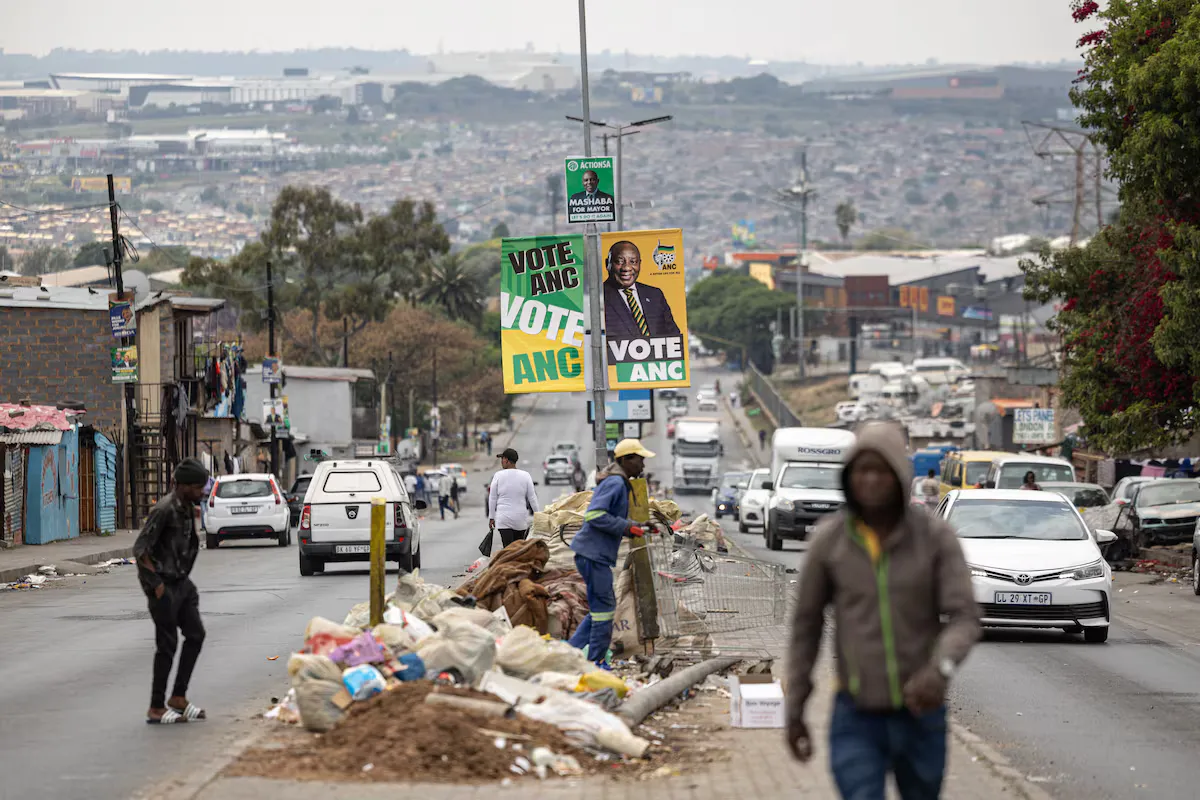 Photo: The Globe and Mail
Key points
The ANC won only 30.81% in municipal elections, its worst since 1994, losing outright majorities in all metros.
South Africa's African National Congress has fallen to its worst municipal election result since the end of apartheid, winning 30.81% of the national vote with 99% of results counted. The party lost outright majorities in all eight metropolitan councils, including Johannesburg, Tshwane, and eThekwini. Secretary-general Fikile Mbalula described the outcome as a "catastrophic disaster" at a media briefing on the weekend.
The result marks a steep decline from the 45.6% the ANC won in the 2021 local elections and is less than half the 64.9% it received in 2006. The party remains South Africa's largest, but it now sits just six percentage points ahead of the Democratic Alliance, which took 24.6% of the vote. The uMkhonto weSizwe Party received 9.72%.
Worst result since 1994
The ANC's support fell to 20.27% in Johannesburg, 20.22% in Tshwane, and 22.11% in Ekurhuleni. In eThekwini, home to Durban, support dropped to 16.46%. Buffalo City was the only metro where the party stayed above 40%, at 41.93%. The DA finished first in Johannesburg with 35% of the vote. The losses deepen a decline that reshaped national politics in 2024, when the ANC lost its parliamentary majority, taking 40.2% of the vote and entering a coalition government with the DA and other parties. Municipal control has long been a key source of party revenue through contributions from public representatives and local patronage networks, according to Jason Halfon, a former DA official.
Across the country, 135 councils are hung, meaning no party has a majority, compared with 66 in 2021. The ANC controls 53 of 213 councils outright and has the most votes in 128 councils, but many of those lack a governing majority. More than half of all municipalities are now hung, complicating the formation of workable coalitions.
Coalition talks ahead
Parties have 14 days to negotiate coalition agreements for the new municipal councils. The DA, which led in Johannesburg, will struggle to find partners because of animosity from ActionSA and the Economic Freedom Fighters. A deal with the ANC would alienate supporters of both parties, political commentators said. President Cyril Ramaphosa, whose party lost 15 percentage points from its 2021 margin, touted the election as a sign of a healthy political system. "At a time when democracy is under strain in many parts of the world, South Africans have shown once more that ours is a strong and enduring democracy," he said Sunday at the election centre where results were announced.
The results have renewed questions about Ramaphosa's leadership. Senior party members are discussing what should happen next, and an analyst warned that coalition failures could intensify calls for him to leave office earlier than planned. Ramaphosa is due to step down as party leader in late 2027, but there has been talk of an earlier leadership contest.
Leadership questions
Former minister Nkosazana Dlamini-Zuma said ANC leaders needed to examine what went wrong and take responsibility. Mbalula acknowledged the scale of the defeat, saying the party would listen to voters and address its problems. "We have been humbled," he said. "We will confront the reasons why people who once regarded the ANC as their natural political home have become disillusioned with our movement."
The ANC's decline has fuelled debate about the fate of Africa's liberation movements. The Botswana Democratic Party lost nearly 90% of its parliamentary seats in 2024 after ruling since independence. Liberation parties in Tanzania, Zimbabwe, and Mozambique have increasingly relied on authoritarian power, while the ANC has accepted free and fair results even when disastrous.
The election could also affect South Africa's foreign policy, including its stance on Israel. Halfon said the results could strengthen parties seeking to challenge ANC policies, particularly the DA, which participates in the national Government of National Unity. He argued that coalition partners could gradually push for a more pragmatic approach to Israel, though any shift would be "indirectly, and only over time."
The Electoral Commission of South Africa was expected to declare the final results on Sunday night. The next national elections are not scheduled until 2029, but the municipal results will shape the balance of power within the governing coalition. Political analyst Dale McKinley cautioned against describing the ANC as finished, noting it remained the largest party, but said it was continuing to lose support, particularly in urban areas.
Frequently asked questions
What was the ANC's vote share in the latest municipal elections?
The ANC won 30.81% of the national vote, its worst municipal result since 1994, down from 45.6% in 2021.
How many councils are hung after the latest municipal elections?
135 councils are hung, meaning no party has a majority, up from 66 in 2021. The ANC controls 53 of 213 councils outright.
What happens next after the ANC's poor election result?
Parties have 14 days to negotiate coalition agreements. The results could intensify calls for President Ramaphosa to leave office earlier than planned.