California voters reject 5% billionaire wealth tax in Proposition 40
California voters rejected Proposition 40, a 5% wealth tax on billionaires, on 10 November, with 52.8% opposed, ending a record-spending campaign.
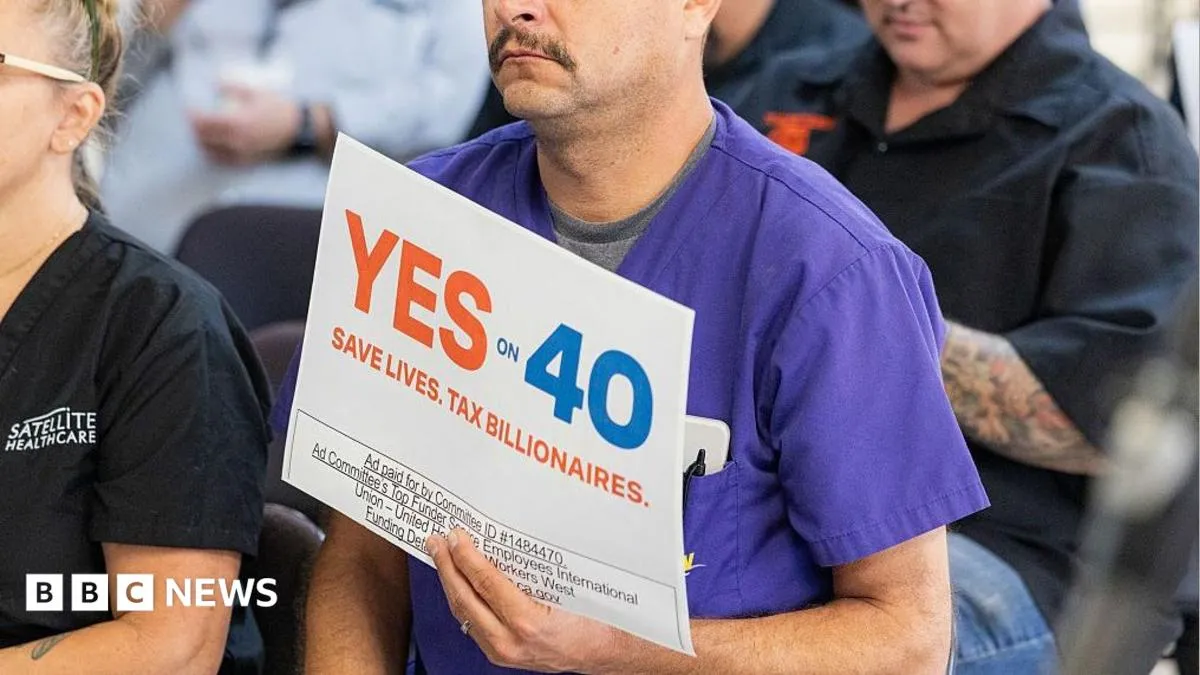 Photo: BBC News
Key points
California voters rejected Proposition 40, a 5% wealth tax on billionaires, on 10 November, with 52.8% opposed.
California voters rejected Proposition 40, a one-time 5% tax on the net worth of billionaires, on 10 November, with 52.8% opposed and 47.2% in favour. The measure would have applied to residents with net worth over $1 billion as of 31 December 2026, excluding real estate and certain retirement assets. Proponents estimated it would raise about $100 billion over five years, with 90% going to healthcare and 10% to education and food assistance.
The defeat ends a campaign that shattered spending records for a tax-related measure in California and split traditional Democratic allies. The proposal was the nation's biggest test of taxing the ultra-rich through their investments rather than paychecks. It came as other states and federal policymakers debate how to tax extreme wealth, making the vote a bellwether for similar proposals.
What Proposition 40 proposed
The tax would have been the world's first wealth tax targeting billionaires, experts believe. It aimed to backfill federal healthcare funding cuts under H.R. 1, the 'One Big Beautiful Bill Act,' implemented in 2025. Supporters, including SEIU United Healthcare Workers West, said the state would lose an estimated $100 billion in federal healthcare funding over five years without it.
The measure divided Democrats. Governor Gavin Newsom opposed it, warning it could drive wealthy residents out of the state and reduce income-tax revenue. Former Representative Katie Porter and the California Medical Association also opposed it, while Senator Bernie Sanders, Representative Ro Khanna, and the California Democratic Party supported it. Newsom supports a federal minimum tax on net worth above $100 million but says a state-level tax would disadvantage California.
The opposition campaign
A Stanford University study found that billionaires who have already left California, including Brin, Page, and Thiel, removed about $540 billion, or 30%, of the state's billionaire wealth from potential taxation. The study concluded Prop. 40 might generate only about $30 billion instead of the $100 billion estimated by proponents. The Legislative Analyst's Office projected 'tens of billions of dollars' and warned of up to $1 billion in annual income-tax revenue loss.
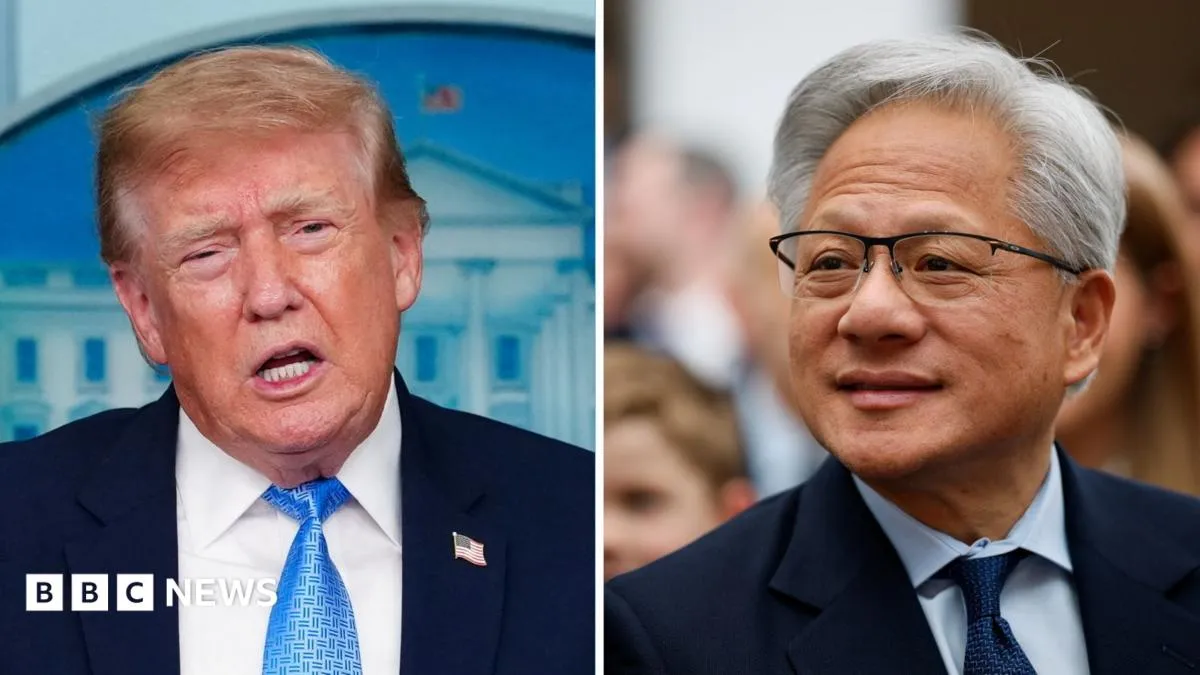
Economists supporting the measure included Nobel laureates Daron Acemoglu and Joseph Stiglitz. An open letter noted that between 2019 and 2025, California income tax paid by billionaires was 'only 1.6% of their $1.4 trillion wealth gain.' Nvidia CEO Jensen Huang, with an estimated net worth of about $200 billion, supported the tax, telling CBS News, 'I don't mind paying taxes; the more you make, the more taxes you pay, so I'm okay with that.'
The AP Voter Poll showed generational and income divides. A majority of voters under 30 voted 'yes,' while about 7 in 10 voters aged 65 and older voted 'no.' About half of voters with household income under $100,000 supported the measure, while closer to 6 in 10 voters earning $100,000 or more opposed it. The measure also faced opposition from Planned Parenthood and the California Medical Association, which called it 'a reckless experiment conducted on our state's economy.'
What happens next
Dave Regan, president of SEIU United Healthcare Workers West, said on election night that billionaires' efforts created 'a lot of confusion and a lot of second-guessing among people who really in their hearts know what the right the thing to do is.' He pledged to seek a billionaire tax again in 2028. The result marks a defeat for advocates of higher taxes on the wealthy, who argue that higher taxes improve people's lives.
Two other propositions on the ballot could still nullify the tax. Proposition 42, which prohibits new state taxes on personal property, is expected to pass, and if either 41 or 42 receives more votes than Prop. 40, the wealth tax will be void. The Associated Press determined Monday that 'no' had enough votes to win, after most Californians voted by mail and ballots postmarked by Election Day were counted within a week.
The rejection follows a trend in Western Europe, where roughly half of countries imposed wealth taxes in the early 1990s, but all but three have since repealed them, citing capital flight and reduced investment. At least seven billionaires, including Steven Spielberg, Larry Page, and Sergey Brin, have left California. The Stanford working paper by Benjamin Jaros and Joshua Rauh found that in 85% of 100,000 simulations, the tax would cost the state more revenue than it generates.
The next dated event is the certification of the election results, which will confirm the passage of Proposition 42 and the nullification of Proposition 40. Supporters of the California tax have already started running ads in New Hampshire, New Mexico, and Virginia, states that vote early in the 2028 Democratic presidential primary, criticising Newsom's opposition. The debate over taxing extreme wealth is likely to continue in other states and at the federal level.
Frequently asked questions
What was Proposition 40?
Proposition 40 was a California ballot measure that would have imposed a one-time 5% tax on the net worth of residents exceeding $1 billion, with 90% of revenue going to healthcare and 10% to education and food assistance.
Why did California voters reject the billionaire wealth tax?
Voters rejected it with 52.8% opposed, according to The New York Times. Opposition came from Governor Gavin Newsom, some unions, and billionaires who spent heavily, warning it would drive wealthy residents out of the state and reduce tax revenue.
What happens next after the rejection?
Two competing measures, Propositions 41 and 42, could nullify the tax if either passes with more votes. Proposition 42, which prohibits new state taxes on personal property, is expected to pass, and supporters plan to try again in 2028.