Cambridge scientist Marta Shahbazi dies in Spain train crash killing 69
Dr Marta Shahbazi, a Cambridge scientist, died on 28 October when a Renfe train crashed near Urda, killing 69 people.
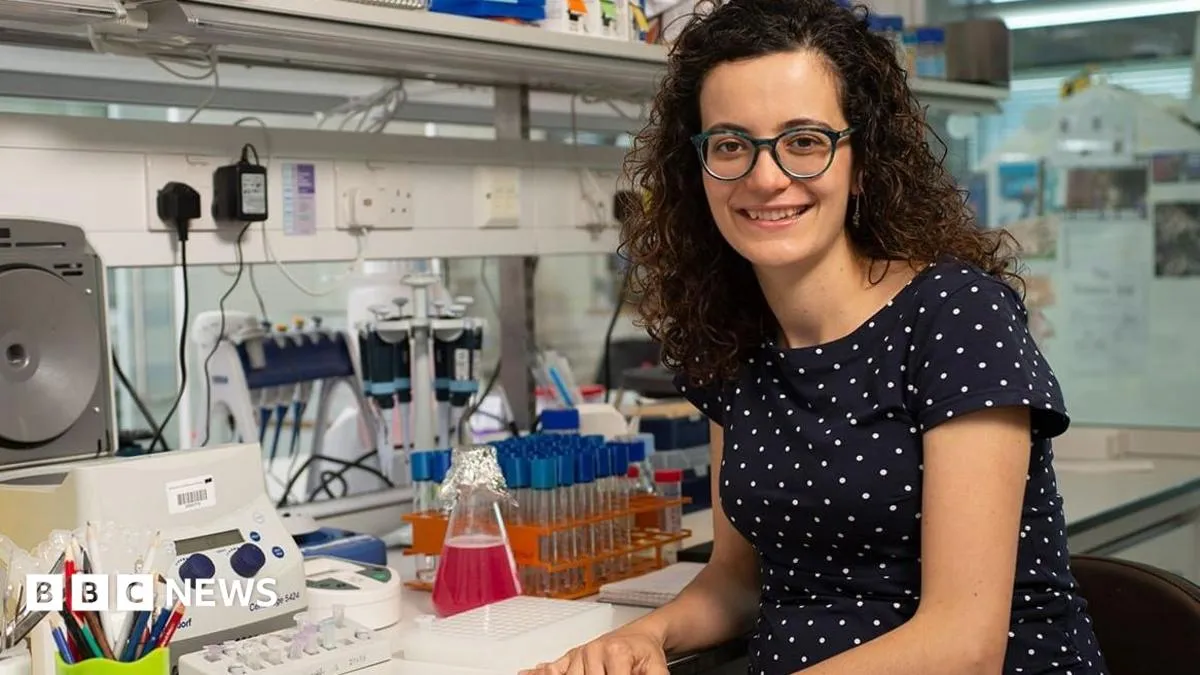 Photo: BBC News
Key points
Dr Marta Shahbazi died in a Spanish train crash on 28 October while travelling to receive a scientific prize.
Dr Marta Shahbazi, an award-winning scientist at the University of Cambridge, died in a train crash in Spain on 28 October while travelling to receive a prize for scientific excellence. The crash near Urda, south of Madrid, killed at least 69 people. Shahbazi was a group leader at the Medical Research Council Laboratory of Molecular Biology (LMB) and an affiliate assistant professor at the Cambridge Stem Cell Institute.
Shahbazi was on her way to a conference in El Rompido, Andalusia, to collect the 2026 José Luis Gómez-Skarmeta prize from the Spanish Society of Developmental Biology. The society recognised her 'outstanding contributions to the study of the early stages of human development', as reported. The LMB said she had earned several awards for her work on human embryos and cell biology.
Award journey cut short
The LMB paid tribute to Shahbazi, calling her an 'inspiring, talented and passionate scientist' whose death was 'a profound shock and a huge loss'. The laboratory noted she was a mother of two and a role model for a 'mother scientist', a term she used to describe herself. Her research focused on the earliest steps in human embryo development and how errors lead to failed pregnancies.
Shahbazi joined the LMB in 2020 after completing her PhD at the Spanish National Cancer Research Centre and working as a post-doctoral fellow at Cambridge. She was also a principal investigator at the Cambridge Stem Cell Institute (CSCI). The institute's director, Prof Bertie Gottgens, said the community was 'shocked and deeply saddened' by her death, praising her 'pioneering research' and 'collaborative spirit'.
Dr Roser Vento-Tormo, a group leader at the Wellcome Sanger Institute, wrote on LinkedIn: 'Marta Shahbazi was a beautiful person: a close collaborator, a treasured friend, and an inspiration to me both as a scientist and as a mother.' She added that some of their joint work would be published in the coming months, and readers would 'feel the passion she poured into everything she did'.
Tributes from colleagues
The news of Shahbazi's death was first confirmed by the CiMUS research centre in Santiago de Compostela, where her aunt, Prof María José Alonso, works. CiMUS called her 'a brilliant young researcher' in a social media post. The centre expressed its sympathies to Alonso following the death of her niece in the railway accident on 28 October.
The crash occurred when a state-operated Renfe high-speed train smashed into the back of a stationary train operated by the Iryo company. More than 540 people were on board both trains. The collision happened on the line between Madrid and Seville, and it was Spain's second high-speed rail crash this year, as reported.
The disaster is one of the worst rail accidents in Europe's modern history and Spain's worst since 2013. Three days of national mourning were declared in the country, starting from Thursday. Spanish Prime Minister Pedro Sánchez described the incident as a 'tragedy' and promised an investigation.
Crash details
Shahbazi's death has prompted tributes from colleagues and institutions. The LMB said she was 'a much-admired role model' who wrote eloquently about balancing family and career. Her work was recognised with 'many awards and prizes', the laboratory added. The Foreign Office has been contacted, though no further details were provided.
The investigation into the crash is ongoing, with Spanish authorities promising to determine the cause. The crash has raised questions about the safety of high-speed rail in Spain, which has seen two fatal incidents this year. The scientific community mourns the loss of a researcher whose work shed light on early human development, and her legacy will continue through her published research and the students she mentored.
Frequently asked questions
Who was Marta Shahbazi?
Dr Marta Shahbazi was a group leader at the MRC Laboratory of Molecular Biology and an affiliate assistant professor at the Cambridge Stem Cell Institute. She researched early human embryo development and was a mother of two.
What happened in the Spain train crash?
On 28 October, a Renfe high-speed train crashed into a stationary Iryo train near Urda, killing at least 69 people. More than 540 people were on board both trains.
Why was Shahbazi travelling on the train?
She was on her way to collect the 2026 José Luis Gómez-Skarmeta prize from the Spanish Society of Developmental Biology at a conference in El Rompido, Andalusia.