Gen Z protests draw 100,000, looting hits Frankfurt shops
On 31 October, Gen Z regelt protests drew 100,000 across Germany; overnight looting in Frankfurt led to 30 arrests and calls for tough penalties.
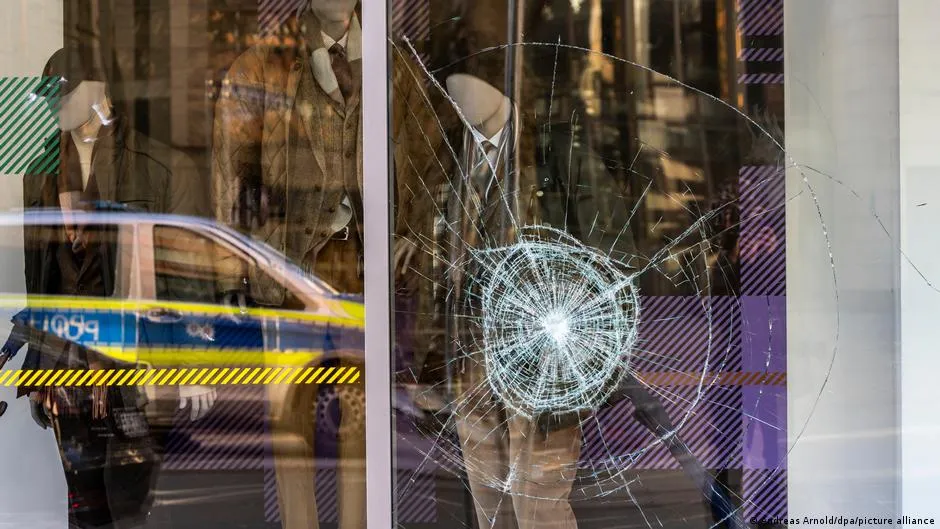 Photo: DW
Key points
Gen Z regelt protests on 31 October drew 100,000 across Germany; overnight looting in Frankfurt led to 30 arrests and calls for tough penalties.
On 31 October, tens of thousands of demonstrators took to the streets in more than 30 German cities, including Berlin, Frankfurt, Cologne and Munich, in protests organized by the campaign group Gen Z regelt, which means "Gen Z takes charge." The group's spokesperson said Saturday that 100,000 people showed why they were taking to the streets, with estimates of participation in six to eight cities to come later. The protests demanded better education and lower living costs.
The largely peaceful protests turned violent in some areas late on Saturday. Frankfurt police reported violent disturbances including windows being smashed and petrol bombs being thrown at the emergency services. In the city centre, windows were smashed at several shops, police said on X, urging bystanders to avoid the area. In Hamburg, some barricades were set on fire. Some businesses had boarded up their windows and doors in preparation for the protests.
Looting and arrests
Frankfurt police put more than 30 individuals under temporary arrest, local broadcaster HR said, without giving details of those detained. Interior Minister Alexander Dobrindt threatened tough penalties for looters and rioters who rampaged through Frankfurt overnight but praised the heavy police presence for preventing larger scale violence. "The rioters and looters will be identified and held accountable," Dobrindt was quoted as telling the Bild tabloid on Sunday. "This breach of the peace must be followed by tough penalties."
Dobrindt accused "violent left-wing groups and troublemakers from the migrant community" of hijacking the otherwise peaceful protests, without elaborating. He said the police strategy of maintaining a large presence while deploying officers across multiple locations had worked. "Excesses of violence like those in Paris were prevented thanks to our highly committed police forces," Dobrindt, a member of the conservative CSU, said.
Gen Z regelt distanced itself from the violent riots and looting that followed the protests in some cities. "We did not have any influence on what happened after the demonstrations," the group's spokesperson said. Police also confirmed the demonstrations themselves were largely peaceful and that looting and riots afterward were set off by extremists using the protests for cover. "The Gen Z protests turned out to be very peaceful," Andreas Rosskopf, chairman of the police union representing the Federal Police, told the Rheinische Post.
Demands and next steps
In Cologne, which also saw looting, a police spokeswoman said the incidents were more likely linked to Halloween celebrations than to the aftermath of the Gen Z protests. The protests coincided with Halloween and came weeks after some of the worst rioting in decades erupted in neighboring France. Roman Poseck, interior minister for the state of Hesse, which includes Frankfurt, warned Germans against using protests in France as an example ahead of Saturday's protests.
Gen Z regelt has called for more funding for schools, addiction treatment, and psychotherapy as well as measures to combat rising living costs. While it promotes social justice and greater climate protection, it opposes the introduction of mandatory military service, as well as an expansion of government surveillance. "We are here today to fight for peace and freedom, rather than for war and coercion," Gen Z regelt spokesperson Lina Friedrich said Saturday in Berlin.
The group has called for people to take to the streets again on 14 November. The initiative's organizers issued a positive assessment of protests across Germany. "Today, 100,000 people showed why they're taking to the streets," a spokesperson for the initiative said Saturday, adding that estimates of participation in six to eight cities would come later. The protests took place alongside many others in Europe, with France, Italy, Serbia and Spain seeing protests against the cost of living, among other causes.
In France, student protests about the state of education last month evolved into wider demonstrations about the cost of living and social security. In Italy, Prime Minister Giorgia Meloni's far-right government said it would deploy 500 army troops alongside the police in Milan until the end of the year after groups of masked protesters looted stores in the fashion capital and elsewhere and threw projectiles at police earlier this month.
Andrew Barclay, a politics lecturer at the University of Sheffield, said it was important to focus on the differences between the protests. The French protests have involved "hundreds of thousands taking to the streets over many weeks, and at least initially centered on specific grievances about education funding," he said. While protests elsewhere may have taken inspiration from the French, he said, "their scale so far hasn't been as large, and whilst the state of education continues to be a common theme, the issues being protested has ballooned to include a much larger number of complaints."
Frequently asked questions
What did Gen Z regelt protest for?
Gen Z regelt demanded more funding for schools, addiction treatment, and psychotherapy, as well as measures to combat rising living costs. It also promotes social justice and climate protection, while opposing mandatory military service and expansion of government surveillance.
How many people were arrested in Frankfurt?
Frankfurt police put more than 30 individuals under temporary arrest, local broadcaster HR said, without giving details of those detained. The arrests followed overnight looting after the protests.
When are the next Gen Z regelt protests?
Gen Z regelt has called for people to take to the streets again on 14 November. The group organized protests in 34 cities on 31 October, drawing 100,000 participants.