COP31 in Antalya runs past deadline over fossil fuel phase-out
Negotiators from nearly 200 countries worked past the official close in Antalya on 20 November 2026 after a new draft dropped any mention of phasing out fossil fuels.
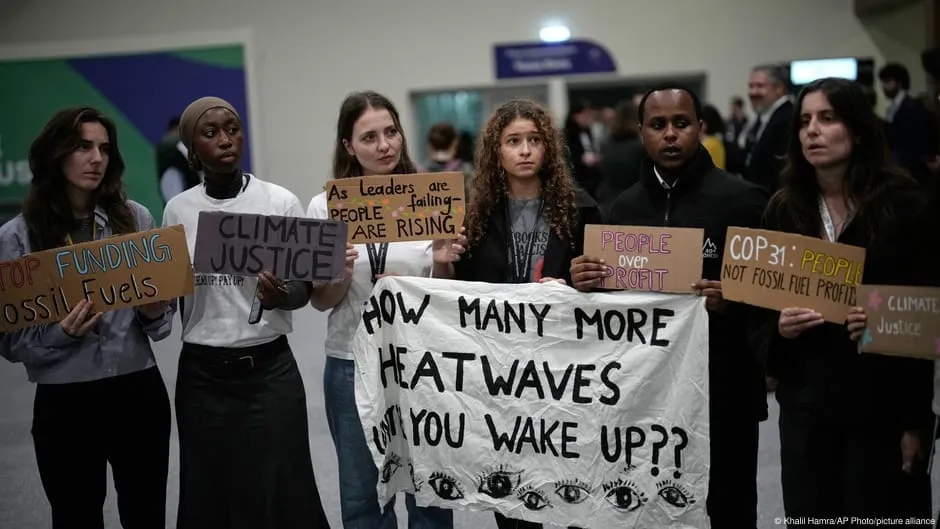 Photo: DW
Key points
COP31 talks in Antalya ran past their official close on 20 November 2026 after a draft deal omitted how to phase out fossil fuels, with a group of countries demanding explicit action.
Diplomats from nearly 200 countries met in Antalya, Turkey, for the COP31 climate summit, which ran past its official closing time on Friday, 20 November 2026. A new draft deal omits any mention of how to phase out fossil fuels, which campaigners called a step "backwards" and a "glaring regression".
The omission is the central dispute of the closing phase. A group of countries from Europe, Africa, Latin America and the Pacific challenged the proposed agreement, demanding explicit action on fossil fuels and stronger climate finance. Negotiators were searching for a deal that nearly 200 governments can accept before the gavel falls.
A draft without fossil fuels
Shortly after 9 p.m. local time in Antalya, delegates gathered for a plenary session, well past the official closing time. The Turkish presidency's opening address was partly drowned out by a protester shouting objections in English such as "you are killing the future," and gaining applause within the chamber. COP31 President Murat Kurum, Turkey's environment minister, told the plenary: "We've been negotiating for days to find the common ground." He hailed the progress made and said the world "waits for good news from this room." The session noted that several of the more ambitious aspects of a political declaration remained incomplete, with no agreement yet reached.
Who is demanding more
Several national delegates spoke during the plenary to bemoan the elusive progress or even backsliding during the two weeks of negotiations. The evening's session was dealing with technical issues, and the possibility that discussions continue into the weekend remained open as delegates worked through the text. Ethiopia, the host of next year's COP32, addressed the plenary late on Friday. Foreign Minister Gedion Timothewos, the upcoming COP32 president, called the COP process a marathon, not a sprint, and said the country was looking forward to picking up the baton from Turkey and leading the next leg of the relay into 2027.
A separate dispute concerns the scientific basis for the talks. The Intergovernmental Panel on Climate Change, the world's leading body of climate scientists, should already have started work on its next multi-year assessment, but the process is on hold at the urging of countries including Russia, Saudi Arabia and Iran.
Science timeline in dispute
The IPCC's assessments, published every six to seven years, provide the basis for major international climate agreements, including the 2015 Paris Agreement. The panel began evaluating climate science in 1988, and its most recent report was published in 2023. The last plenary session on the next report was put on hold in October at the urging of Russia, Iran, Saudi Arabia and Kenya.
At the core of the dispute is whether future UN climate talks base negotiations on the latest science. That matters for the next global stocktake, due in 2028, a report card on the world's climate efforts. The European Union, Brazil, the United Kingdom and small island states want the IPCC's seventh assessment report published in 2028; Russia, Iran, India and Saudi Arabia want it postponed until 2029.
A German Environment Ministry spokesperson said at COP: "We stand ready to help resolve this issue, so that the panel can continue its work." France, in its pre-COP communications, accused the countries delaying the report of attempting to "obstruct science in order to lower the ambition of the global stocktake."
Budget issues have also held up the IPCC's work, including funds that pay travel for hundreds of volunteer scientists, especially those from poorer countries. A member of another delegation said: "No budget means no more IPCC." Researchers have said the timeline is attainable; an open letter released in October, signed by more than 100 researchers from 36 countries including India and China, said: "We have no time to lose."
EU Climate Commissioner Wopke Hoekstra said at COP31 on 17 November that it was "fundamental to protect the integrity of climate science and the role of the IPCC as the source of best available science." There is no vote on the IPCC at COP31, but its significance and a timeline for the next report could be included in the final declaration, expected this weekend.
Frequently asked questions
What is the dispute at COP31 in Antalya?
A new draft deal omits any mention of how to phase out fossil fuels. A group of countries from Europe, Africa, Latin America and the Pacific demanded explicit action on fossil fuels and stronger climate finance, and talks ran past the official close on 20 November 2026.
When will the IPCC's next assessment report be published?
The EU, Brazil, the UK and small island states want the seventh assessment report in 2028, before the global stocktake due that year. Russia, Iran, India and Saudi Arabia want it postponed until 2029. The dispute is unresolved.
Who hosts COP32?
Ethiopia hosts COP32 in 2027. Foreign Minister Gedion Timothewos, the upcoming COP32 president, told the closing plenary that the country would pick up the baton from Turkey and lead the next leg of the relay.