EU drops Canada associate member offer before Montreal summit
The EU has dropped its offer of "associate member" status for Canada in a draft joint statement circulated on 28 October, replacing it with "ever closer association" language ahead of the Montreal summit.
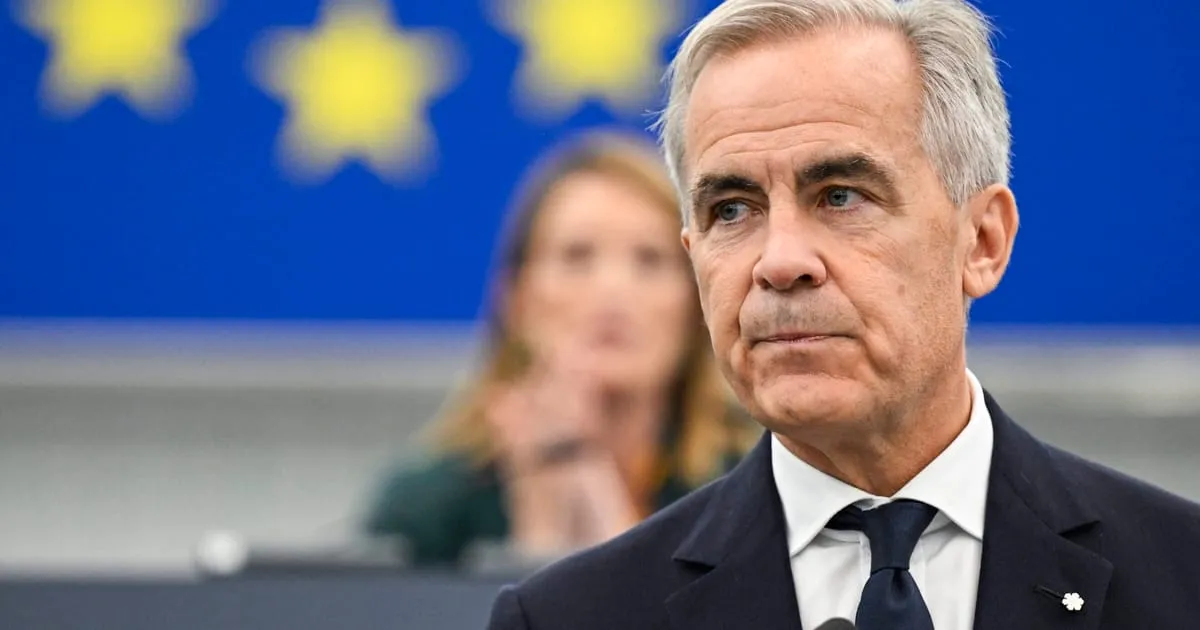 Photo: POLITICO
Key points
The EU dropped its offer of "associate member" status for Canada in a draft joint statement, replacing it with "ever closer association" language ahead of the Montreal summit.
The EU has dropped the idea of offering Canada "associate member" status in the 27-member bloc, opting instead for softer language promising "ever closer association" ahead of a landmark EU-Canada summit in Montreal, according to the latest version of the draft joint statement. A group of countries including Germany, Greece and France objected to mentioning associate membership in the joint EU-Canada statement to be issued in Montreal, the diplomats said.
The change matters because it reverses what had been hailed as a landmark in EU history. European Commission President Ursula von der Leyen had originally proposed "associate membership" for Canada in her State of the European Union speech in September, catching some EU countries off-guard. The bloc has not allowed any state membership since Croatia joined in 2013. Associate membership had been mooted, and rejected, previously for countries such as Ukraine.
Why the wording changed
The mechanism behind the reversal was political and legal pushback from EU capitals. "Associate status" has no definition, and diplomats questioned whether Canada could join the European Council, legislative bodies or decision-making processes without a vote. Germany argued that "associate membership" should be reserved as an interim step for prospective candidate countries, such as Ukraine or Montenegro, noting the status has no formal grounding in current EU treaties. At a meeting on Monday, ambassadors raised concerns about the dramatic offer.
A previous draft of the joint statement had read that the EU and Canada would "work to define by the 2027 EU-Canada Summit the concept of Associate Member that will reflect, through this even closer association, our common endeavour and cooperation towards our shared goals of prosperity, economic security and strategic autonomy." In the final version, the text reads: "We will create an even closer association between Canada and the EU... and work to define by the 2027 EU-Canada Summit the concept of an ever closer association of Canada to the EU, short of full membership itself."
The draft statement was circulated to the 27 member states of the EU and Canada on Wednesday, the eve of a trilateral meeting between the heads of the European Commission, the European Council and Prime Minister Mark Carney in Montreal. The text still needs final approval, and EU countries have a deadline of 6 p.m. to raise objections. The document is dated Oct. 28.
What the draft statement contains
Beyond the membership wording, the draft confirms that both parties have concluded "substantive negotiations" on a new Digital Trade Agreement that will supplement the existing free-trade deal between Canada and the EU. The agreement "will improve legal certainty and predictability, facilitate cross-border data flows, and enhance confidence in the digital economy for businesses and consumers." Senior European officials said in a background briefing that the deal would harmonise rules on digital commerce, including e-contracts and duties on electronic transmissions.
The draft also promises to look into faster money transfer solutions between Europe and Canada, stating that the two sides "will also support work toward connecting instant payment systems to facilitate faster, lower cost and more seamless cross-border transactions." Canada has reached an agreement with the European Investment Bank that will facilitate bloc members' investments in Canadian critical minerals, and the document confirms Canada's intent to join the Ukraine Support Loan, a 90 billion Euro programme, without specifying how much Canada will contribute.
The draft commits to building new sub-sea cable infrastructure between Canada, Europe and Asia, addressing Canada's very few wired connections with Europe amid concerns about sabotage of critical connectivity infrastructure. It also launches discussions on skills development and labour and researcher mobility, though there are no firm commitments. Senior government officials said work is under way to boost Canada's participation in two key EU programmes: Horizon and Erasmus+.
Canadian Prime Minister Mark Carney played down the significance of the terminology change. "The good news is it doesn't matter about specific names or nomenclature," Carney said Tuesday. "What matters is the difference that it will make to lives of Canadians." Carney has said Canada has no interest in formally joining the EU, though he has spoken of wanting to boost labour, research and student mobility between the two sides.
The backdrop to the summit includes a bitter trade war between the US and Canada, which has led Carney to seek new trading partnerships. Ahead of the Montreal summit, TD Economics released a report suggesting "meaningful" upside for Canada if it were to deepen economic ties with Europe, with tens of billions of dollars in additional trade possible if barriers were removed in defence, energy, critical minerals and digital markets. US President Donald Trump had previously called the EU's proposal "laughable."
The final agreement is expected to be signed by Carney, von der Leyen and European Council President Antonio Costa on Friday after a trilateral meeting in Montreal. The summit runs Thursday and Friday. The two sides have set a deadline of the 2027 EU-Canada Summit to define the concept of "an ever closer association of Canada to the EU, short of full membership itself."
Frequently asked questions
Why did the EU drop the offer of associate member status for Canada?
Germany, Greece and France objected to mentioning associate membership in the joint EU-Canada statement. "Associate status" has no definition in EU treaties, and diplomats questioned whether Canada could join EU institutions without a vote.
What replaced the associate member offer in the draft statement?
The draft statement says the two sides will "work to define by the 2027 EU-Canada Summit the concept of an ever closer association of Canada to the EU, short of full membership itself." The text still needs final approval.
What else is in the EU-Canada draft statement?
The draft confirms substantive negotiations concluded on a new Digital Trade Agreement, an agreement with the European Investment Bank on Canadian critical minerals investments, Canada's intent to join the 90 billion Euro Ukraine Support Loan, and commitments to sub-sea cable infrastructure.