French police open attempted murder probe as Europe protests turn violent
On 31 October, 320,000 marched in France and 100,000 in Germany; 770 arrested in France, 100 officers injured in Frankfurt.
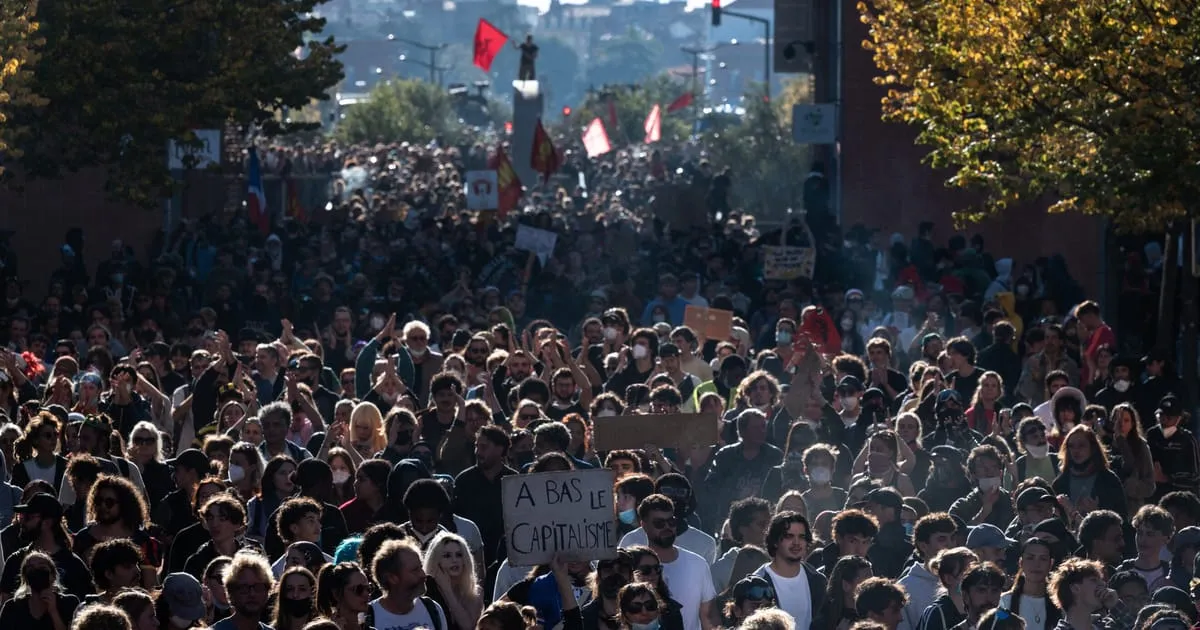 Photo: POLITICO
Key points
Cost-of-living protests across Europe turned violent on 31 October, with French police opening an attempted murder probe and German police blaming extremists.
French authorities opened an attempted murder investigation after a petrol bomb hit a riot police officer in Paris on 31 October, as cost-of-living protests across Europe turned violent. The interior ministry said 320,000 people marched in about 150 demonstrations across France, with 770 arrests. Student unions put the figure at half a million, including 200,000 in Paris.
The protests began a month ago at a high school on the outskirts of Paris over the state of schools and widened to the cost of living. The first major day, on 17 October, ended with the looting of hundreds of shops in several cities. On 31 October, masked groups hurled paving stones at police in Paris, who responded with teargas and baton charges. Four police officers and a gendarme were injured in the capital.
Violence in Paris
Interior Minister Laurent Nuñez, who had deployed 70,000 officers, denounced an "extraordinary" level of violence and described the petrol bomb attack on a riot officer as "attempted murder". The prosecutor's office said incendiary devices were thrown at a group of about 15 gendarmes and police officers. Injuries reportedly included second-degree burns in an incident captured on mobile phone video and shared on social media.
The level of physical violence and looting was significantly lower than on 17 October, when 2,600 people were arrested and as many as 3,000 shops pillaged in one of the worst nights of urban unrest in France's recent history. Many protesters wore Halloween costumes despite Nuñez warning that face coverings could result in fines of €150. The protests, called by students, trade unions and former members of the "yellow vest" movement, passed off calmly until the end. Injuries included second-degree burns, according to video shared on social media.
In Germany, more than 100,000 protesters marched in over 30 cities on Saturday to demand better education and lower living costs in protests led by the "Gen Z regelt" (Gen Z will sort it) campaign. The protests were ignited by the youth-led initiative and remained largely peaceful despite the police cancelling a planned march in Cologne after some participants wore face coverings and set off smoke bombs.
German unrest
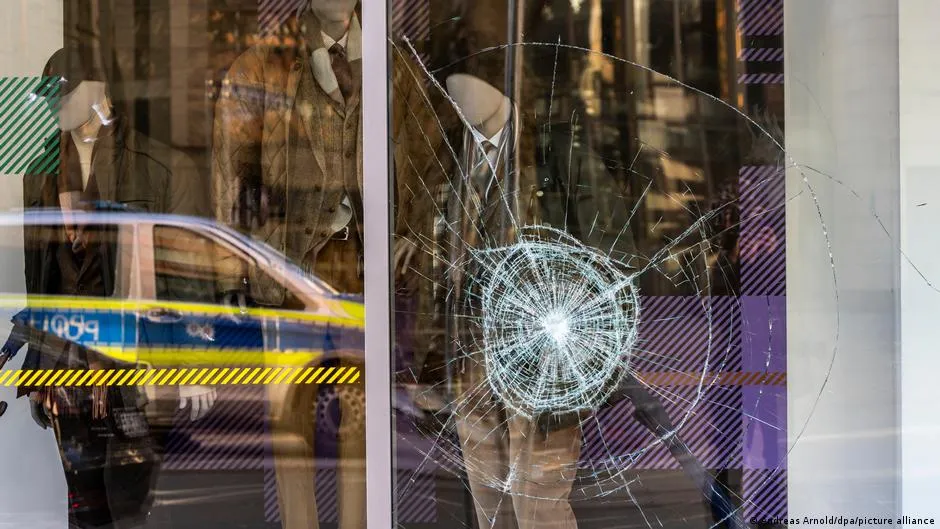
Violence broke out in Frankfurt, where hooded rioters damaged 17 shops, looting five of them, and threw missiles including petrol bombs, according to Roman Poseck, the state interior minister for Hesse. More than 100 of the 1,300 police officers deployed in the city were injured and 54 suspects, aged from 13 to 29, were arrested. "I am shocked by what I have seen, and there is no point in sugar-coating it. Let me make this very clear: things cannot go on like this," Poseck said.
German Interior Minister Alexander Dobrindt told the tabloid newspaper Bild that deploying a heavy police presence across multiple locations had been effective. "Excesses of violence like those in Paris were prevented thanks to our highly committed police forces," he said. He singled out "violent leftwing groups and troublemakers from the migrant community", adding: "Tough penalties must follow this breach of the peace."
Most of those arrested in Frankfurt were German nationals, the minister said, adding that police estimated they had been confronted with "between 1,000 and 1,500 violent troublemakers, predominantly from a migrant background". In Hamburg, burning barricades were set up, according to the newspaper Bild. Violence also broke out in Cologne, where police used water cannon to disperse the crowd, and in Berlin, where protesters attacked police with bottles and fireworks.
Spread across Europe
Gen Z regelt posted a statement distancing itself from all violence. "We had no influence on what happened after the demonstrations ended," a spokesperson said. The German protests were inspired by those in France, which also turned violent last month, prompting officials to impose curfews and other restrictions. In Italy, the police carried out 60 searches across 23 cities targeting people suspected of inciting violence at mass demonstrations on Friday, according to news agency ANSA.
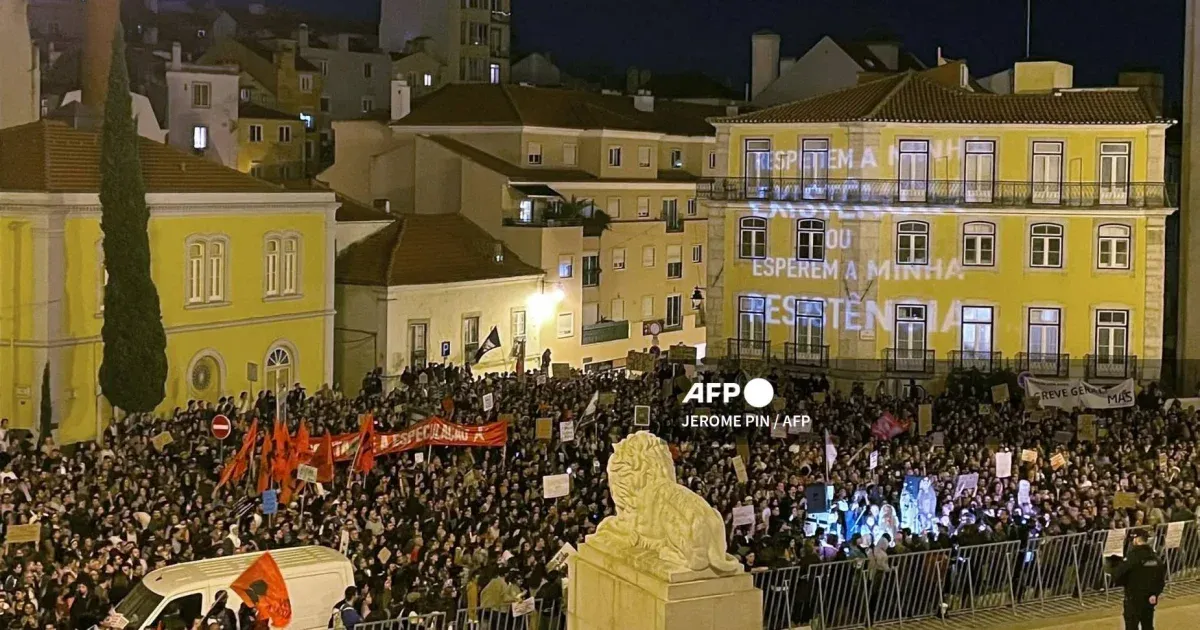
Violence also broke out in Portugal, where riot police removed protesters by force from Rossio Square in Lisbon at about 4.30am on Sunday after thousands of people angry at the housing crisis marched through the city on Saturday and set up camp. The protesters want Portugal's minority centre-right government to withdraw a bill that makes evictions easier and ends rent caps on new leases. A smaller camp in Porto was also cleared by force.
In Albania, masked protesters hurled stones and firebombs at police in the capital, Tirana, on the margins of a demonstration demanding the resignation of the prime minister, Edi Rama, over perceived corruption. Youths threw paving stones and firebombs at police and set fire to rubbish bins at the end of a largely peaceful protest. The interior ministry said on Friday that 350 people had been hurt in the protests.
Students in France announced new blockades of high schools and universities on Tuesday and Thursday, ahead of a trade union demonstration called for 5 November. The protests have shaken a number of countries this autumn over the education system, deteriorating public services, declining prospects, unaffordable housing and the spiralling cost of living. Police were on alert in Barcelona, over calls from an anonymous TikTok network, and in Italy, after recent clashes in Milan, Turin and Bologna.
Frequently asked questions
What sparked the protests in France?
The protests began a month ago at a high school on the outskirts of Paris over the state of schools and widened to the cost of living. The first major day, on 17 October, ended with the looting of hundreds of shops.
How many people were arrested in France and Germany?
In France, 770 people were arrested on 31 October. In Germany, 54 suspects were arrested in Frankfurt and at least 30 in Frankfurt and 60 in Berlin, according to reports.
What did German police blame for the violence?
German police blamed left-wing extremists and troublemakers from migrant communities. Interior Minister Alexander Dobrindt said 'violent leftwing groups and troublemakers from the migrant community' caused violence.