Europe's summer heat killed more than 50,000 people in 854 cities
Extreme heat killed more than 50,000 people across 854 European cities in June, July and August 2026, with about 32,000 deaths linked to human-caused climate change, a study in Nature Health found.
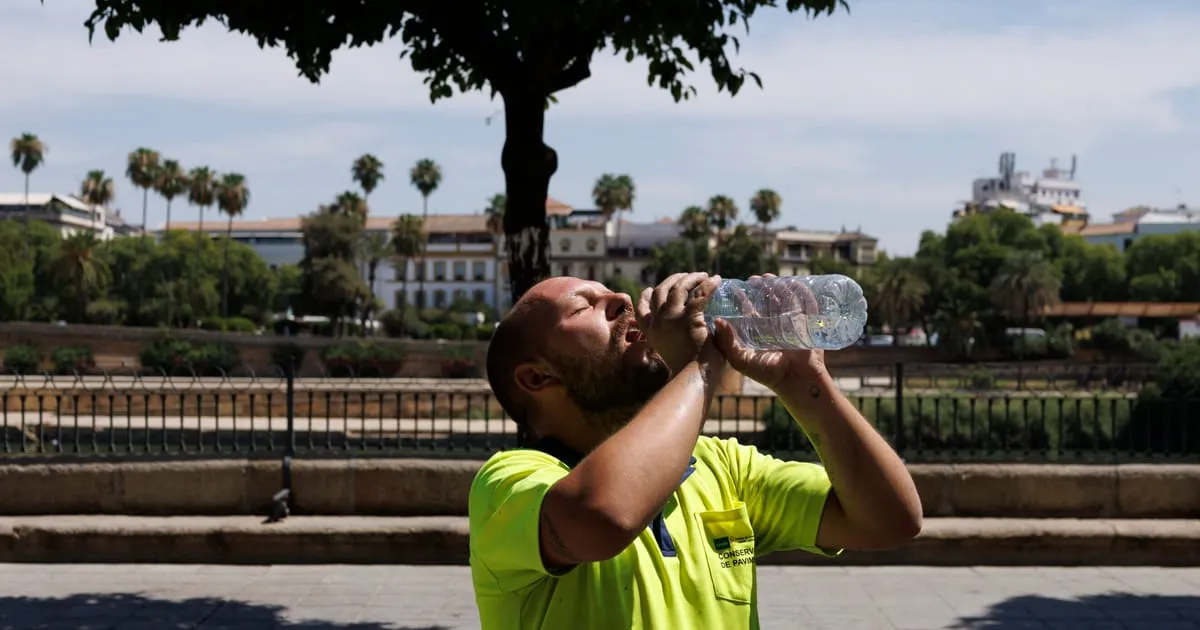 Photo: POLITICO
Key points
Extreme heat killed more than 50,000 people across 854 European cities in summer 2026, with about 32,000 deaths attributed to human-caused climate change.
Extreme heat killed more than 50,000 people across 854 European cities during June, July and August 2026, according to a new analysis published in the journal Nature Health. The study estimated 50,391 heat-related excess deaths, of which about 32,000 were linked to additional warming caused by human activity. The analysis covers cities in the European Union, the United Kingdom, Norway and Switzerland, home to about 40% of the population of 30 countries.
The findings mark the deadliest summer for heat-related mortality on record this century, far outstripping previous peaks of 29,000 deaths in 2022 and 28,000 in 2003. Between 2000 and 2025, a companion study found 430,000 heat-related deaths in total, with around half caused by climate change. The share of deaths attributed to climate change has risen from about 40% at the start of the century to 65% this summer, the study found.
Why this summer broke the record
Two peer-reviewed studies in Nature Health, one covering 2000 to 2025 and the second focused on 2026, were produced by scientists from Imperial College London and the London School of Hygiene & Tropical Medicine. The researchers estimated heat-related excess deaths by analysing temperature records and historical heat-mortality models, a method they say has consistently matched official government statistics released later.
To isolate the role of climate change, the scientists compared the actual weather seen in these cities to a temperature model representing a world without global warming. The difference between the two models produced the estimate of about 32,000 deaths attributable to human-caused warming. The models account for the way high temperatures strain the cardiovascular and respiratory systems, accelerating death in people with pre-existing conditions such as heart disease, stroke or kidney failure.
The study combined established relationships between heat and mortality with 2026 temperature data to rapidly estimate the summer's fallout. Almost a third of this summer's heat-related deaths occurred during Europe's late June heat wave, which smashed several temperature records. The EU's climate monitoring service announced that more than half the continent was seared by very strong heat stress that felt hotter than 38C, while the continental average reached its third-hottest level on record.
How the death toll was estimated
David García-García, a researcher at the mortality monitoring system at the Carlos III health institute in Madrid who was not involved in the study, called it a valuable contribution that allowed comparisons across the continent. He cautioned that the figures are estimates based on observed temperatures and epidemiological models, which do not incorporate actual data on deaths occurring in the summer of 2026. The authors also note the numbers may be revised as final national mortality data becomes available.
People succumbed to heat at the highest rates in Malta, Italy and Hungary, while absolute death tolls were greatest in Italy, France, Spain, Germany and the UK, where scientists estimated 4,354 heat deaths. Naples was the hardest-hit city, with 815 deaths per million. Mario Guarino, an emergency doctor at Ospedale CTO in Naples, said he witnessed a 15% increase in emergency room visits during the hottest weeks.
The elderly were worst affected: people aged 85 and over accounted for roughly half of the estimated deaths, according to Garyfallos Konstantinoudis, study co-author and assistant professor at Imperial College. Younger people were not immune, with around 6,000 deaths among people under 65, including 833 people aged between 20 and 44. Loneliness and poverty worsened outcomes, with Guarino describing patients in hot attics and abandoned by carers.
Where the toll fell hardest
The authors caution that the results cannot be automatically extrapolated to the whole of Europe, since the study was limited to 854 cities and does not include the May heat wave. Death certificates rarely record contributing factors such as dangerous temperatures, so families often do not know heat hastened a relative's death. Age, access to cooling, building quality and health system preparedness also shape the toll.
Clair Barnes, lead author and extreme weather researcher at Imperial College London, said the summer of 2026 is likely to have been the worst on record for heat-related mortality across much of Europe. Malcolm Mistry, climate and health scientist at the London School of Hygiene & Tropical Medicine, said the proportion of deaths attributed to anthropogenic climate change is even more alarming than the absolute numbers. European health experts insist protective measures should be planned before extreme temperatures arrive.
Frequently asked questions
How many people did Europe's summer heat kill in 2026?
The study estimated 50,391 heat-related excess deaths across 854 European cities in June, July and August 2026, with about 32,000 attributable to human-caused climate change.
Which countries and cities were hit hardest?
Absolute tolls were largest in Italy, France, Spain, Germany and the UK, where scientists estimated 4,354 heat deaths. The study covered 854 cities in the EU, UK, Norway and Switzerland.
How was the death toll calculated?
Researchers combined historical heat-mortality models with 2026 temperature data, then compared actual weather to a model of a world without global warming to isolate climate change's contribution.