FAA ground stop after copper wire upgrade grounds 8,200 flights
A nationwide FAA ground stop on 13 November, caused by a fiber optic upgrade, canceled over 8,200 flights and prompted a $50 billion funding request.
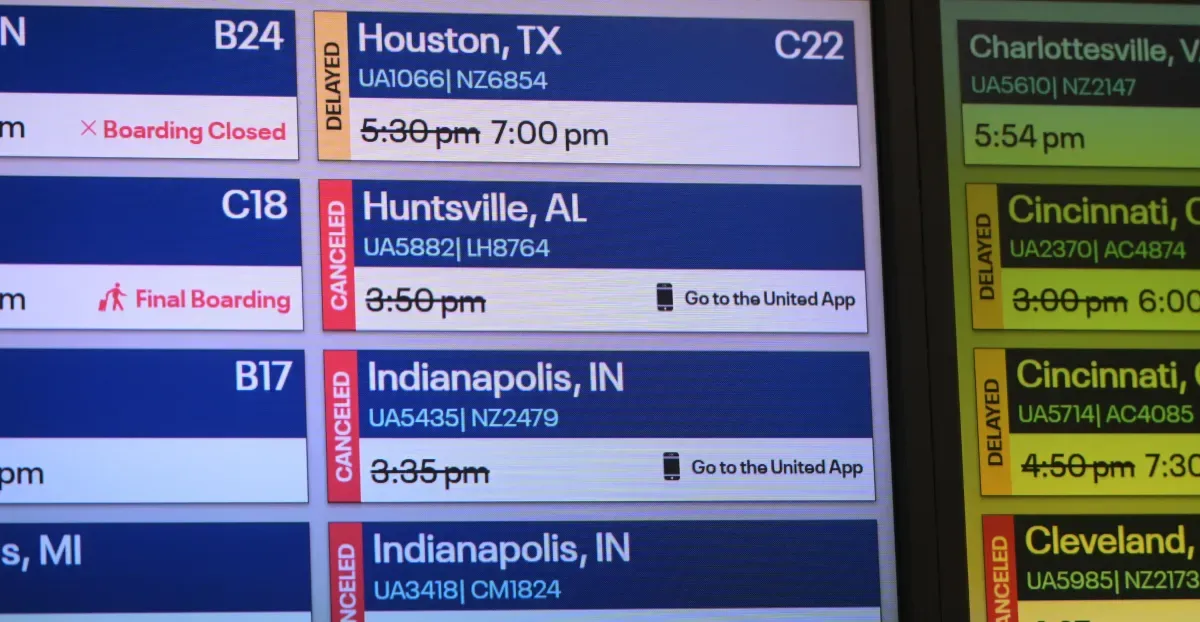 Photo: The Verge
Key points
A fiber optic upgrade at a remote FAA facility caused a router to flood the network, leading to a nationwide ground stop that canceled over 8,200 flights.
A nationwide ground stop ordered by the Federal Aviation Administration on 13 November canceled more than 8,200 flights, according to aviation data firm Cirium. The halt followed a fiber optic upgrade at a remote facility that caused a router to flood the air traffic control network, disrupting radar feeds and communication with planes.
The ground stop, which halted departures from the continental US for more than four hours starting at 15:54 EST, was the longest such incident since the 11 September 2001 attacks. No flights were allowed to take off from the continental US during that period, and some international flights were permitted to depart to clear space. The disruption continued into the next day, with more than 3,500 flights canceled and over 2,000 delayed on 14 November, according to tracking website FlightAware.
What caused the outage
Duffy told a press conference that the root cause was unclear, listing possible explanations: faulty hardware, a misconfigured router, or 'incompetence' on the part of contractor L3Harris. He said the wire was 'such an old wire that it was being discontinued,' necessitating the upgrade. The FAA's acting chief technology officer, Rebecca Guy, said the agency saw two places pinging the network at a high rate and disabled both to stabilize it, and is now performing a root cause analysis.
L3Harris, which has been modernizing the National Airspace System's communications infrastructure, said it had completed more than 70% of the planned conversion from legacy copper wires to a fiber optic system before the shutdown. In a statement, the company said it was supporting the FAA's investigation and took the ground stop and its impact on travelers, airlines, and air traffic operations seriously. The company has been a longtime contractor for the FAA.
The incident prompted the Trump administration to increase its funding request for air traffic control modernization. Duffy and Homeland Security Secretary Markwayne Mullin raised the ask to $50 billion on 13 November, a day after Duffy and White House budget chief Russ Vought formally requested $30.1 billion. Duffy called the incident 'an emergency' and said, 'I want $50 billion. President Trump is a builder. He's going to build this network and deliver for the American people.'
The funding request
The $50 billion figure is $19.1 billion higher than the earlier request, which echoed a White House-backed bill introduced in September by Senator Eric Schmitt that would provide $10.1 billion for air traffic control upgrades. Those funds would come after $12.5 billion allocated through the July 2025 reconciliation law, which Duffy and Vought called a 'down-payment.' Mullin said the new figure was an estimate for a 'complete overhaul of the system,' which has been going through a 'patchwork' upgrade process.
The FAA's air route traffic control centers, which guide planes across long distances, were cited as the cause of the problem. The 22 centers across the country use instrument-dependent flight plans. Senate Commerce Committee Republicans said the outage highlighted the need to prioritize modernization of these centers, while ranking member Maria Cantwell said the panel would review technology issues related to how planes communicate.
Duffy said the work was done at 3pm on a Friday afternoon, and while switchovers at bigger airports take place late at night, remote switchovers happen during the day. He said there would be a reevaluation of when this work is done. FAA administrator Bryan Bedford said there is 'zero evidence of anything nefarious and zero evidence of anything AI-related.'
Investigation and next steps
Former Transportation Security Administration administrator John Pistole said that the ability to restart the system in four-and-a-half hours showed resilience, but added, 'what's to say it's not going to happen tomorrow?' Duffy warned that a similar issue could arise again unless Congress approves upgrades. Both chambers of Congress are controlled by the Republican Party, and committees have been in negotiations over aviation safety bills following the January 2025 midair collision near Ronald Reagan Washington National Airport.
The House Transportation and Infrastructure Committee chairman Sam Graves and ranking member Rick Larsen called the communication failures 'concerning' and said their committee would thoroughly review the issues. The Senate Commerce Committee is also looking into the matter. Leaders have said they hope to reach a deal on aviation safety legislation in the lame-duck session, which could address the funding and technology mandates at issue.
Frequently asked questions
What caused the FAA ground stop on 13 November?
A fiber optic upgrade at a remote FAA facility caused a router to flood the network with over 1,000 connection attempts every 4 to 5 seconds, disrupting radar and communications, leading to the ground stop.
How many flights were canceled due to the ground stop?
More than 8,200 flights were canceled on 13 November, according to Cirium, with additional cancellations and delays on 14 November.
What is the Trump administration requesting for air traffic control upgrades?
The administration increased its request to $50 billion for a complete overhaul of the air traffic control system, up from $30.1 billion requested a day earlier.