Google lets US adults build private Android apps from prompts
Google began rolling out on Tuesday a feature letting US users aged 18 and over build personal Android apps in Google AI Studio from a written prompt, running them privately on their own devices.
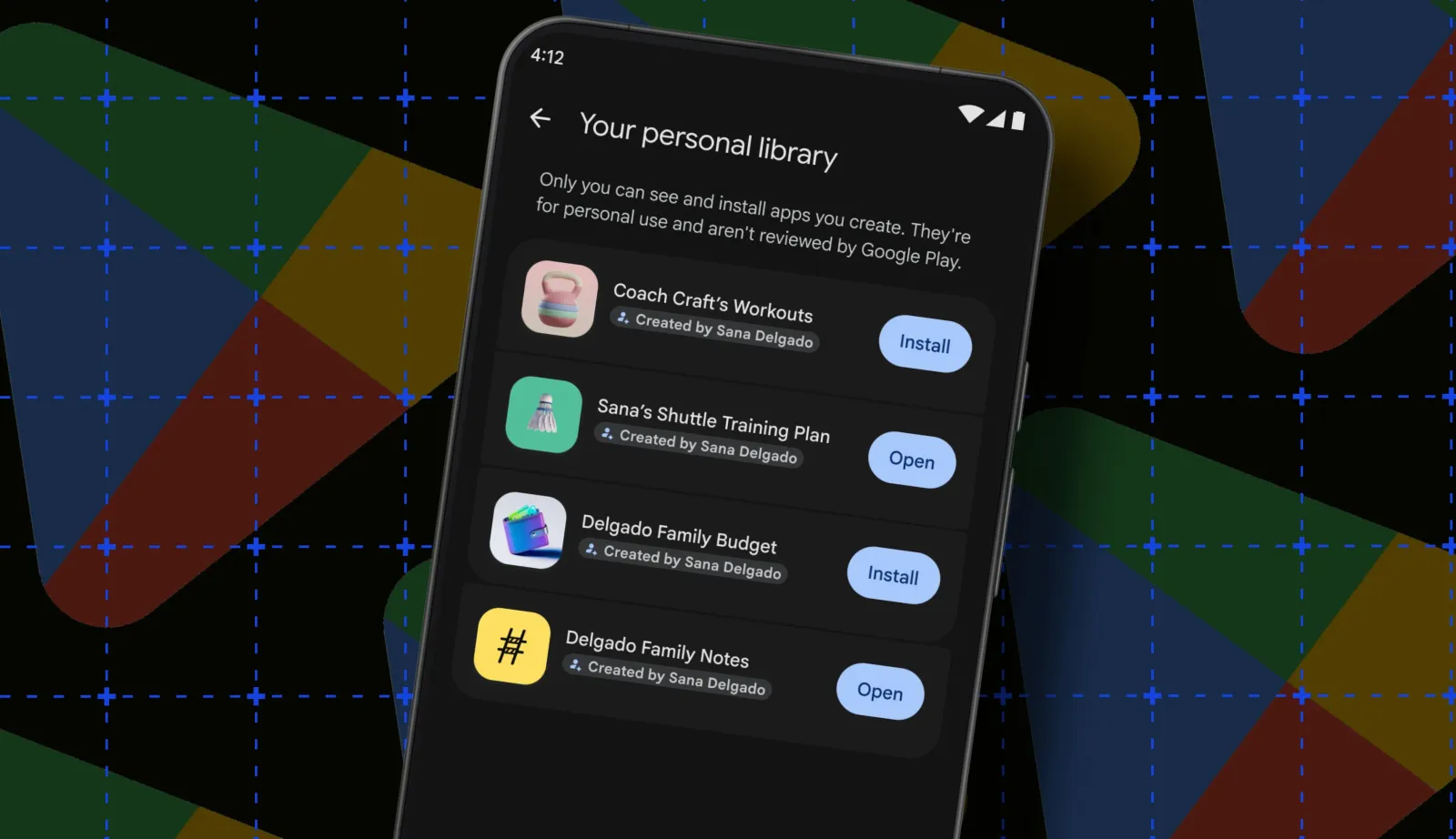 Photo: ZDNET
Key points
Google began rolling out on Tuesday a feature letting US users aged 18 and over build personal Android apps in Google AI Studio from a written prompt.
Google began rolling out on Tuesday a feature letting anyone with a standard Google account build personal Android apps in Google AI Studio, using only a written prompt. The rollout starts in select markets including the US, for users aged 18 and older, Google said. Apps launched through the service remain private and separate from the public Play Store catalog, running on the user's own device.
What the feature changes
The change matters because it removes the developer-account requirement that has long stood between a person with an idea and an app on their phone. Apps are launched from a private part of Google Play and are not included in the public Play Store catalog. There is no charge to experiment and build an app, and the app does not have to be commercially viable.
To get started, a user accesses the tool in Google AI Studio and describes what they want in a prompt; AI does the rest. While the app is under creation, options appear to add features the user might have missed. Light edits are possible once the app is complete, or the user can scrap it and start again.
Google AI Studio is capable of generating apps with just a written prompt to Gemini, and users can adjust results with more prompts or by directly editing the generated code. There is an app creator in AI Studio intended for professional developer accounts that requires USB debugging connected to a PC; the new tool works with that same creator but installs the app on a personal device with a single click.
How the app creator works
The apps bypass the public Play Store, but users can share them. Google said users will be able to share those apps with a small circle of friends and family in the coming months. Your app will only be available on your own devices to start, including tablets and computers with access to the Play Store, in a new personal library section.
When a user wants to distribute an app to a global audience, Google says it will be possible to graduate to a professional developer account and submit the app to the Play Store's normal safety reviews. Those who later want to publish publicly move to a professional developer account, at which point their apps undergo the same safety reviews and quality checks required of other developers.
The personal app feature was announced alongside updates to app discovery and gaming. Ask Play, Google Play's AI recommendation tool, can now generate comparisons between apps, highlighting differences and user sentiment. Google also plans to bring Play apps, games and developer content into Gemini conversations, with that integration rolling out soon.
What arrives alongside the change
For games, Google introduced Game Finder, which uses players' stated preferences and gaming activity to recommend titles; it launches in English for US users, with more markets planned. The Gamer DNA feature lets users refine recommendations around genres, mechanics, art styles and specific games. Game playlists let users recommend a collection of mobile games for other people to try.
Other additions include Sprints, competitive challenges lasting 48 hours for groups of two to five players, and the ability to record 30 second clips through the Sidekick gaming overlay on select devices. Community Posts now allow users to ask and answer questions on game detail pages, with automatic translation across languages; support for developer posts and official announcements will follow in the coming weeks.
Google is also extending premium game trials to PC and bringing more titles to Android and PC with cloud saves. In cars with Google built-in and Android XR, the company is updating the Play Store's layout to better fit the size of the physical or virtual screen. Sports topic pages in the Play Store will expand to cover soccer games from Premier League and Major League Soccer.
The rollout's reach is limited to select markets including the US, and to users aged 18 and older. Sharing among friends and family is planned in the coming months rather than available now, and public publishing still requires graduating to a professional developer account and passing the same safety reviews as other developers.
Google's announcement expands its push into vibe coding, in which users describe what they want and use AI to generate and refine software. The new Play integration gives those projects a path onto Android devices without requiring a public store listing, while the broader updates broaden Play's role from distributing publicly available software to supporting personal app creation.
Frequently asked questions
What did Google announce?
Google began rolling out on Tuesday a feature letting anyone with a standard Google account build personal Android apps in Google AI Studio from a written prompt, running them privately on their own devices, in select markets including the US for users aged 18 and older.
How do you build an app with Google AI Studio?
You access the tool in Google AI Studio, describe what you want in a prompt, and AI does the rest. Options appear to add features you might have missed, and you can make light edits once the app is complete or scrap it and start again.
Can you share or publish the apps you build?
Apps run on your own devices to start, in a new personal library section. Sharing with friends and family is planned in the coming months, and for global distribution you can graduate to a professional developer account and submit to the Play Store's normal safety reviews.