iFixit teardown points to hinge pressure behind iPhone Duo screen cracks
iFixit's iPhone Duo teardown, published on 25 October 2026, found a hinge spot where several edges meet that may concentrate stress and crack the folding screen.
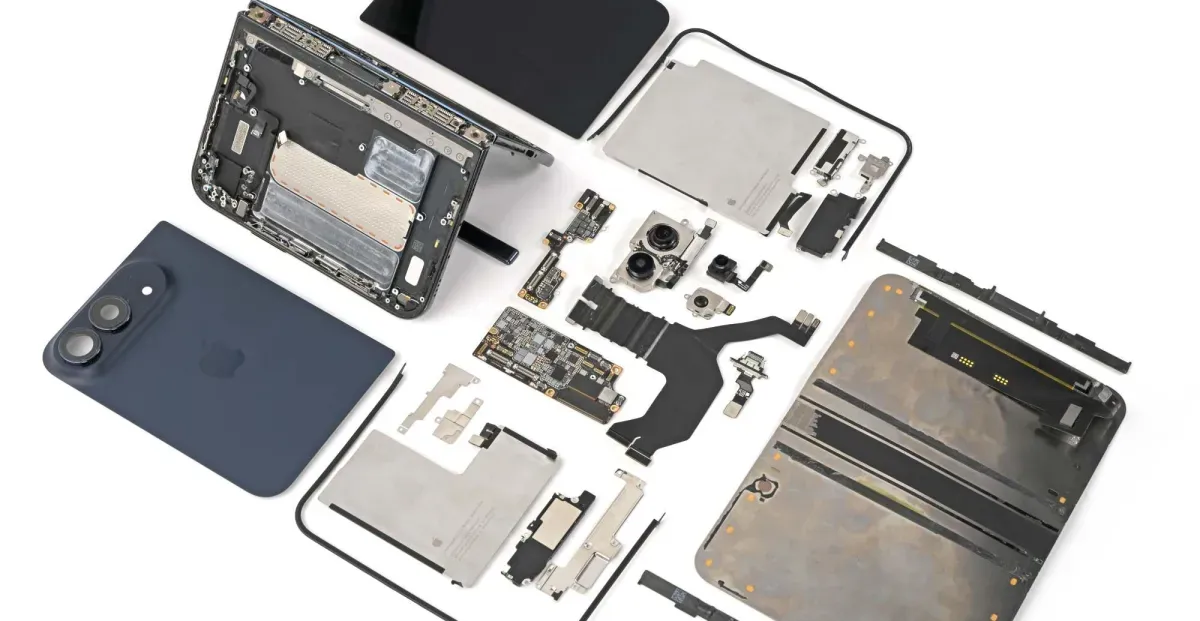 Photo: The Verge
Key points
iFixit's iPhone Duo teardown suggests a hinge weak spot where several edges meet may concentrate stress and crack the folding screen.
iFixit's teardown of the iPhone Duo, published on 25 October 2026, points to a spot in the hinge where several edges meet as a possible cause of the screen cracks owners have reported. The site built a 3D model of the hinge and compared it with photos of the damage, finding the breaks cluster in one area near the central hinge support.
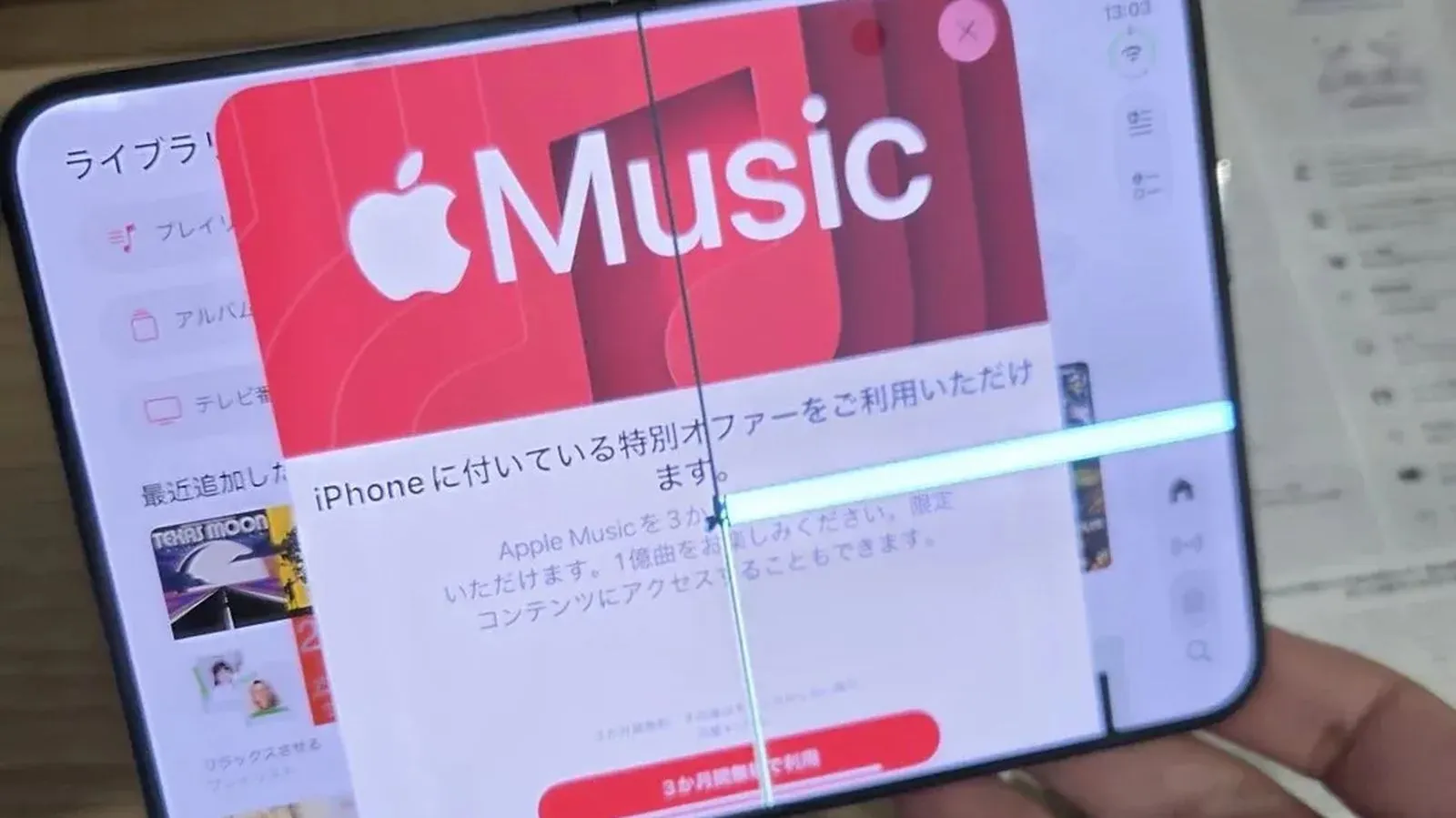
The findings matter because iPhone Duo owners have described a crunch while folding or unfolding the device, followed by bright lines appearing across the inner display, with the cracks all seeming to happen in the same place. iFixit's teardown does not definitively establish what is causing the failures, but the similarities between the reported damage and the hinge's internal geometry give the team promising leads for further investigation.
Where the breaks cluster
iFixit wrote that the breaks cluster near the transition from the gap for the crossing flex cable to the central hinge support. The damage in photos isn't right where the display cable passes through the hinge, but slightly lower, at a point where several edges meet and change how the thin display is supported as it bends. Several structural edges and components converge around that area, potentially concentrating stress on the delicate display layers.
One possibility iFixit raises is that a central support bar isn't retracting properly as the phone closes, potentially putting excessive pressure on the display. Another involves the curved rails that guide the hinge's movement, which rise above the surrounding components during folding and could interfere with the screen if they fail to move as intended. iFixit also listed pressure, a trapped particle, repeated bending, or a manufacturing defect as possible causes.
To see where the stresses build up from folding, iFixit built a 3D hinge model from teardown footage, patents, and CT scans, then compared it with the reported damage locations. The accordion cable passes over that exact spot and sits near the edge of the battery, which iFixit suspects may concentrate pressure and lead to the audible crack reported by some and the broken screens.
How iFixit modelled the hinge
The hinge itself features an intricate combination of gears, springs, and interconnected metal joints, along with a waterdrop design that makes room for the display to bend without folding too sharply. Apple also uses curved guides to control how the joints move, to reduce the stress placed on the display as the phone opens and closes. iFixit said the mechanism is more intricate than Apple's patent filings suggested.
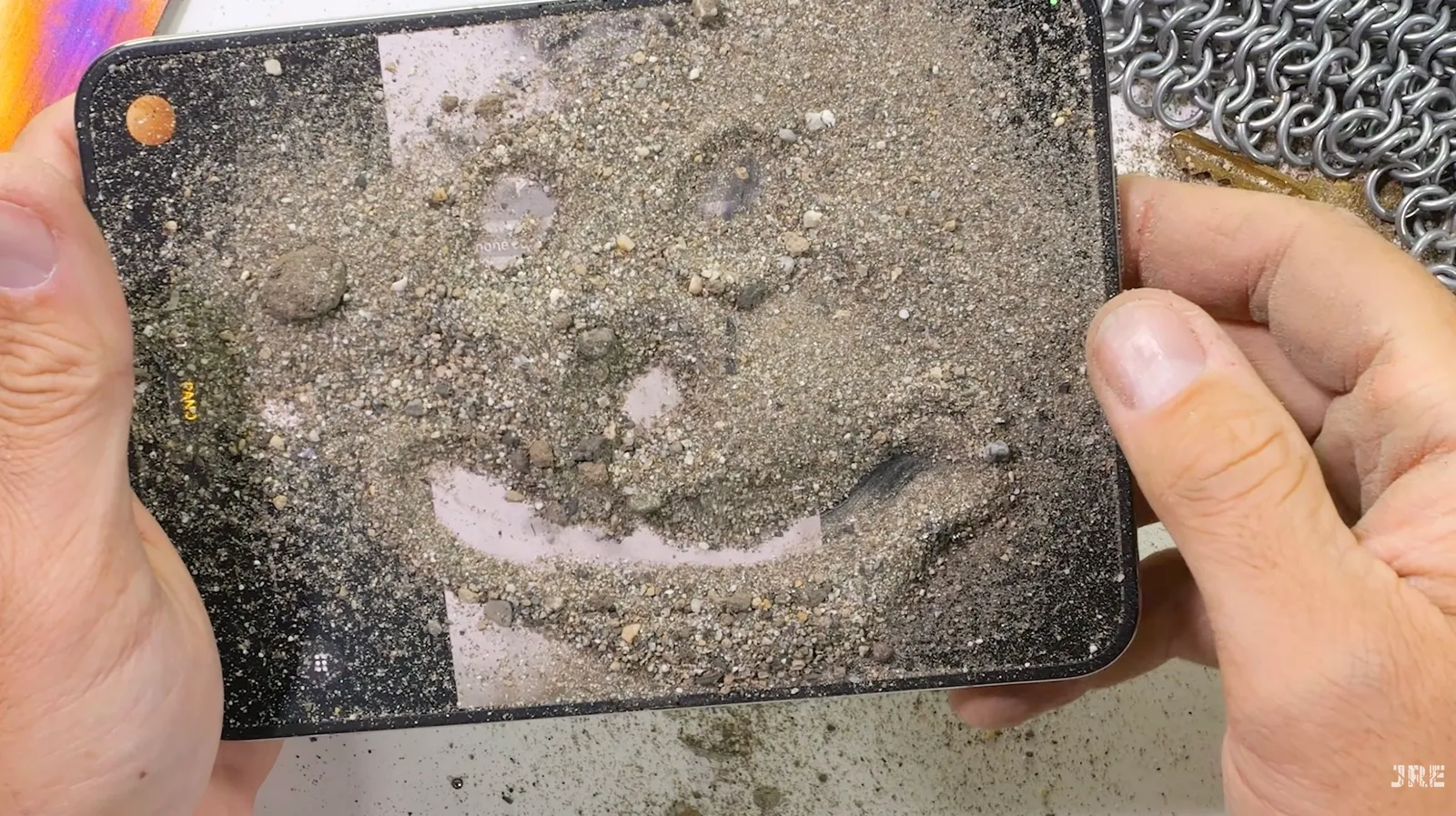
Before opening the Duo, iFixit coated it with fluorescent dust. The iPhone Duo carries an IP68 rating, meaning it is dust-tight and can withstand submersion in water up to 6 meters deep for 30 minutes. Dust reached the USB-C port, speaker mesh, and bezel, and particles infiltrated the hinge, causing it to crunch, but the hinge gathered less dust than the Galaxy Z Fold8 or the Pixel 11 Pro Fold in similar tests.
iFixit gave the iPhone Duo a provisional repairability score of 5 out of 10, the highest it has ever given a foldable smartphone, pending the availability of replacement parts. The Galaxy Z Fold8 and Pixel 11 Pro Fold both scored 4 out of 10. iFixit said the inner display and hinge assembly are the biggest vulnerabilities and cost the Duo points.
What the score reflects
The teardown also examined the display and batteries. Apple describes the inner display as a 10-layer stack, and its matte nano-texture cover scatters reflected light to disguise the crease. Under a microscope, iFixit found oval-shaped subpixels oriented in different directions. The larger battery has a capacity of 11.567 Wh, the smaller 7.506 Wh, for a combined 19.073 Wh.
Replacing the nano-texture cover layer costs $19 with AppleCare+ and $49 without it. The outer display was easy to take off, which helps since most internal repairs go through it, while removing the inner panel requires getting through a lot of adhesive. iFixit called the Duo's battery removal the best from a foldable to date, using a small electrical charge to loosen the adhesive.
iFixit said it could also be the curved rails of the hinge that follow the screen's pivot points, which may be lifting above the flat plates of the hinge as the phone closes, with one rail lining up with the damage. It's possible a hinge component meant to retract isn't doing so, but there's no clear answer. iFixit has published an interactive CT scan of the hinge.
YouTuber CuriousHagi separately reproduced the cracked screen during durability testing, then pulled the phone apart. He found one of the links in the middle of the phone is thinner than the links below or above it and snapped at a small notch where it would be weakest, along with marks where the hinge met the support plate. Apple did not immediately return a request for comment.
Frequently asked questions
What did iFixit find could be causing iPhone Duo screen cracks?
iFixit found reported breaks cluster near the transition from the gap for the crossing flex cable to the central hinge support, where several edges meet and change how the thin display is supported as it bends, potentially concentrating stress.
How repairable is the iPhone Duo according to iFixit?
iFixit gave the iPhone Duo a provisional repairability score of 5 out of 10, the highest it has given a foldable, pending replacement part availability. The Galaxy Z Fold8 and Pixel 11 Pro Fold both scored 4 out of 10.
How did the iPhone Duo handle dust in iFixit's test?
iFixit coated the phone with fluorescent dust. Dust reached the USB-C port, speaker mesh, bezel, and hinge, causing it to crunch, but the hinge gathered less dust than the Galaxy Z Fold8 or Pixel 11 Pro Fold in similar tests.