Iran's Araghchi seeks deal to end US war, Trump calls terms unacceptable
Iran's foreign minister told the state-owned Iran newspaper Tehran wants an agreement guaranteeing no further war, while President Trump said Iran's terms were not acceptable to him.
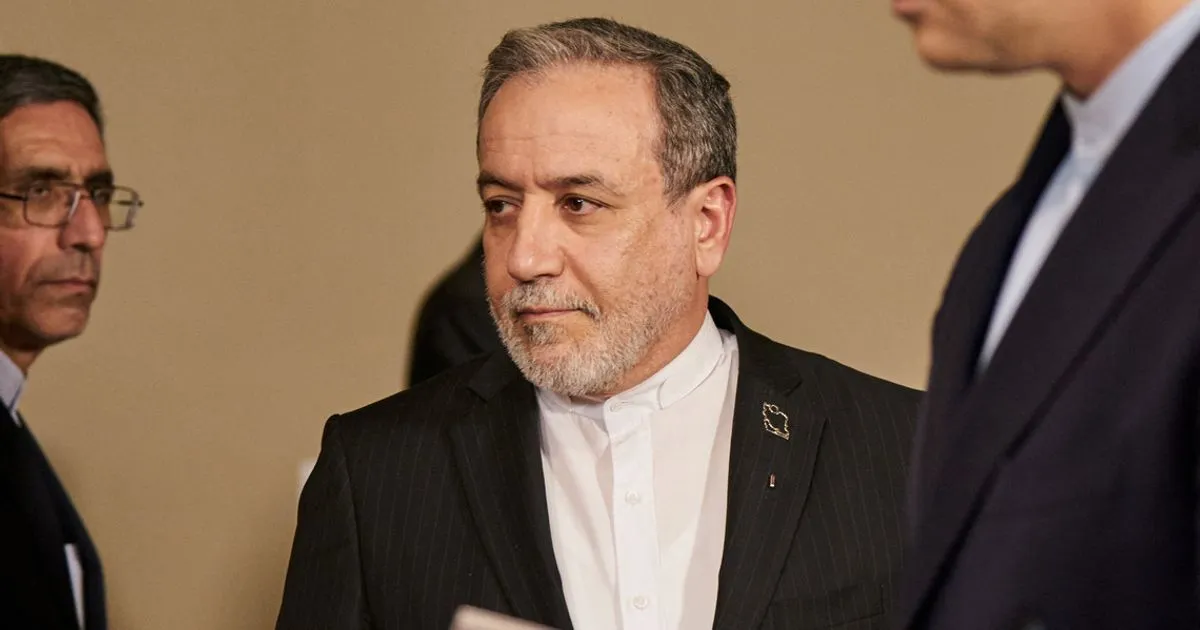 Photo: The Straits Times
Key points
Iran's foreign minister said Tehran still hopes diplomacy can end its war with the United States but wants guarantees Washington is serious before going further.
Iran's Foreign Minister Abbas Araqchi said Tehran still hoped diplomacy could end its war with the United States, telling the state-owned Iran newspaper that Iran was seeking "an agreement that would ensure there was no further war." He said Iran wanted guarantees that Washington was serious about negotiations before proceeding further, and that Tehran saw no need to change the intermediaries in the talks.
Araqchi's remarks set out conditions rather than a timetable. He said Iran had discussed with mediators the form and nature of confidence-building measures. Iran's first demand, he said, is for US President Donald Trump to state explicitly that he wants an agreement. Trump answered from the other side on Friday, saying Iran wanted a deal but not one acceptable to him.
Trump calls terms unacceptable
Trump answered from the other side. "They want to make a deal, but they don't want to make a deal that's acceptable to me," he said at a press conference on Friday. The president's formulation left the substance of the gap unstated: neither side published the terms each has rejected.
The exchange matters because diplomatic efforts are still trying to end a conflict that has disrupted shipping, driven up global energy prices and drawn in countries across the region. Both governments now describe the other as wanting a deal, which shifts the argument from whether to talk to what a settlement would contain. Neither side has published the terms each has rejected.
Qatar carries messages between sides
Qatar is carrying messages between the two sides. Qatari and Iranian officials met on Tuesday in talks aimed at "bridging perspectives and narrowing the gap between proposals presented on the ground," a spokesperson for Qatar's foreign ministry said. Araqchi said the two sides are still exchanging messages through mediators. The war began when the United States and Israel attacked Iran on February 28, prompting Tehran to strike Israel and Gulf states hosting US military bases.
Iran's stated red lines put the nuclear programme at the centre of any settlement. Araqchi said Iran's red lines included keeping enriched uranium in the country, though he added that he believed "a fair solution" could be reached. He also said Iran's official position on the Treaty on the Non-Proliferation of Nuclear Weapons remains the same and its nuclear doctrine has not changed.
Shipping is the second pressure point. Araqchi said the Strait of Hormuz would remain closed until the US met Iran's seven conditions, without listing them in the interview. His comments came hours after Trump reiterated that the US had "total control" over the strait, a claim Iran contests by insisting vessels follow its protocol to transit or risk attack.
Hormuz stays shut over seven conditions
The economic cost is measurable. Around 80% of pre-war oil volumes continue to reach global markets from Middle Eastern producers despite increased Iranian attacks on shipping, energy analysts said. Exports averaged around 13 million barrels per day in the first two weeks of November, down 20% from October's 15-16 million barrels per day, according to Rystad Energy.
Rystad attributed the decline to security concerns around the Strait of Hormuz and reduced flows through Saudi Arabia's pipeline to the Red Sea port of Yanbu, which has faced repeated attacks. That figure gives the diplomacy a baseline: talks are proceeding while roughly a fifth of October's export volume has already been lost.
Araqchi also said it was not surprising for Trump to take a new position every day, or even to reverse what he had said the day before. The comment signals that Tehran treats the US president's public statements as unstable ground, which is why Iran is asking for an explicit declaration before it moves to a next stage. The next dated step is the Qatari-mediated round that already met on Tuesday, with Doha describing its aim as narrowing the gap between proposals on the ground. Neither side has published a date for direct talks, and the seven Iranian conditions and the US terms remain unstated in public.
Frequently asked questions
What did Iran's foreign minister say about ending the war?
Abbas Araqchi told the state-owned Iran newspaper that Tehran was seeking "an agreement that would ensure there was no further war" and wanted guarantees Washington was serious about negotiations before proceeding further.
What did Trump say about Iran's offer?
Trump said at a press conference on Friday: "They want to make a deal, but they don't want to make a deal that's acceptable to me." He did not publish the terms he rejected.
What are Iran's red lines in the talks?
Araqchi said Iran's red lines included keeping enriched uranium in the country, and that the Strait of Hormuz would remain closed until the US met Iran's seven conditions.