Iran executes three men over Karaj attacks and protest links
Iran executed Hassan Divband, Hamid Kazemi, and Reza Zanganeh on 8 November after the Supreme Court upheld their death sentences for attacks during January protests.
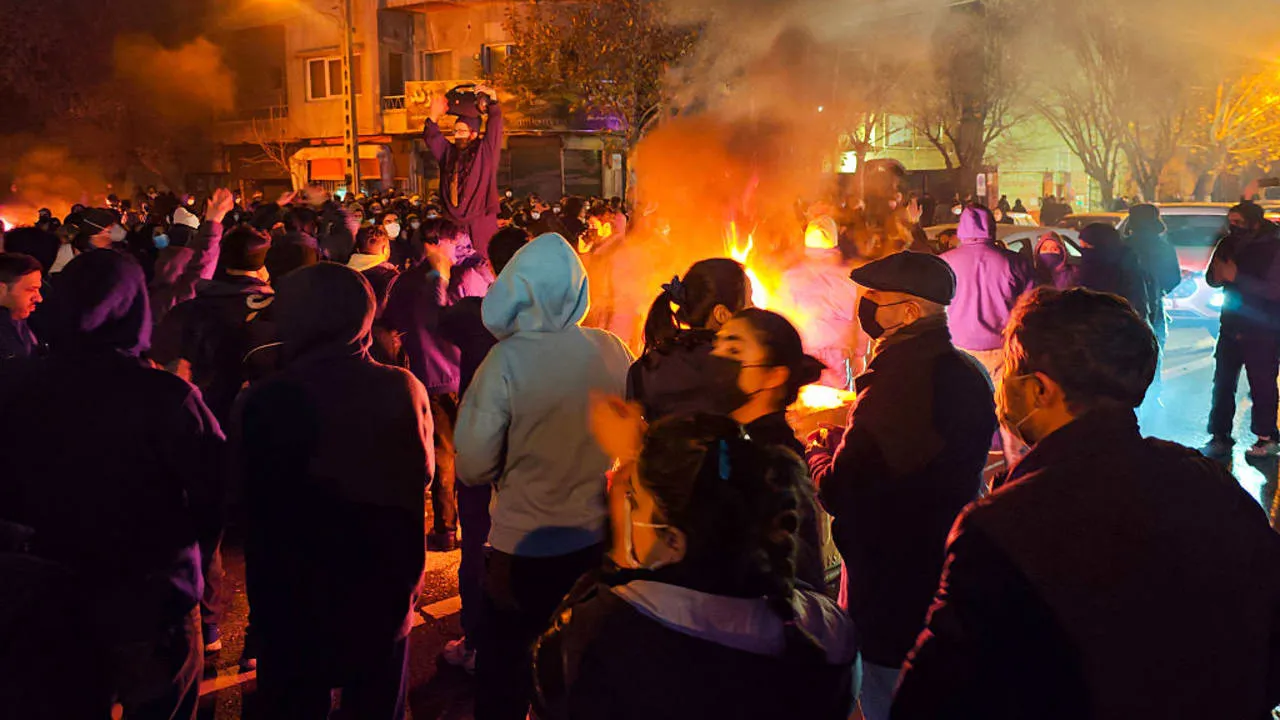 Photo: The Jerusalem Post
Key points
Iran executed three men on 8 November after the Supreme Court upheld their death sentences for attacks during January protests in Karaj.
Iran executed Hassan Divband, Hamid Kazemi, and Reza Zanganeh on 8 November after the Supreme Court upheld their death sentences, the judiciary announced. The three were convicted of carrying out operations for Israel and the United States and taking part in armed unrest during January's anti-government protests, state media reported.
The executions are the latest in a series Iran has carried out in recent months over the January protests, including of people accused of links to Israel and the US. The judiciary accused the men of using firearms, grenades and Molotov cocktails, setting fire to public facilities, and damaging an electricity substation in the city of Karaj, causing power outages in some areas.
The executions and charges
The three were also accused of participating in what the judiciary described as operational activities for Israel, the United States, and hostile groups against Iran's national security and interests. Their sentences included the confiscation of their property. The judiciary said the men had acted in accordance with calls for demonstrations by exiled Crown Prince Reza Pahlavi and as part of an Israeli-American plan to destabilize the country.
Divband was arrested on 11 January after investigations identified him as a suspect in attacks on public property and incitement to violence, according to the judiciary. Ten others accused of participating in the unrest under his supervision were subsequently arrested. The judiciary said Divband, 30, who owned an automotive repair business, had recruited employees and relatives to participate in the demonstrations.
The judiciary said confessions, surveillance footage, and intelligence reports supported the convictions, although the evidence has not been independently examined. State-affiliated Tasnim News Agency reported that investigators claimed to have recovered two hunting rifles, ammunition, and evidence of the manufacture and use of 20 Molotov cocktails and 15 homemade explosive devices.
Evidence and family arrests
Information published by IranWire on Friday, citing an Iranian committee monitoring the detention of protesters, revealed that several members of Divband's family had also been arrested during the January crackdown. They included his 29-year-old relative Ali-Asghar Divband, 15-year-old Ali-Akbar Divband, and his 50-year-old father, Mohammad-Ali Divband. Another relative, Hamidreza Forouhar, 20, was also detained. Their current circumstances remain unclear, with no independently verified information available concerning their charges or whether they remain in custody.
Another relative, Hamidreza Forouhar, 20, was also detained. Their current charges and custody status are unknown. Zanganeh, 27, had previously been sentenced to death on accusations of cooperating with Israel's Mossad intelligence agency, according to the Hengaw Organization for Human Rights. Hengaw reported in August that Zanganeh, a recently married automotive technician specializing in foreign vehicles, was arrested at his workplace in April and later held at Ghezel Hesar Prison. People close to him rejected the espionage allegations, saying they believed the accusations arose from his work repairing imported vehicles and previous business-related travel abroad.
The executions come amid continued concern over the Islamic Republic's use of legislation introduced in 2025 that increased punishments for espionage and cooperation with Israel and other countries designated as hostile, as well as the use of execution on protesters from January's demonstrations. The legislation, accelerated following the Twelve Day War in June 2025 between Israel and Iran, expanded the range of national security offenses punishable by death.
Broader execution concerns
Human Rights Watch and the Abdorrahman Boroumand Center for Human Rights in Iran warned in September that the law was being used against protesters accused of acting on behalf of foreign governments, often without evidence establishing any genuine espionage activities. Their investigation examined 29 executions linked to the January protests between March and August, finding that 16 of the cases involved no allegation that the defendants had killed anyone.
The organizations documented proceedings marked by allegations of torture, coerced confessions, restricted access to legal representation, and trials that sometimes concluded within weeks of an arrest. "The authorities' message is clearly that protests will be met with brutality," Bahar Saba, senior Iran researcher at Human Rights Watch, said at the time. The scale of the executions has continued to raise international concern, with an October investigation by Iran International identifying at least 70 executions linked to the protests.
The judiciary said eight other defendants in the Karaj case had received prison sentences ranging from five to ten years. The executions were carried out after the Supreme Court upheld their sentences, while the other defendants received prison terms of 5 to 10 years. The executions come as Iran continues to face scrutiny over its handling of protesters from January's demonstrations.
Frequently asked questions
Who were the three men executed by Iran on 8 November?
Hassan Divband, Hamid Kazemi, and Reza Zanganeh were executed after the Supreme Court upheld their death sentences. They were convicted of attacks in Karaj during January protests, including damaging an electricity substation.
What were the charges against the executed men?
They were accused of carrying out operations for Israel and the US, using firearms, grenades and Molotov cocktails, setting fire to public facilities, and damaging an electricity substation in Karaj, causing power outages.
How many others were sentenced in the Karaj case?
Eight other defendants received prison sentences ranging from five to ten years. Ten others accused of participating in the unrest under Divband's supervision were arrested.